
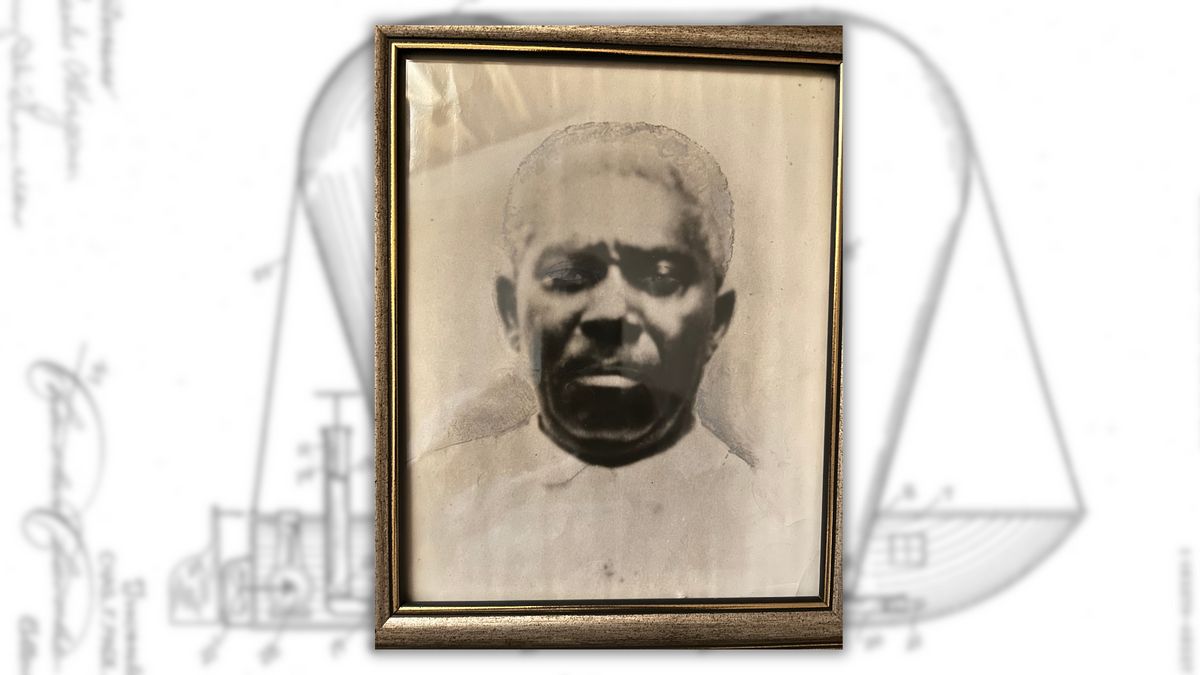
A claim that a Louisiana-based Black inventor named Charles F. Page received a patent for a flying machine before the Wright brothers and prior to their first powered, sustained and controlled airplane flight has been circulating online for years.
According to Page's family, his invention was also tested and flew prior to the contraption made by the aviation pioneer siblings, which took flight on Dec. 17, 1903.
The discussion on social media appeared to begin with a lengthy post on LinkedIn in late December 2023 that documented Page's often overlooked history. His story also garnered attention in October 2024 thanks to the opening of an exhibit named "Pioneer Skies: From Freedom to Flight, The Story of Airship Inventor Charles F. Page" that was assembled by the Louisiana State Museum and the Louisiana Civil Rights Museum Advisory Board at Louis Armstrong New Orleans International Airport.
According to an August 2024 news release from the office of Billy Nungesser, Louisiana's Lieutenant Governor, "'Pioneer Skies' delves into the rich history of aviation, highlighting Charles F. Page, a formerly enslaved man from Pineville [Louisiana] who invented an airship and, in 1906, during the Jim Crow era, received a patent for his airship, notably before the Wright Brothers."
Other reports about Page, such as a lengthy profile in Louisiana newspaper The Advocate (archived), also from August 2024, emphasized the fact that the entrepreneur's patent was approved before the Wrights'.
However, neither article notes the fact that, according to documentation from the United States Patent and Trademark Office (USPTO),
Therefore, Page was granted a patent before the Wright brothers but he filed for it after they did. He also filed his patent before their airplane's historic first flight.

(USPTO)
However, the USPTO said the two machines were "very different technologies" and "neither patent would have affected the other being granted regardless of whose was filed first."
They added:
Airships like Page's rely on buoyancy from balloons to lift the craft, as opposed to airplanes like the Wright Brothers' inventions. The idea of airships has been around in some form since at least the 17th century, and Page's was an improvement on existing inventions. You can think of it like comparing a sailboat to a motorboat – both require a lot of expertise to create, but they run very differently.
This absolutely does not take away from Page's accomplishments – receiving a patent and attempting to market his technology in the Jim Crow South was extremely difficult for an African American inventor during this time period. But the idea that the Wright brothers were receiving credit for something he invented first is not accurate.
When asked why a patent filed after another was the first to be approved, the USPTO said via email:
There could be a couple of reasons for Page's patent being granted first, ranging from the patent examiner having fewer cases or working a bit faster, the invention requiring less back and forth to understand and approve, or Page/his lawyer responding to the examiner's questions faster. Since the technologies are very different, there would be no conflict between the two patents and it therefore would not have mattered which was granted first.

(USPTO)
Further, there is only anecdotal evidence that
Joseph Page credits local historian Michael Wynne with helping to bring his grandfather's story to light. "Unfortunately, deep-rooted racial bias still exists here and African American history has long been ignored and neglected," Wynne said via email. The historian describes himself as the "unofficial historian of central Louisiana" and has written over 50 books on the subject. "It has been literally a fight for me these six and a half years to bring deserving attention to Page and it continues to be a challenge."
Despite the struggle to bring Page's story to light in the present, there was some local coverage of his invention at the time. The April 21, 1906, edition of Alexandria, Louisiana's Weekly Town Talk newspaper, featured a story on Page's airship. It read, in part:
Charles F. Page, a colored citizen of Pineville, and a native of that town, aged about 31 years, has for a number of years been engaged in trying to invent an air ship. He first made application for a patent April 24, 1903, and has now scored U.S. patent, which was issued to him April 10, 1906
[ … ]
After an examination we feel confident that the invention is one of merit, and many of the ideas brought out by the inventor entirely new, and we believe that with this invention the navigation of the air, in a safe manner, is nearer in sight than it has ever been.
The article goes on to describe the airship's design, concluding: "Inventor Page has made a amiable addition to air navigation machines."

(Weekly Town Talk, April 21, 1906)
The profile of a Black inventor in a Louisiana newspaper at this time was notable considering this was an era of explicit racial segregation in the U.S., with laws being in place that would not be overturned until more than 60 years after Page filed his patent.
In fact, the social climate of the time likely played a role in Page's eventual erasure from aviation history. A historian from the USPTO said via email:
The structural racism present in Page's daily life absolutely could have had an impact on Page's ability to market his invention. Black inventors during this time frame often faced barriers in obtaining a lawyer, pitching their products to industries that were dominated by white men and receiving fair treatment in court if their patents were challenged. Receiving his patent was a huge accomplishment in and of itself. I would need to do more research to determine what impact this had on Page personally, but it was certainly a major factor in the experience of Black inventors of his time, particularly in the Jim Crow South.

(Daily Town Talk, May 12, 1974)
According to Page's family, one way in which the extreme racism of the era impacted the inventor personally was through an incident linked to his attempted submission of the airship prototype to the 1904 St. Louis World's Fair.
It was an invention which might have landed Page's name beside those of the Wrights as a pioneer in aviation, had the strange-looking machine not mysteriously disappeared en route to the St. Louis World's Fair.
"It was stolen," Miss Eva Page, the inventor's daughter, says of the airship. "After that Papa never built another one."

("History of the Louisiana Purchase Exposition")
This story was repeated by Page's grandson (Eva Page's nephew),
Indeed, pages from the 1904 St. Louis World's Fair program, available for viewing through the digital library of the University of Missouri, show no record of Page's device among the other airship displays.
In 2023, Page's hometown of Pineville, Louisiana, honored the inventor's contributions with a historical marker.
"He should've been recognized 75 years ago," Wynne told KALB, a local news station in Alexandria, Louisiana. He elaborated to Snopes via email: "Like Jesus was not appreciated in his own hometown of Jerusalem, likewise, Page has been ignored."