
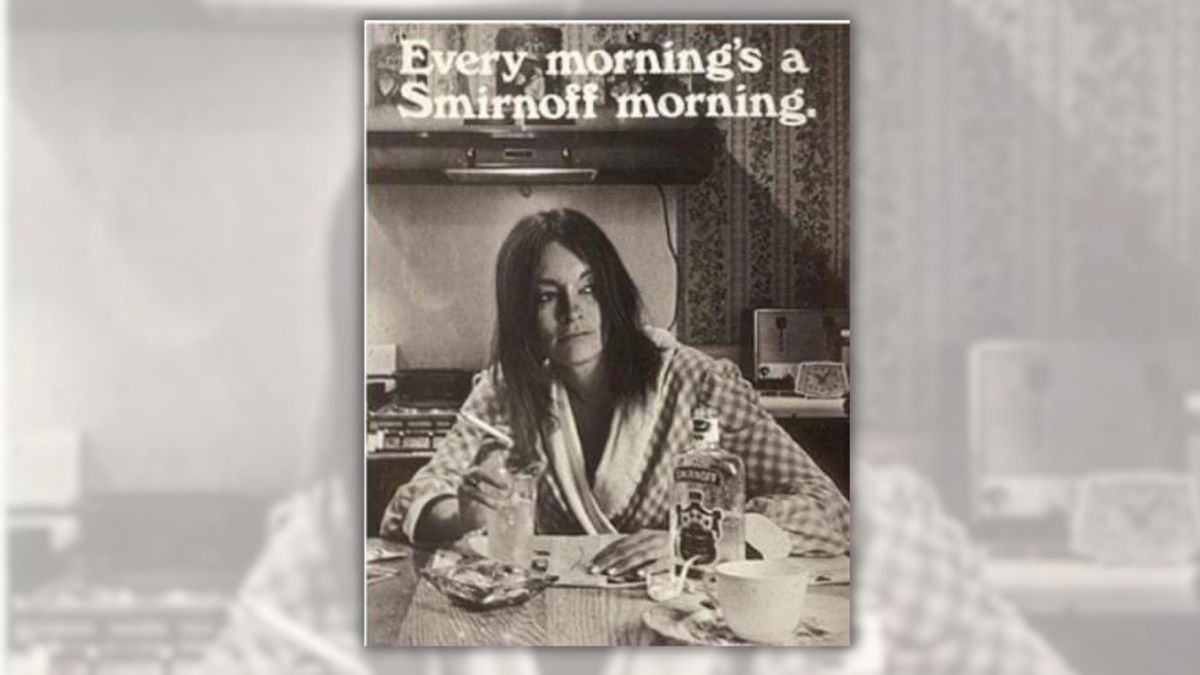
In early January 2026, an image circulated online purportedly showing a vintage advertisement for Smirnoff vodka that read, "Every morning's a Smirnoff morning."
The alleged ad featured a woman in a bathrobe, sitting at a table with a cigarette and glass of vodka. Social media users on Facebook (archived), Instagram (archived) and Reddit claimed it was published in 1980.
A reverse image search on Google showed the image has been shared online since at least 2014.
In short, there is no evidence this was an authentic ad for Smirnoff vodka, nor that it was published in 1980. Satirical anti-capitalist magazine Adbusters appeared to have created the advertisement as a spoof. It was not possible to track down a physical or digital copy of the ad in Adbusters' online archive or in its back issue archives.
Adbusters had not replied to our inquiries at the time of publication.
For these reasons, Snopes could not independently verify the ad's presence in the magazine; therefore, we were unable to rate this claim, though it did appear to be an authentic spoof ad attributed to Adbusters.
The alleged Smirnoff ad has been mentioned specifically in at least two publications, both of which stated that Adbusters published the image in its Winter 1989-90 issue, one of the magazine's earliest.
Fake ads such as this were considered a form of "culture jamming," a movement The Los Angeles Times called "the new dissent in America" in 1992. The newspaper described culture jamming as an effort to "sabotage advertising" and "sabotage television" by turning advertising "against itself."
Ronald K.L. Collins, who authored the 1992 LA Times piece, and

("The Death of Discourse" by Ronald K.L. Collins and David M. Skover)
The book's citations listed the image as appearing on the inside cover of Adbusters Quarterly's "Winter 1989-1990" issue.
A 2012 University of Iowa dissertation, titled, "Contested Images: The Politics and Poetics of Appropriation," by
In the paper's section on culture jamming, Glassco described Adbusters as a way to "address hyper commercialism and the degradation of the physical and mental environment." He wrote:
The alternative ads in the first Adbusters publication included a photograph of a horse grazing alone in a cemetery. Across the bottom of the photograph are the words "Marlboro Country." Another showed a destitute woman facing her first drink of the day with the text, "Every morning is a Smirnoff morning."
Snopes reached out to Glassco for further information and will update this article if we receive a response.