
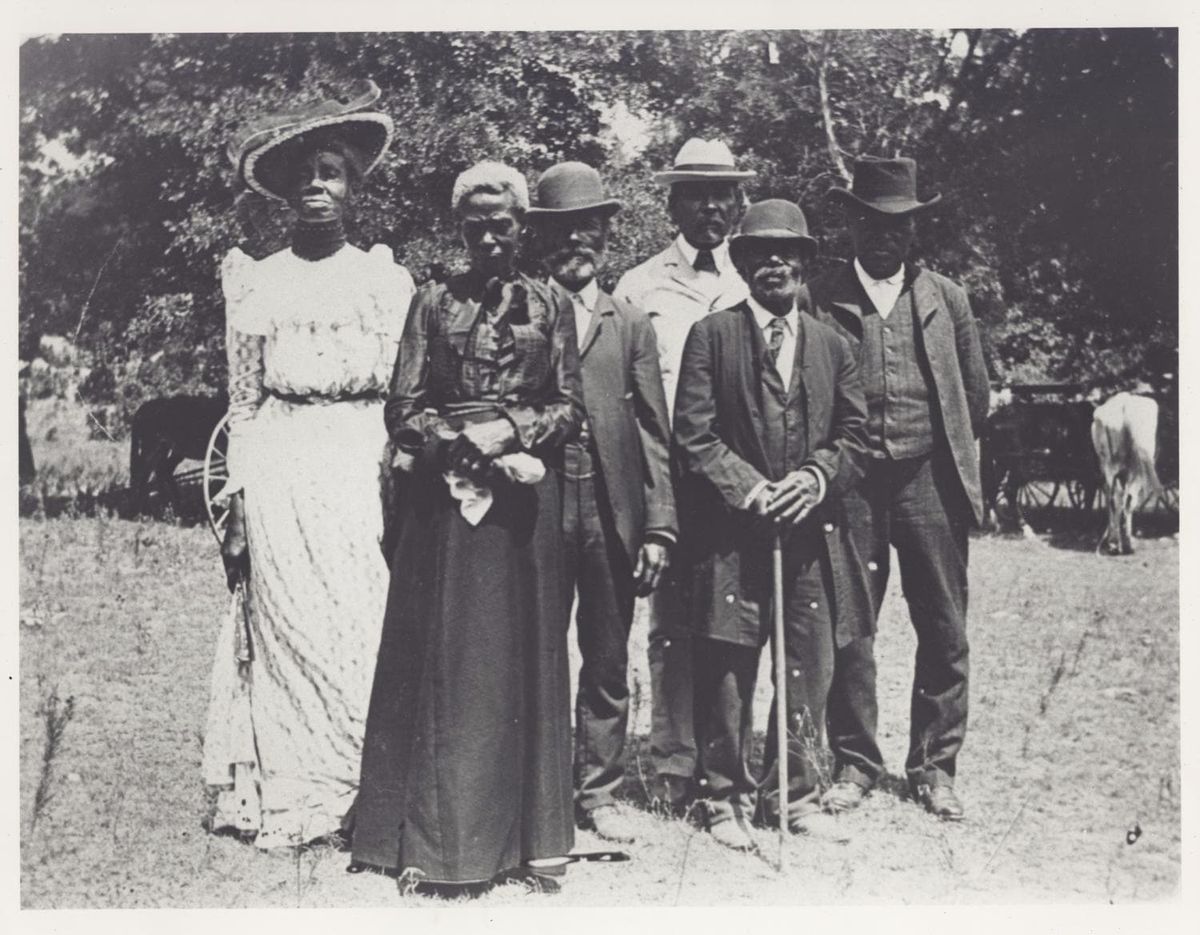
Juneteenth, a federal holiday celebrated on June 19, commemorates the day in 1865 that enslaved people in Texas learned they were free.
On that day, Union Maj. Gen. Gordon Granger arrived in Galveston, Texas, to issue General Order No. 3, informing the people that all slaves were free. The announcement came two months after Confederate Gen. Robert E. Lee surrendered and the Union Army won the Civil War, and more than two years after then-U.S. President Abraham Lincoln signed the Emancipation Proclamation.
According to The Associated Press, although the Emancipation Proclamation freed slaves in the South in 1863, it could not be enforced in many places, like border states, until after the end of the Civil War. Granger was ultimately sent to Texas to start enforcing the proclamation.
General Order No. 3 stated:
The people of Texas are informed that, in accordance with a proclamation from the Executive of the United States, all slaves are free. This involves an absolute equality of personal rights and rights of property between former masters and slaves, and the connection heretofore existing between them becomes that between employer and hired labor. The freedmen are advised to remain quietly at their present homes and work for wages. They are informed that they will not be allowed to collect at military posts and that they will not be supported in idleness either there or elsewhere.
While this proclamation marked the expansion of freedom for enslaved Black people, the language at the end showed that there was still a long way to go in their fight for equality.
For some time, acting on the general order was done at the freed people's own peril. Former slave owners did not follow the order, and in some cases, freed people were forced back into work. June 19, 1866, was the first celebration of Juneteenth by newly freed Black men and women, one year after the announcement,
Now, many people, especially Black Americans, celebrate this day across the country. Combining the words "June" and "nineteenth," the day is sometimes called "Juneteenth Independence Day," "Freedom Day," or "Emancipation Day." According to the National Archives, it is the oldest known celebration commemorating the end of slavery in the United States.
Most states have officially recognized and commemorated Juneteenth, but it was only officially recognized as a federal holiday on June 17, 2021.
In June 2020, former President Donald Trump generated controversy by claiming that he made the term "Juneteenth" famous and that very few people had heard of it.
After more cases of police brutality resulting in the deaths of George Floyd, Breonna Taylor, Ahmaud Arbery, and other Black people in 2020, Juneteenth was marked nationwide with protests as well as celebrations.