
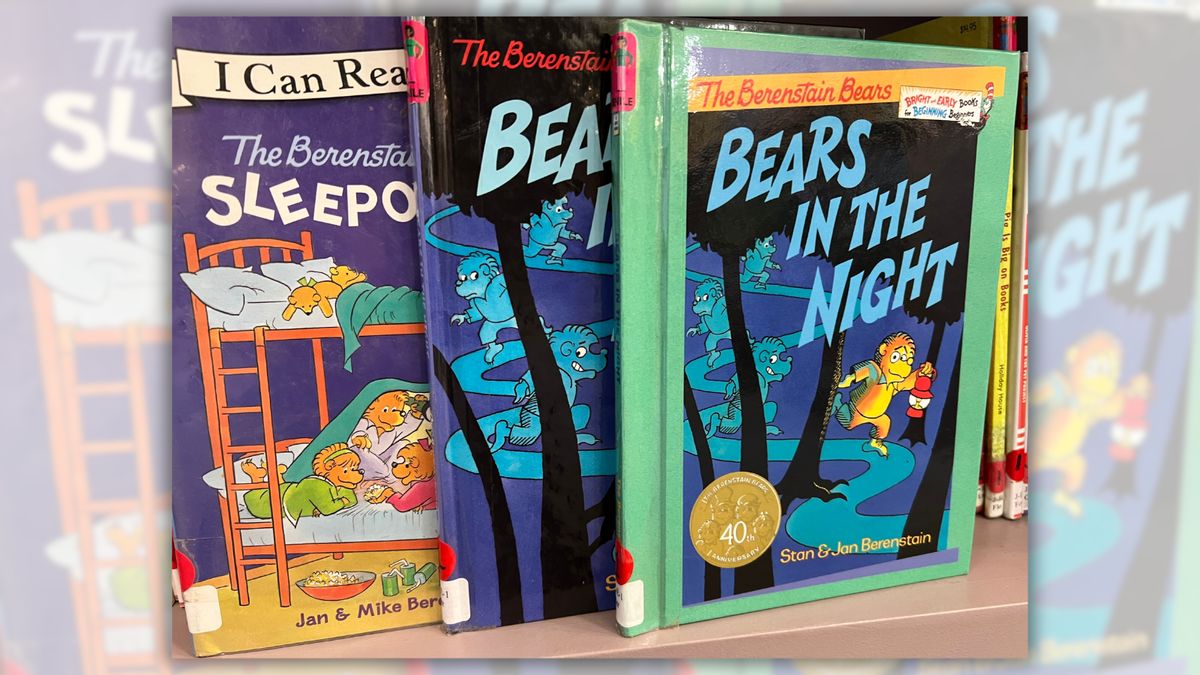
For years, people have argued online about the title of a long-running series of children's books in what could be classified as the most popular example of the Mandela Effect.
The Mandela Effect is essentially a "collective misremembering" of something. Snopes' David Emery researched the history of the phenomena in 2016, writing:
The term "Mandela Effect" was coined by self-described "paranormal consultant" Fiona Broome, who has written on her web site that she first became aware of the phenomenon after discovering that she shared a particular false memory — that South African human rights activist and president Nelson Mandela died in prison during the 1980s (he actually died in 2013) — with many other people.
The most pervasive example of these types of claims involves "The Berenstain Bears," a chidren's storybook series about an anthropomorphic family of bears that debuted in 1962, written and illustrated by husband and wife team Stan and Jan Berenstain.
However, passionate fans who subscribe to the Mandela Effect theory have insisted that they clearly remember the name being rendered "Berenstein" rather than "Berenstain."
Over the years, popular Reddit threads and YouTube videos emerged dedicated to the apparent mystery, peppered with other users chiming in that they recall the name the same way:
Despite the insistence of those who are convinced they grew up with the "Berensteins," the bears and their creators have always been rendered as "Berenstain" since the very beginning.
The first book featuring the titular bears was 1962's "The Big Honey Hunt," which featured the author's bylines rendered as "by Stanley and Janice Berenstain" on the front cover (later shortened to Stan and Jan).
The bears themselves are not referred to as "The Berenstain Bears" in the first book. That didn't occur until the second book, "The Bike Lesson," released in 1964, which featured the subtitle "Another Adventure of the Berenstain Bears."

(Internet Archive)
Further, it wasn't until 1973's "The Berenstain Bears' Nursery Tales" that the phrase would begin to appear in the title proper, though most later books in the series would follow a title format of "The Berenstain Bears" followed by the subject of the story ("Go to Camp" or "Get Stage Fright," for instance.)
Before the Mandela Effect was in the public lexicon, Stan Berenstain addressed confusion over his last name in the Berenstains' 2002 autobiography, "Down a Sunny Dirt Road." He recounted a story from his first day of the third grade, when his teacher "took exception" to how he pronounced his name.
He wrote:
She said there was no such name as Berenstain. The name, as everyone knew, was Bernstein—and that was what my name would be, at least in her room. When I raised my hand and protested that Berenstain had always been my name, she silenced me with an icy stare and said she didn't approve of people who changed their names.

(Internet Archive)
Mike Berenstain, son of Stan and Jan and current shepherd of his family's creation, said in a 2015 interview with National Post that his parents never intended to call them "The Berenstain Bears," and revealed the nomenclature was a creation of their publisher, Ted Geisel — better known as Dr. Seuss.
The younger Berenstain also referred to the anecdote in his parents' autobiography and said he had similar issues growing up. He stated:
It goes back pretty far, the issue. And when I was a kid growing up, nobody pronounced it correctly. I never even tried to get people to pronounce it correctly. They always said "Berensteen" or "Bernstein" or something. I never thought much about it at the time. I just figured that, you know, people pronounce things incorrectly, and that's just the way it is. It's not a new issue, it's just a common phenomenon that happens to people with oddly spelled names.
Mike Berenstain further added "family tradition" explained the odd spelling "was an attempt to phonetically spell" a "Slavic-coloured pronunciation" of the family name, stemming from his great-grandparents who "were Ukrainian Jews who emigrated [to the U.S.] in the late 19th century, fleeing the pogroms and persecution of Jews in Ukraine at that time."
Adaptations of "The Berenstain Bears" similarly have always featured "Berenstain" rather than "Berenstein," as well.
From 1979 to 1983, NBC aired a series of "Berenstain Bears" cartoon holiday specials. TV listings from the time show the title properly rendered as "Berenstain."
A Saturday-morning cartoon debuted on CBS in 1985, which also featured the correct spelling. Episodes from the cartoon featuring the title screen displaying "Berenstain" are available to watch on YouTube.
In addition, an advertisement from the Sept. 14, 1985, edition of "TV Guide" showcased CBS' "The Berenstain Bears" cartoon alongside other programs of the era, like "Hulk Hogan's Rock 'n' Wrestling" and "Dungeons & Dragons." The ad is viewable on Getty Images.
PBS and Treehouse Kids produced another "Berenstain Bears" cartoon series in 2002, which featured a title sequence and theme song by Lee Ann Womack that both clearly depict "Berenstain." The episodes are available to watch on "The Berenstain Bears" YouTube channel.
For further reading on instances of the Mandela Effect, read Snopes' explorations into whether the Evil Queen actually says "Magic mirror on the wall" in Disney's original "Snow White" movie and if Jif peanut butter was originally called Jiffy.