
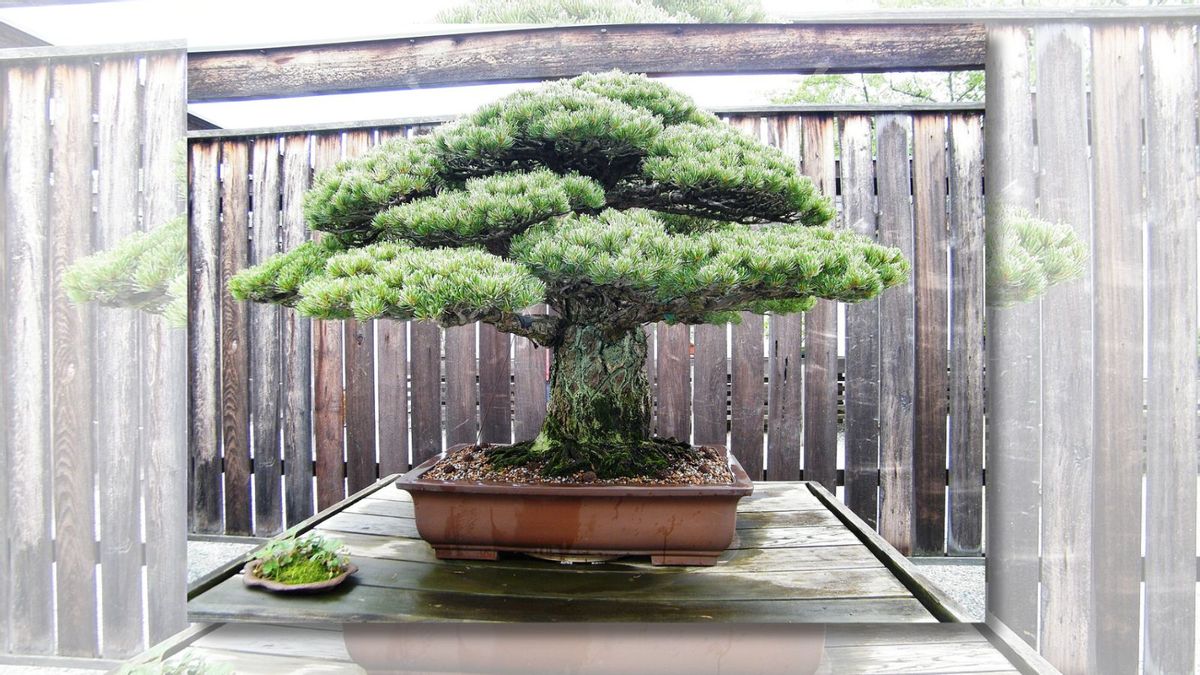
A photograph that has spread on Reddit and Facebook for years allegedly showed a bonsai tree that survived the United States' bombing of Hiroshima, Japan, in World War II. Captions paired with the image said the tree was around 400 years old.
Most claim examples shared the following image:

(Wikimedia Commons)
The above

According to the
The National Bonsai Foundation's official Instagram page noted that 2025 marked the tree's 400th anniversary.
The museum only learned about the bonsai surviving the Hiroshima bombings gradually, through conversations with younger generations of the Yamaki family,
Shigeru and Akira Yamaki, grandsons of t
On the morning of August 6, 1945 at 8:15 am the atomic bomb was dropped on Hiroshima.
Shigeru said that all the family members (his grandparents and their young son-Shigeru's father) were inside their home. The bomb exploded about three kilometers (less than two miles) from the family compound. The blast blew out all the glass windows in the home, and each member of the family was cut from the flying glass fragments. Miraculously, however, none of them suffered any permanent injury.
Masaru Yamaki became a very influential member of the Japanese bonsai community, living until age 89. His widow, Ritsu Yamaki, is now 91 and still living in the family home with Shigeru's father and mother.
The great old Japanese white pine and a large number of other bonsai were sitting on benches in the garden. Amazingly, none of these bonsai was harmed by the blast either, because the nursery was protected by a tall wall. A Japanese broadcasting company would later film the bonsai garden and report on how the wall had saved the bonsai.
When Shigeru returned to Japan, he obtained from his father a wealth of information, including photographs, documenting the illustrious bonsai career of Masaru Yamaki. On September 1 of 2003, Shigeru came back to Washington, D.C., bringing with him copies of these invaluable historical materials.
The Foundation describes the bonsai as a "hibakujumoku" — a Japanese phrase for trees that survived the atomic bomb. In 2020, Bonsai Museum staff painstakingly repotted the centuries-old tree, a process that required suspending it with straps and using a hydraulic lift cart. Both tree and container weighed 200 to 300 pounds.
A May 2025 NPR report described the tree as a symbol of forgiveness, reconciliation and peace between Japan and the U.S.
According to Smithsonian Magazine, the Yamaki grandsons shared the story of the bomb with the museum through a Japanese translator. The first atomic bomb was dropped over Hiroshima by the B-29 fighter jet "Enola Gay" and destroyed 90% of the city, killing 80,000 Japanese at first, followed by 100,000 more later.
This was not the first unusual tree-related photo Snopes investigated. For example, we previously looked into whether an image authentically showed a circular "experimental forestry" project in Japan.