
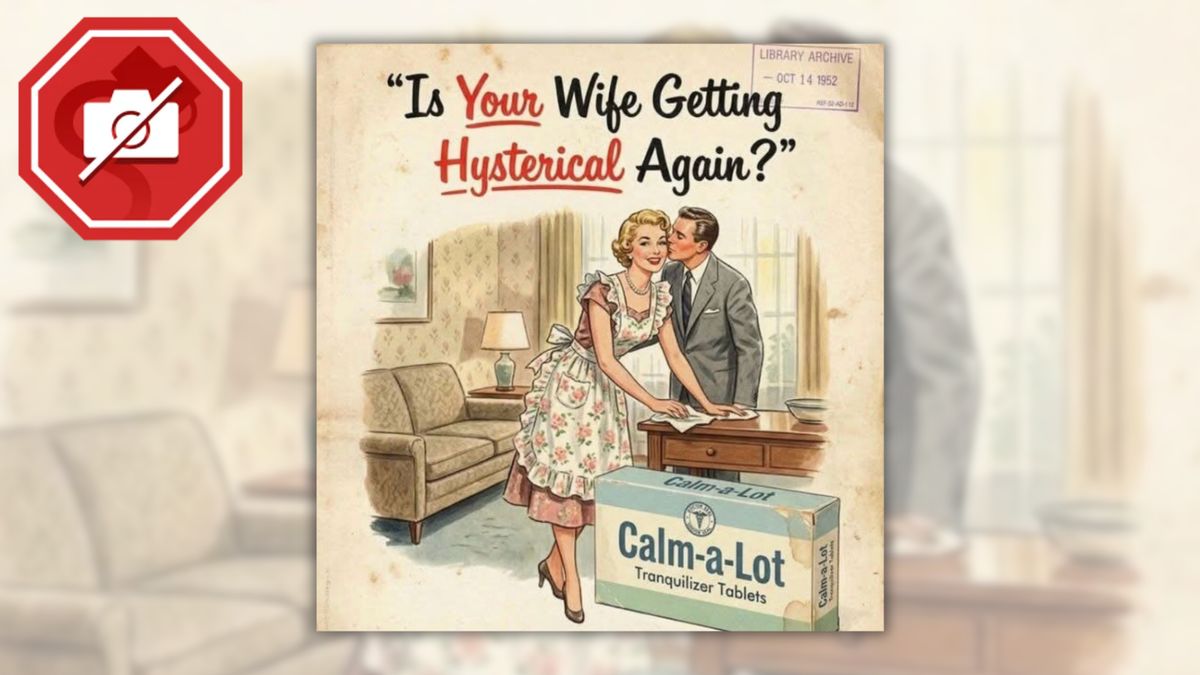
An image purportedly showing an authentic sexist advertisement from the 1950s spread online throughout early 2026.
The ad allegedly promoted tranquilizer tablets called Calm-a-Lot, featured copy that read, "Is Your Wife Getting Hysterical Again?" and depicted an illustration of a man kissing his wife on the cheek as she cleans.
One social media user who posted the image wrote: "The 50s were wild! That being said, I know a lot of husbands who would give this to their wives." At first glance, its style tracks with many sexist ads of the era.
The advertisement also featured an image of the alleged product and a testimonial attributed to a "Satisfied Husband" who lives in "Anywhere, U.S.A." that stated:
More doctors recommend Calm-a-Lot for the modern homemaker who becomes upset over little household worries such as a burnt roast, noisy children, or everyday tension. One tablet before social activities helps her remain calm, cheerful, and pleasant throughout the day. Thanks to Calm-a-Lot, my wife is herself again. Our home is happier than ever.
The image also featured a stamp in the top right corner that suggested it was added to an unnamed library's archive on Oct. 14, 1952, as well as a small bullet point in the bottom right corner that said the product was advertised in Life magazine.
The 50s were wild! That being said, I know a lot of husbands who would give this to their wives 🤣 pic.twitter.com/GlMazja1w1
— Dr. Clown, PhD (@DrClownPhD) February 10, 2026
Sexist, racist or generally bizarre ads were common for the era — Snopes has fact-checked a variety of authentic and fake vintage advertisements over the years — but in this case, the ad was fabricated.
It appeared to be digitally created to appear like an authentic, vintage ad. Snopes could not trace its origins beyond its spread on social media in early February 2026. We were able to determine that the product it advertised never existed and, therefore, we have rated the advertisement as fake.
Searching for information about a tranquilizer product called Calm-a-Lot on Google, Bing, DuckDuckGo and Yahoo, as well as newspaper archive newspapers.com, returned no relevant results.
The product described in the fake ad suggested it was an anxiolytic, or medication to treat anxiety and produce a calming effect. According to Drugs.com, an independent archive of current and discontinued medications, no such anxiolytic called Calm-a-Lot has ever existed in any form.
A reverse image search of the fake ad on Google revealed only recent social media posts circulating the image. Similar searches on TinEye and Yandex respectively returned no results at all or other advertisements, both authentic and fake, with a similar 1950s aesthetic.
The fake ad claimed Calm-a-Lot was advertised in Life magazine, but a search for the ad on the Google Books platform, which includes the Life magazine archive, turned up no results. A thorough review of Life magazine's Oct. 13, 1952, edition — an issue released the day before the purported date stamp that is seen on the fake image — featured no such ad.
In sum, while sexist advertisements such as the one shown in the in-question image were prevalent in the 1950s, this particular ad was a spoof.