

In early February 2025, people were sharing a
FYI: Sharing information that was just shared with me.
DO NOT BUY CHICKEN!!! Please tell your family and friends!
The president has paused all announcements and communications from the CDC, FDA, etc., until 2/1 and there is a hugggggheeeeeee recall on chicken and eggland eggs that is NOT being properly announced to the public. (Sound familiar... remember the COVID delayed Announcement?) Please, please, please, DO NOT BUY CHICKEN, or please do your own research before you do.
A friend works for CDC, and she confirmed this. Pass it on! Please
My contact said: The bird flu is happening and there are some confirmed cases in the United States.
Some versions of the message had slight variations, such as changing the communications pause date from "2/1" to "2/15," or saying that the information came from a "friend who works for the White House."
The message can be split into the following claims:
- The U.S. government has issued a large recall on chicken and Eggland's Best eggs.
- The recall is not being publiciz
ed due to an alleged mandate by U.S. President Donald Trump to freeze communications from public health organizations like the Food and Drug Administration and Centers for Disease Control and Prevention. - The purported recall is apparently related to an outbreak of bird flu.
While that outbreak was based in reality — it began in 2022 and has led to a small number of human cases of bird flu in 10 states — the message's warning against buying chicken and eggs was not.
The message had several indications of being misinformation. Firstly, it incorrectly stated that the FDA and CDC were responsible for the recall. In reality, the U.S. Department of Agriculture is in charge of recalls for chicken and egg products, while the FDA is in charge of recalls for shell eggs.
Furthermore, the author of the message was unknown. The text simply cited an unnamed "friend" who supposedly works at the CDC — again, an agency that does not handle food recalls — as its purported source, though, due to their anonymity, it was impossible to verify their existence or involvement.
The reference to a communication pause stemmed from a purported
A large food recall like the one described in the viral message would likely fall under that category — a spokesperson for the FDA said via email that the Department of Health and Human Services had "approved numerous communications related to critical health and safety needs and will continue to do so," but that it was "unaware of a recall pertaining to Eggland's Best eggs." The spokesperson also said that most food recalls in the U.S. are issued by the product's manufacturer, and that the FDA shares the release as a public service.
A spokesperson for the USDA, which is directly in charge of recalls on meat, poultry and certain egg products, said via email that the agency has continued releasing recall and public health alerts on its website for products under its jurisdiction, including meat (and catfish), poultry and all non-shelled egg products.
The USDA has issued three such alerts, including two recalls, since Trump took office on Jan. 20, 2025: warnings about a "foreign matter contamination" in certain sausage, an "extraneous material contamination" in a specific type of breaded chicken nuggets and potential misbranding of other chicken products. None of those issues involved bird flu.
In other words, the message's implication that the reported communication pause was suppressing information about a large recall on chicken was not based on fact.
The message implies the recall is due to the bird flu — and that people who consume chicken or eggs are at risk of infection.
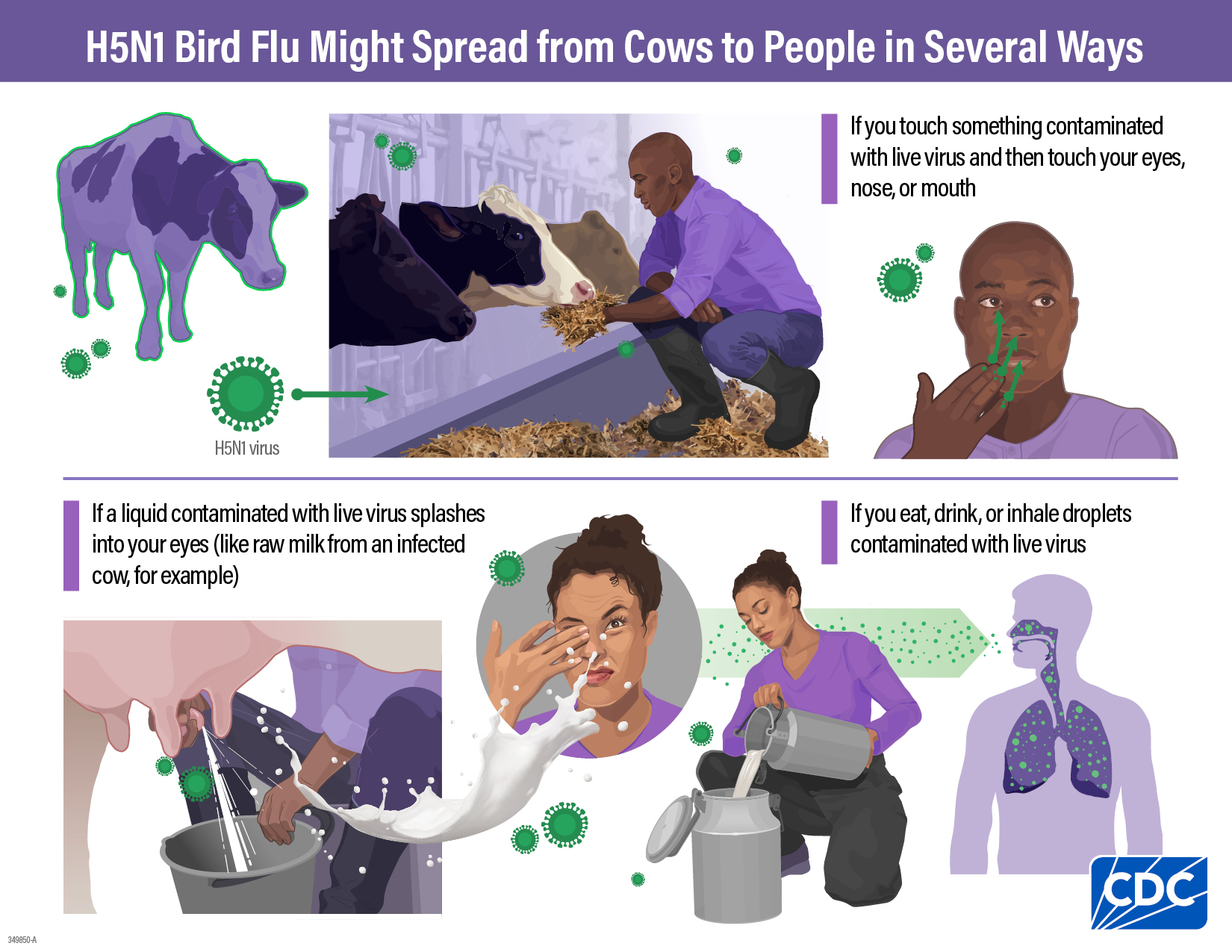
However, the risk of contracting bird flu from eating infected chicken or egg is almost zero. According to information from the CDC published during former President Joe Biden's administration, bird flu primarily spreads from chickens and cows when people have long, direct contact with infected animals or contaminated surfaces. The virus also can spread through the air via dust particles, or via liquids like saliva, mucus, feces and unpasteurized (raw) milk.
A 2010 report coauthored by the FDA and USDA
Also, cooking chicken properly (to an internal temperature of 165 degrees Fahrenheit, or 73.9 degrees Celsius, all the way through) inactivates the virus, rendering the chicken safe to eat. Washing your hands and cleaning your cutting boards and knives after handling raw chicken eliminates contamination risk.
For eggs, the 2010 report states that in-shell pasteurization will also inactivate the virus.
In other words, even if the recall were real, the risk of catching bird flu from eating contaminated chicken or eggs is negligible, especially if people practice good food safety.
The message did say one thing correctly — "The bird flu is happening and there are some confirmed cases in the United States."
Many stores and restaurants across the nation were reportedly facing egg shortages due to the outbreak, as of early February 2025.
According to data from the CDC and USDA, the flu has infected more than 153 million birds nationwide and numerous herds of cows in 16 states since the outbreak began in 2022. As of this writing, 67 people across 10 states have tested positive for bird flu, and one person has died. All but four cases involved people who work in agriculture, putting them in close proximity to potentially infected animals.
Crucially, no human infected with bird flu in the current outbreak has transmitted the disease to someone else. The CDC currently rates the risk of bird flu to the general population as "low."