
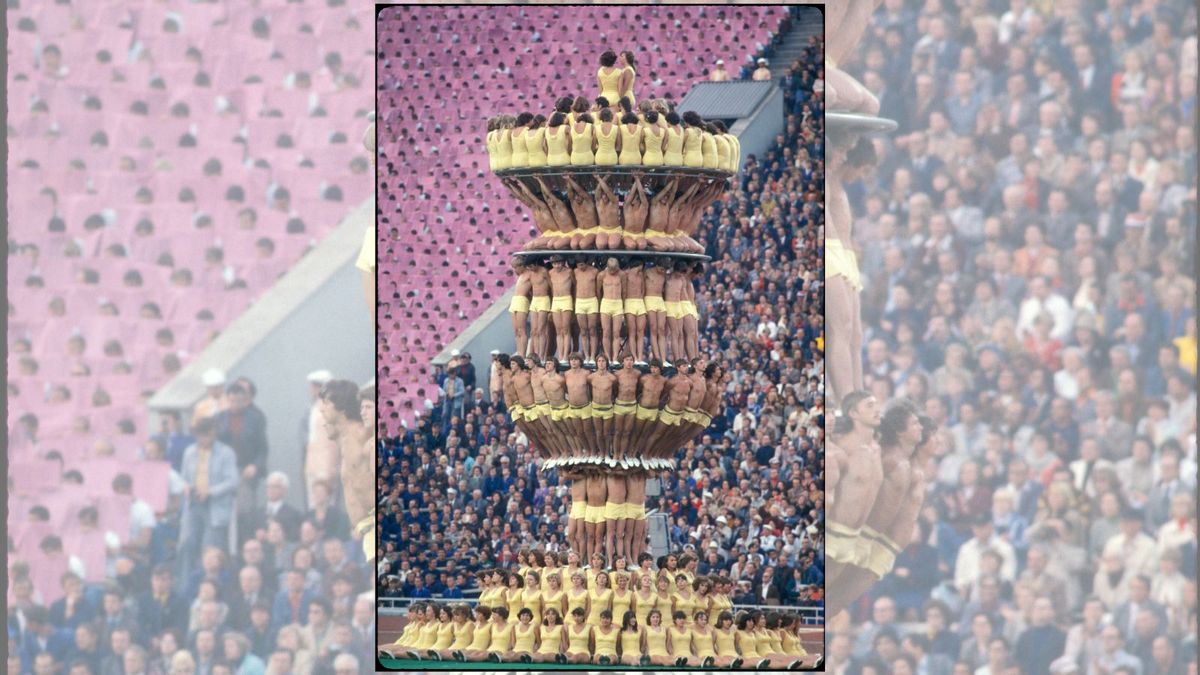
A viral photograph purportedly shows a real formation of humans replicating the Olympic torch during the 1980 Olympic Games in Moscow, in what was then the Soviet Union. The photograph shows an impressive feat in which dozens of acrobats stood on top of each other (relying on mounted platforms) to create a human tower in the likeness of the torch.
The photograph has been viral on Reddit over several years.
The above image is real and accurately depicts the opening ceremony celebration of the 1980 Olympic Games in Moscow.
We found a copy of the photograph on Getty Images with the caption: "19 JULY - 03 AUG 1980: Opening ceremony celebration shows a formation of people replicating the Olympic torch during the Olympic Games in Moscow, Soviet Union."

(Rich Clarkson/Getty Images)
Radio Free Europe/Radio Liberty published a black and white photograph of the rehearsals involved in the creating such towers, seen here.
Many clips of the Moscow opening ceremony are available on YouTube from unverified sources, but they correspond with authenticated media photographs of the event. Based on this old recording of the ceremony, there were numerous so-called "human towers" in the grand arena of the Lenin Stadium. Wide shots followed by a close up of one such tower can be seen after the 1:27:49 mark:
In 1980, the U.S. Olympic Committee had voted to boycott the games after the Soviet Union invaded Afghanistan. More than 60 other nations joined them in the boycott.