
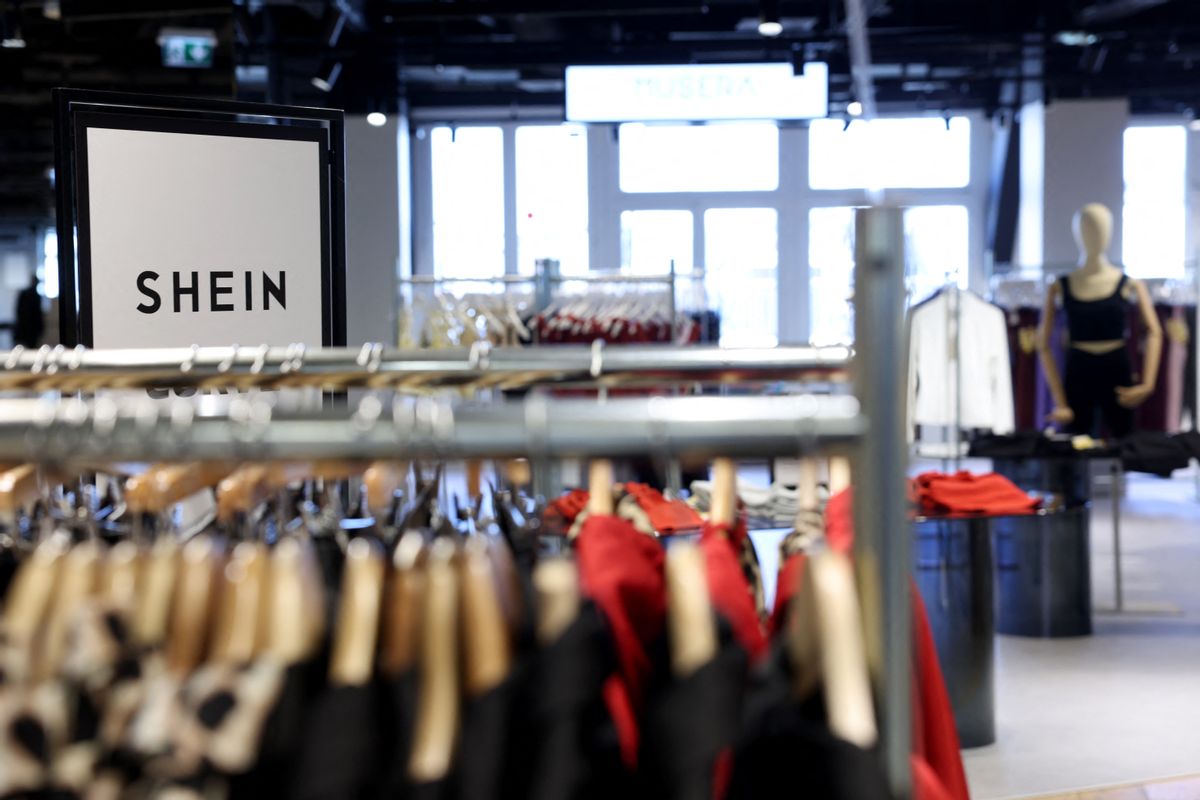
In April 2026, a claim (archived) circulated online that the fast fashion retailer Shein faced a lawsuit after laboratory testing found its clothes contained chemicals used to preserve dead bodies.
One Instagram user who wrote about the alleged lawsuit claimed "independent lab testing" revealed various chemicals including formaldehyde, a chemical that can be used as a preservative in mortuaries, in Shein's products. The user claimed testing found formaldehyde "in a dress made for a child at 3.5 times the legal limit."
Claims about Shein being the subject of a lawsuit also circulated on Facebook (archived), Threads (archived) and X (archived). Snopes readers searched our site to find out more about the claim.
According to a court filing by lawyers from the Texas attorney general's office, the state sued Shein over "deceptive trade practices" on Feb. 20, 2026. That lawsuit made several accusations against Shein, one of which was that the company allegedly made "false, misleading, and deceptive representations regarding the quality and safety" of its goods.
As part of that accusation, the attorney general's office referred to laboratory testing that found formaldehyde in some of Shein's products at levels that breached non-U.S. regulations. Given the above, we rate this claim true.
We contacted the Texas attorney general's office for comment on the lawsuit and await replies to our queries.
A spokesperson for Shein said in an emailed statement after the initial publication of this article:
At SHEIN, we take our responsibilities to our customers seriously and we are committed to providing a safe, secure, and reliable shopping experience. Like Attorney General Paxton, we are dedicated to protecting the health and personal information of Texans and all of our customers, and remain focused on maintaining our high standards for product safety and data security.
What the Texas lawsuit said
In its Feb. 20, 2026, complaint, lawyers for the Texas attorney general's office claimed six defendants collectively referred to as "Shein" violated the Texas Deceptive Trade Practices Act, which protects consumers in the state from false, deceptive or misleading business practices.
Lawyers for the attorney general's office argued that Shein failed to inform consumers that their data could be accessed by the Chinese Communist Party. Shein should have informed its consumers about this risk, the complaint said (Page 9), because "Chinese national intelligence, cybersecurity, and data laws authorize the CCP to compel Chinese companies like Shein to provide access to consumer data at any time."
The complaint also claimed (Page 10) Shein made "false, misleading, and deceptive representations regarding the quality and safety" of the goods it sold. The lawsuit referred to research conducted by Greenpeace and the Nordic Council that found potentially harmful chemicals like formaldehyde in products from Shein and other webshops.
According to the U.S. National Cancer Institute, formaldehyde can be used as a preservative in mortuaries and medical laboratories. It is also used in building materials like pressed-wood products and appears naturally. Formaldehyde in clothes can help keep garments wrinkle-free.
Formaldehyde exposure can cause myeloid leukemia and other cancers, according to the U.S. National Cancer Institute. Greenpeace's report said (Page 9) the chemical could also cause "irritation of the skin, eyes and respiratory system."
The 2025 report (Page 3) found that 32% of the products it tested from Shein contained "hazardous chemicals," including formaldehyde.
The research (Page 9) found 20 samples from the 56 products it tested contained formaldehyde. One sample, which came from a dress made for children (Page 26), contained 260 mg/kg of formaldehyde, 3.5 times the European Union's REACH regulated limit of 75 mg/kg.
A Shein spokesperson acknowledged the Greenpeace research in an emailed statement, writing:
As soon as we were made aware of the report's findings, the products in question were removed immediately from our platform globally, in line with SHEIN's standard protocols, and the items remain delisted while we conduct further testing. We acknowledge the concerns raised about our processes for handling similar listings to those under scrutiny, and we recognize that this case highlights areas where our controls can be further strengthened.
The U.S. does not have a federal equivalent to the European Union's REACH regulation for formaldehyde levels in consumer textiles (clothes). REACH establishes EU-wide standards for permissible levels of chemical substances in materials and products.
The U.S. Environmental Protection Agency determined in 2025 that formaldehyde presented "an unreasonable risk of injury to human health." The agency said it would begin a risk management process to address the risk to human health — like cancer or allergies, as noted above — that formaldehyde posed. It was unclear what shape this risk management process would take.
The Texas attorney general's office also referenced research conducted by Seoul's municipal government in 2024 in its lawsuit. That research, part of a series of reports on products from "overseas online platforms," found 24.7 mg/kg formaldehyde in one children's bag, which exceeded South Korea's 20mg/kg or less standard limit but not REACH regulation limits.
Because Shein often changes its stock, it was unlikely it still sold any of the products that Greenpeace or Seoul's municipal government found contained above-regulation levels of formaldehyde at the time of this writing.
At the time of this writing, lawyers for Shein sought to dismiss the Texas lawsuit, arguing that the state's courts had no jurisdiction over the six companies mentioned in the suit.
The state sought, among other relief, civil penalties of up to $10,000 per breach of its Deceptive Trade Practices Act to be paid by Shein and for a judge to order the company to disclose when its products contained harmful substances like chemicals or heavy metals.
The case remained ongoing at the time of this writing.