
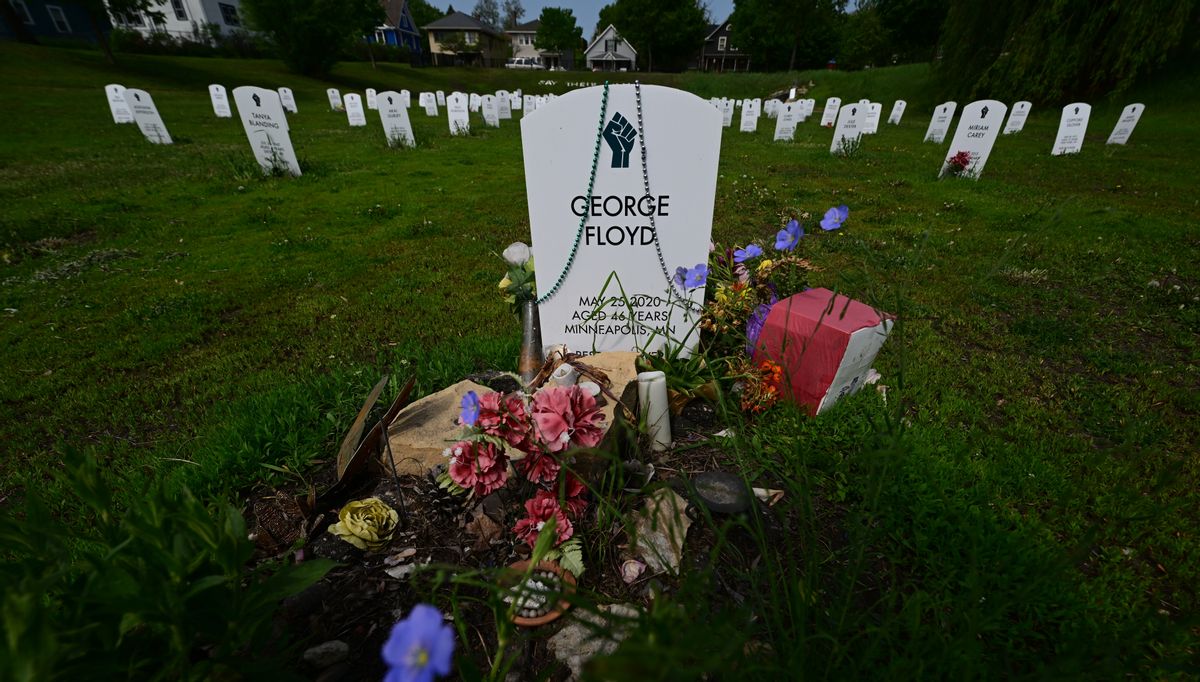
In 2021, the Hennepin County District Court found Derek Chauvin, an officer of the Minneapolis Police Department, guilty of murdering George Floyd, an unarmed Black man, on May 25, 2020, in an excessive use of force. According to the opinions of some Americans who defended Chauvin's actions, however, the police officer played no role in Floyd's death. They claim instead that Floyd died of a drug overdose.
Over the years, people like U.S. Rep. Marjorie Taylor Greene and conservative news host Tucker Carlson have shared the claim. For instance, on May 14, 2025, Greene posted to X calling for Chauvin to be pardoned and released from prison because Floyd's true cause of death was an overdose.
Floyd's toxicology report was not clean — he did have levels of fentanyl, methamphetamine and THC in his blood at the time of his death. However, two separate autopsies found that Floyd did not die of a drug overdose.
On June 6, 2020, Scientific American published an opinion article by 12 doctors, titled, "George Floyd's Autopsy and the Structural Gaslighting of America." The authors argued that Black people killed by police will have their entire life, character and body, examined and scrutinized to justify the exoneration of the police officers involved in their deaths. We referenced the article in our 2020 coverage of Floyd's criminal history. In our coverage, we also examined the details of Floyd's autopsies. We will do so again here.
Floyd underwent two different autopsies after his death. The Hennepin County Medical Examiner's Office released its autopsy on June 3, 2020. It found that Floyd died of "cardiopulmonary arrest complicating law enforcement subdual, restraint, and neck compression." In more standard English, he died of heart and lung failure caused by the way police restrained and subdued him.
According to CNN, Andrew Baker, the Hennepin County medical examiner who performed the autopsy on Floyd, said in testimony during Chauvin's trial that Floyd's heart disease and drug use were contributing factors — but not the main cause of his death.
"For example, you know, Mr. Floyd's use of fentanyl did not cause the subdual or neck restraint. His heart disease did not cause the subdual or the neck restraint," he testified.
Floyd's family asked experts to conduct an independent autopsy around the same time. While the full report is not available publicly, the summary is. It said he died from "asphyxiation from sustained pressure."
The words might be different, but the causes of death are similar — the functioning of the heart and lungs is quite interlinked. If one of the two organs stops, it's not long until the other does.
Two, independent autopsies confirm Floyd did not die of a drug overdose. Several experts who spoke to The Associated Press about the claim agreed, noting that Floyd did not show the typical signs of an overdose, and the toxicology reports were not consistent with an overdose.
We therefore rate this claim as false.