
On March 8, 2025, U.S. Secretary of Agriculture Brooke Rollins said on X that the U.S. Department of Agriculture had canceled a $600,000 grant for a study on "menstrual cycles in transgender men."

(X user @SecRollins)
Rollins shared a link to a March 6 news article that said the American Principles Project, a conservative political advocacy group, discovered the grant and included it in its "Funding Insanity: Federal Spending on Gender Ideology under Biden-Harris" database.
Social media users on Facebook, X (archived), Threads (archived) and Reddit (archived) spread the news of the canceled grant. Snopes readers also messaged us asking about the authenticity of this claim.
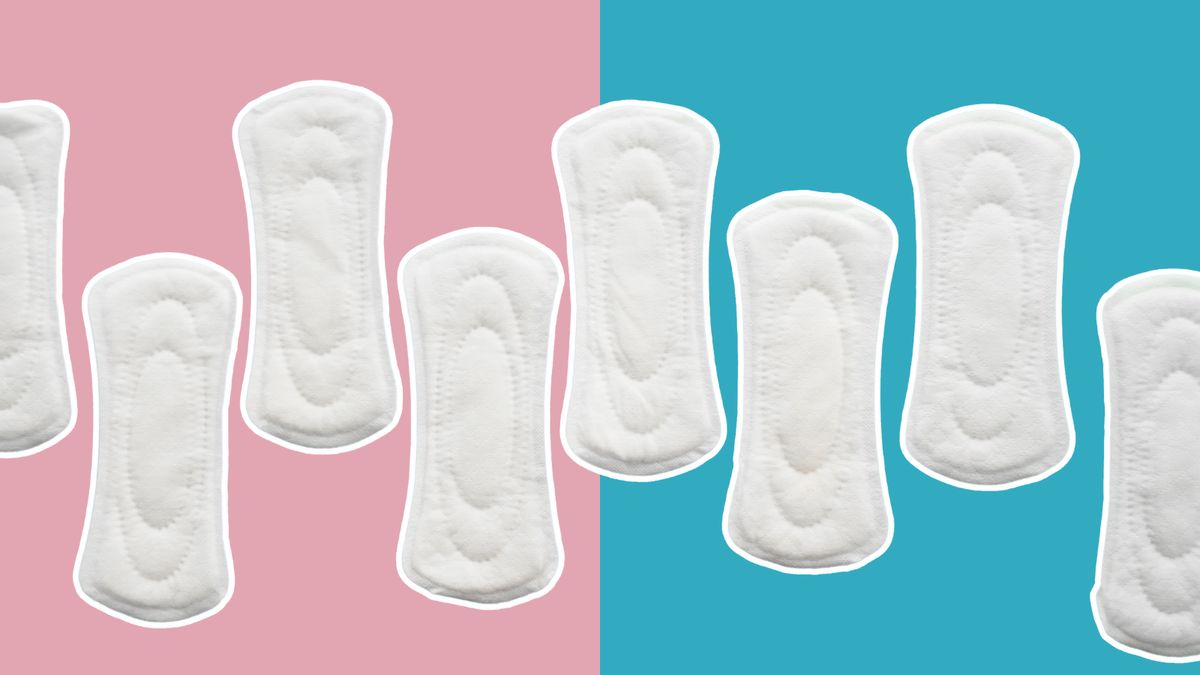
However, while the USDA did issue a $600,000 grant to Southern University and A&M College and, according to Rollins, since canceled it, the university said on March 9 that the grant did not fund research on menstrual cycles in transgender men but rather research into disposable feminine hygiene products, also known as period products. This is backed up by the project proposal originally submitted to the USDA. Therefore, we rate this claim false.
We have reached out to the National Institute of Food and Agriculture, which provided the grant, to confirm its status and await a reply.
The word "transgender" appeared once in the Southern University research proposal. The full sentence read: "It is also important to recognize that transgender men and people with masculine gender identities, intersex and non-binary persons may also menstruate." This sentence also appeared in the grant description on usaspending.gov, an online database of federal grants.
In its "Goals and Objectives" section, the project proposal did not mention transgender men but rather outlined six key goals:
To produce (from fiber to fabric) three alternative natural fibers - regenerative cotton fiber, regenerative wool fiber and industrial hemp fiber (Cannabis sativa) - sourced from local farmers or grown and/or raised on site.
To develop prototypes and patents for sustainable, reusable and disposable feminine hygiene sanitary pads, liners and undergarments using alternative natural fibers.
To evaluate the usefulness, sustainability, toxicity, and preference for products made from each of the alternative natural fibers in comparison to the standard synthetic product.
To educate young women and adolescent girls about menstrual hygiene management through an extension outreach program.
To enhance instruction for students enrolled in Family and Consumer Sciences, Animal Science and Plant and Soil Science programs.
To provide a local fiber processing center for local fiber growers in Louisiana.
In response to Rollins' X post, Southern University said in a March 9 statement: "This grant, which was reviewed by researchers from throughout the country, is not a study on or including research on menstrual cycles."
Rather, the university said, the study aimed to "develop sustainable, reusable, and disposable feminine hygiene products" from alternative natural fibers.
The USDA grant came from the 1890 Institution Teaching, Research and Extension Capacity Building Grants Program. The grant started in April 2024, according to Southern University and was supposed to run until 2027. The grants program aimed to "increase and strengthen food and agriculture sciences" at 1890 land-grant institutions, also known as historically Black universities.