
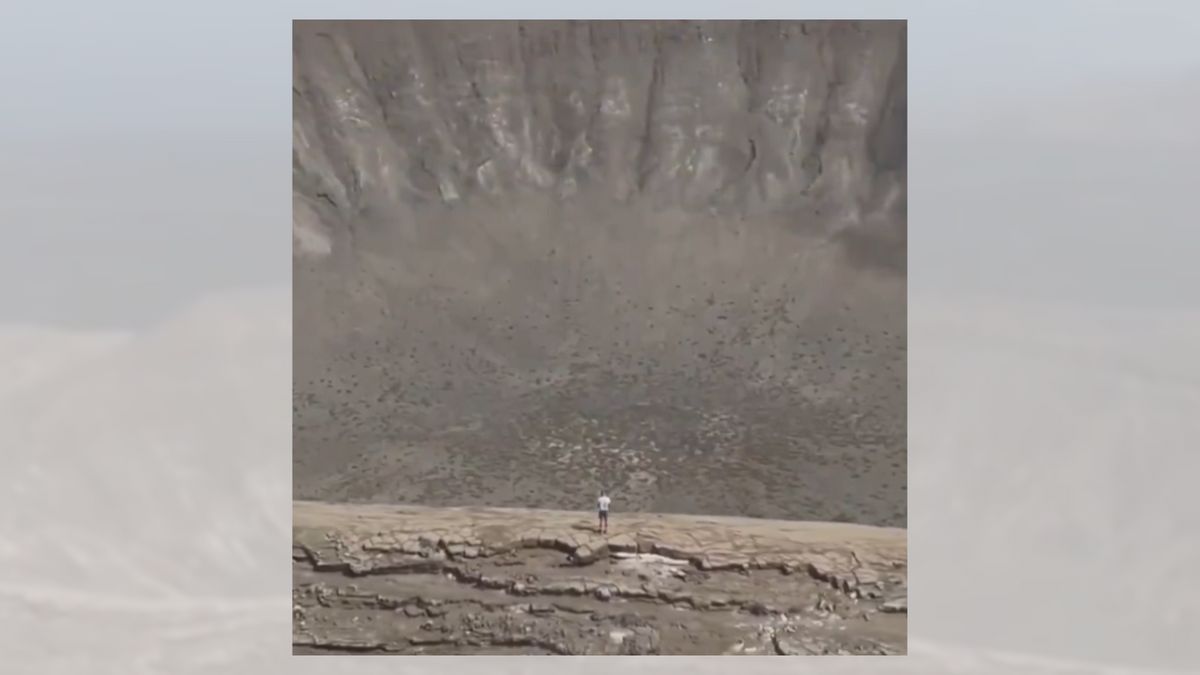
In September 2025, an X post (archived) viewed over 1 million times claimed the world's biggest meteorite impact crater was in Mexico and included a video of the purported site. The video and claim were identical to those shared in an Instagram post (archived) the month prior, which was liked over 21,000 times. The video and claim spread to a number of other social media sites in a series of posts with a handful of likes each.
Some social media posts, such as one on LinkedIn (archived) and Facebook (archived), identified the Mexican crater supposedly in the video as Chicxulub Crater.
The claim that the world's biggest impact crater is in Mexico was false. The video does not show the world's biggest impact crater or even a crater in Mexico; it's a video of a volcanic crater, commonly called a caldera.
The world's largest and oldest known impact site is the Vredefort Crater, the visible part of which is called the Vredefort Dome, in South Africa, according to NASA and UNESCO. Scientists estimate the crater was originally between 180 and 300 kilometers (112 to 186 miles) wide, but figuring out its exact width is difficult because most of the crater has eroded away over the 2 billion years since its formation.
Since most of the largest impact craters are incredibly old, erosion is a common problem that makes them less visible than many of the newer, much smaller craters. This is also the case for the crater in Mexico some posts refer to, the Chicxulub Crater, which according to the
The center of the Chicxulub Crater, believed to be responsible for the extinction of the dinosaurs, is under water, just off the coast of the Yucatan peninsula, but its rim extends into land. From the surface, the crater's rim is invisible due to erosion and a layer of limestone rock over the top of it, according to a website by researcher Emiliano Monroy-Ríos and UNESCO. The only surface evidence of the crater's rim is the so-called ring of cenotes — sink holes filled with water — th
So what is the impressive crater in the popular video? It's Caldera Blanca, a volcanic crater, commonly called a caldera, in Spain's Canary Islands.
The oldest version of the video online that Snopes could fine was an Aug. 23, 2025, Instagram post (archived) from the account leandrosoares.tr. The same Instagram account posted another video (archived) the following day of a man wearing the same white T-shirt, black baseball cap and dark shorts as the man seen in the first video running along the rim of the same crater.
The version of the video posted by leandrosoares.tr, which was posted a couple of days before the incorrect Instagram post with 21,000 likes, was longer than the versions claiming it was of an impact crater. The Instagram posts from leandrosoares.tr correctly identified the crater as Caldera Blanca.
The visuals in the video match with those of Caldera Blanca. In the video, the brown crater is surrounded by blackish land with another, smaller brown crater nearby, and what appears to be the ocean in the background. That matches with Caldera Blanca's appearance on Google Maps, as well as photos published by Canary Islands Tourism.
Caldera Blanca, located in volcanic badlands near the coast of the island of Lanzarote, was created by a pair of volcanic eruptions in 1730 and 1736, according to Canary Islands Tourism. It's a popular location for hikers visiting the island.