
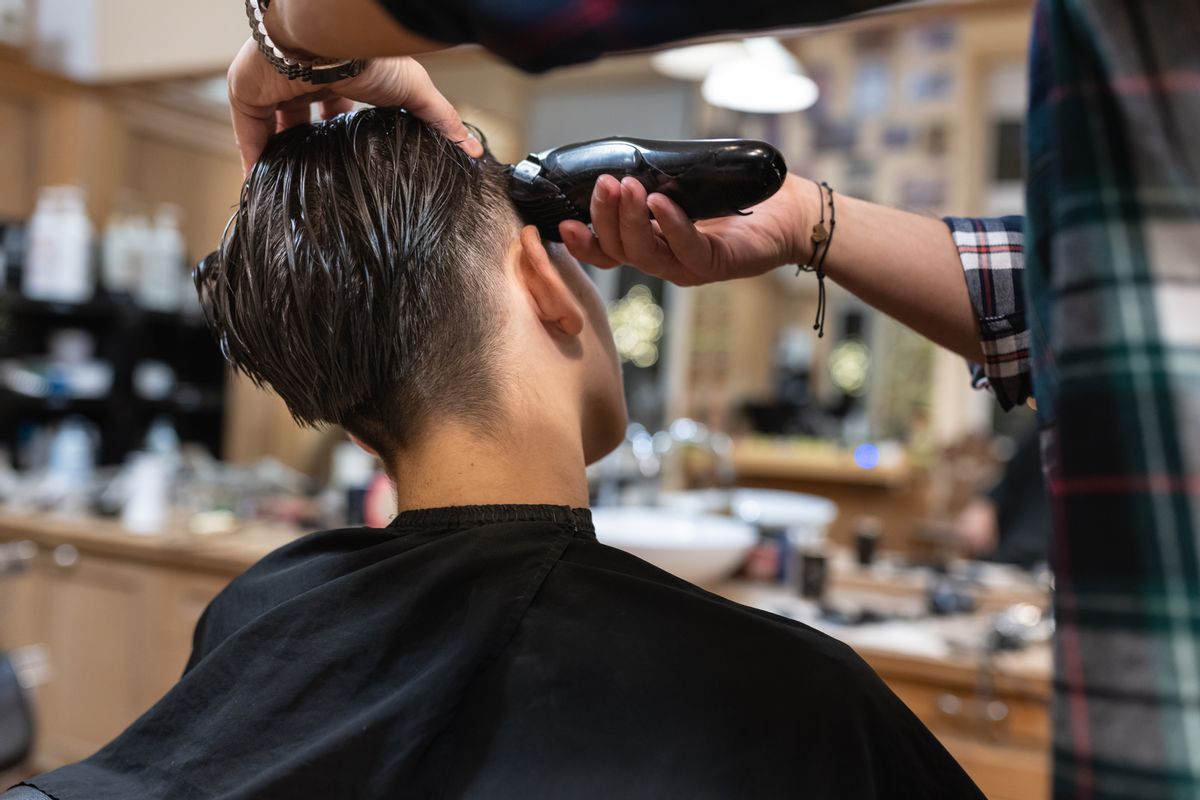
In July 2025, a claim circulated online that legislation proposed by Republicans could ban hairdressers from giving gender nonconforming haircuts to youth clientele.
The rumor spread on X and Bluesky; one July 17 X post had more than 3 million views and 14,000 likes as of this writing.
Many of these posts either shared a screenshot of the headline or a link to an LGBTQ+ Nation story from March titled "GOP bill could ban hairdressers from giving gender-nonconforming haircuts to minors." The claims circulating online largely did not state whether the Republicans were from a state legislature or the federal government, but the LGBTQ+ Nation article was focused on legislation proposed in Arkansas.
Arkansas Republican state Rep. Mary Bentley did, in fact, introduce legislation in March that would have permitted lawsuits against anyone supporting a child's social transition to a different gender from their assigned sex at birth, including through changes to a hairstyle.
Thus, the legislation would not have technically banned anything, as the LGBTQ+ Nation article noted in the rest of the story, but it did seek to prevent hairdressers from giving children gender-nonconforming haircuts. However, by July, this claim was outdated, given that Bentley withdrew her bill from consideration in April.
'Vulnerable Youth Protection Act'
If the legislation — known as House Bill 1668 or the "Vulnerable Youth Protection Act" — had passed, a child or the child's parents could bring a lawsuit against anyone who "knowingly causes or contributes to the social transitioning" of the child in question (emphasis ours):
16-132-103. Civil action — Liability.
(a)(1) Any person who knowingly causes or contributes to the social transitioning of a minor or the castration, sterilization, or mutilation of a minor shall be strictly and jointly and severally liable to the minor and the minor's parents for any personal injuries or harm resulting from the social transitioning or the castration, sterilization, or mutilation of the minor.
The bill defined "social transitioning" to include gender-nonconforming hairstyles, thus opening the door to suing hairstylists for knowingly giving a child a haircut that doesn't match traditional presentation for their sex assigned at birth, as seen below.
(3) "Social transitioning" means any act by which a minor adopts or espouses a gender identity that differs from the minor's biological sex as determined by the sex organs, chromosomes, and endogenous profiles of the minor, including without limitation changes in clothing, pronouns, hairstyle, and name.
If a parent or child's lawsuit over a gender-nonconforming hairstyle succeeded, they would have been entitled under this legislation to at least $10,000 on top of any "compensatory damages" and fees accrued through the legal process, such as payment for attorneys.
16-132-104. Recovery. A person who prevails in a suit brought under this chapter shall be entitled to recover: (1) Nominal damages; (2) Compensatory damages; (3) Statutory damages in an amount of not less than ten thousand dollars ($10,000) from each defendant, in addition to any compensatory damages that may be awarded; (4) Punitive damages in an amount of not less than ten million dollars ($10,000,000) from each defendant if irreversible sterilization or sexual dysfunction results, in addition to any compensatory damages that may be awarded; and (5) Court costs and reasonable attorney's fees
According to the act's bill tracker on the Arkansas Legislature website, Bentley withdrew the policy from consideration on April 1, 2025. Bentley did not immediately respond to an inquiry regarding why she withdrew the act and whether she planned to reintroduce the act in future legislative sessions.

(Arkansas State Legislature/Snopes Illustration)