
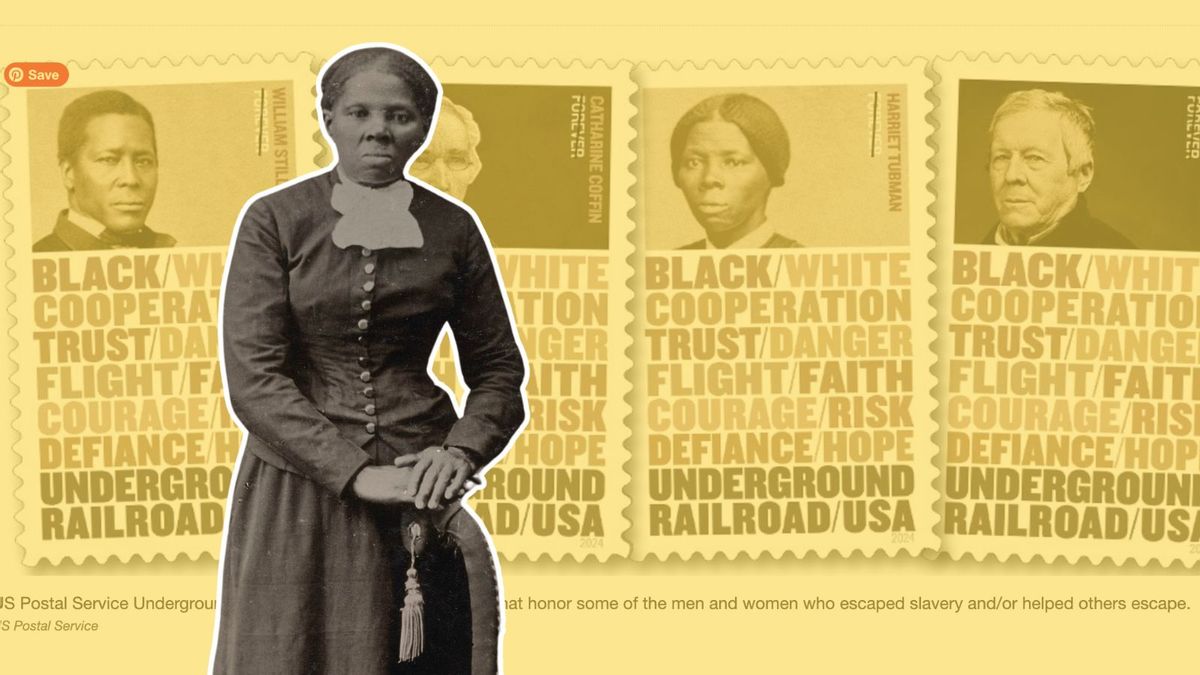
In April 2025, numerous Snopes readers wrote in to ask about purported changes U.S. President Donald Trump's administration made to a National Park Service (NPS) webpage about the Underground Railroad. Readers and social media users pointed out that many references to noted abolitionist and former slave Harriet Tubman no longer appeared on the page. Readers also asked if this change was due to one of Trump's executive orders calling for an end to Diversity, Equity and Inclusion (DEI) initiatives across the federal government.
One X post stated: "Trump took Harriet Tubman OFF the National Parks Underground Railroad memorial and instead centered it around White people."
The above claim about the alleged removal of information about Tubman was true, although the removed content was back online by the time of this writing. Based on archived webpages belonging to the NPS, we found the exact changes the website's administrators made, which included rewriting significant sections of the text and removing a photograph and quote of Tubman from the page. As a result, we've rated the claim true.
The changes were not permanent, however. On April 7, 2025, NPS restored the page to its earlier form, including the original photograph, quote and introductory text. Other pages about Tubman on the NPS site appeared to have gone unchanged.
In response to our questions about the changes, an NPS spokesperson said (emphasis ours):
The National Park Service recognizes Harriet Tubman as the Underground Railroad's best known conductor and we celebrate her as a deeply spiritual woman who lived her ideals and dedicated her life to freedom. She repeatedly risked her life to guide 70 enslaved people north to new lives of freedom. We have dozens of pages about Harriet Tubman celebrating and memorializing her impressive role in American history. There are two national historical parks named after her:
Harriet Tubman National Historical Park (U.S. National Park Service)
Harriet Tubman Underground Railroad National Historical Park (U.S. National Park Service).The idea that a couple web edits somehow invalidate the National Park Service's commitment to telling complex and challenging historical narratives is completely false and belies the extensive websites, social media posts, and programs we offer about Harriet Tubman specifically and Black History as a whole. The focus on one webpage is dismissive of the hard work that National Park employees put in every day to preserve local history, safeguard special places and sharing stories of American experiences. We take the role we've been entrusted with seriously and can point to many examples of how we tell nuanced and difficult stories about American history.
The NPS did not respond to our questions about whether this action was tied to any of Trump's executive orders. Shortly after the page was restored, the NPS sent us an additional statement:
Changes to the Underground Railroad page on the National Park Service's website were made without approval from NPS leadership nor Department leadership. The webpage was immediately restored to its original content.
The NPS made the changes in question on a webpage about the Underground Railroad, a network that helped enslaved Black people escape bondage. The title was, "What is the Underground Railroad?" The original page had a full picture of Tubman at the top, as well as a 1896 quote attributed to her, reading, "I was the conductor of the Underground Railroad for eight years, and I can say what most conductors can't say — I never ran my train off the track and I never lost a passenger."

(Screenshot via archive.org)
The original page (archived) remained in place until mid-February 2025. An edited (archived) version that replaced it on Feb. 20, had the same title but a number of significant changes.
For example, instead of the photograph of Tubman alone, the page now featured a collection of images of stamps showing prominent abolitionists both Black and white. One of the stamps featured an image of Tubman. All the stamps contained text reading, "Black/White cooperation."

(Screenshot via archive.org)
Additionally, the website's administrators changed the first paragraph of the page to a completely different one. The original page described the Underground Railroad thus:
The Underground Railroad—the resistance to enslavement through escape and flight, through the end of the Civil War—refers to the efforts of enslaved African Americans to gain their freedom by escaping bondage. Wherever slavery existed, there were efforts to escape. At first to maroon communities in remote or rugged terrain on the edge of settled areas and eventually across state and international borders. These acts of self-emancipation labeled slaves as "fugitives," "escapees," or "runaways," but in retrospect "freedom seeker" is a more accurate description. Many freedom seekers began their journey unaided and many completed their self-emancipation without assistance, but each subsequent decade in which slavery was legal in the United States, there was an increase in active efforts to assist escape.
By contrast, the first two paragraphs of the edited page stated:
The Underground Railroad—flourished from the end of the 18th century to the end of the Civil War, was one of the most significant expressions of the American civil rights movement during its evolution over more than three centuries.
The Underground Railroad bridged the divides of race, religion, sectional differences, and nationality; spanned State lines and international borders; and joined the American ideals of liberty and freedom expressed in the Declaration of Independence and the Constitution to the extraordinary actions of ordinary men and women working in common purpose to free a people.
A side-by-side comparison of the original page and the edited version, showing all the key changes, is available through the Internet Archive's Wayback Machine.
As of the afternoon of April 7, Tubman's photo and quote were back on the webpage, along with the original introductory text.
A number of pages about Tubman on the NPS website showed no evidence of recent changes as of this writing, including a page about Tubman meeting white abolitionist John Brown. Although a notice at the bottom of that page gives a "last updated" date in March 2025, an archived version from early February 2025 shows that the text of the page remained unchanged.
Around a month after the edits to the Underground Railroad page went live, Trump issued an executive order, "Restoring Truth and Sanity to American History," which stated (emphasis ours):
Over the past decade, Americans have witnessed a concerted and widespread effort to rewrite our Nation's history, replacing objective facts with a distorted narrative driven by ideology rather than truth. This revisionist movement seeks to undermine the remarkable achievements of the United States by casting its founding principles and historical milestones in a negative light. Under this historical revision, our Nation's unparalleled legacy of advancing liberty, individual rights, and human happiness is reconstructed as inherently racist, sexist, oppressive, or otherwise irredeemably flawed. Rather than fostering unity and a deeper understanding of our shared past, the widespread effort to rewrite history deepens societal divides and fosters a sense of national shame, disregarding the progress America has made and the ideals that continue to inspire millions around the globe. ...
[The Secretary of the U.S. Department of Interior should] take action, as appropriate and consistent with applicable law, to ensure that all public monuments, memorials, statues, markers, or similar properties within the Department of the Interior's jurisdiction do not contain descriptions, depictions, or other content that inappropriately disparage Americans past or living (including persons living in colonial times), and instead focus on the greatness of the achievements and progress of the American people or, with respect to natural features, the beauty, abundance, and grandeur of the American landscape.
The NPS is a bureau of the Department of the Interior.
A Washington Post review of a number of NPS webpages found many further changes in language, images and descriptions of historic events. Some pages removed references to slavery, while others softened language about the historic struggle of Black people.