
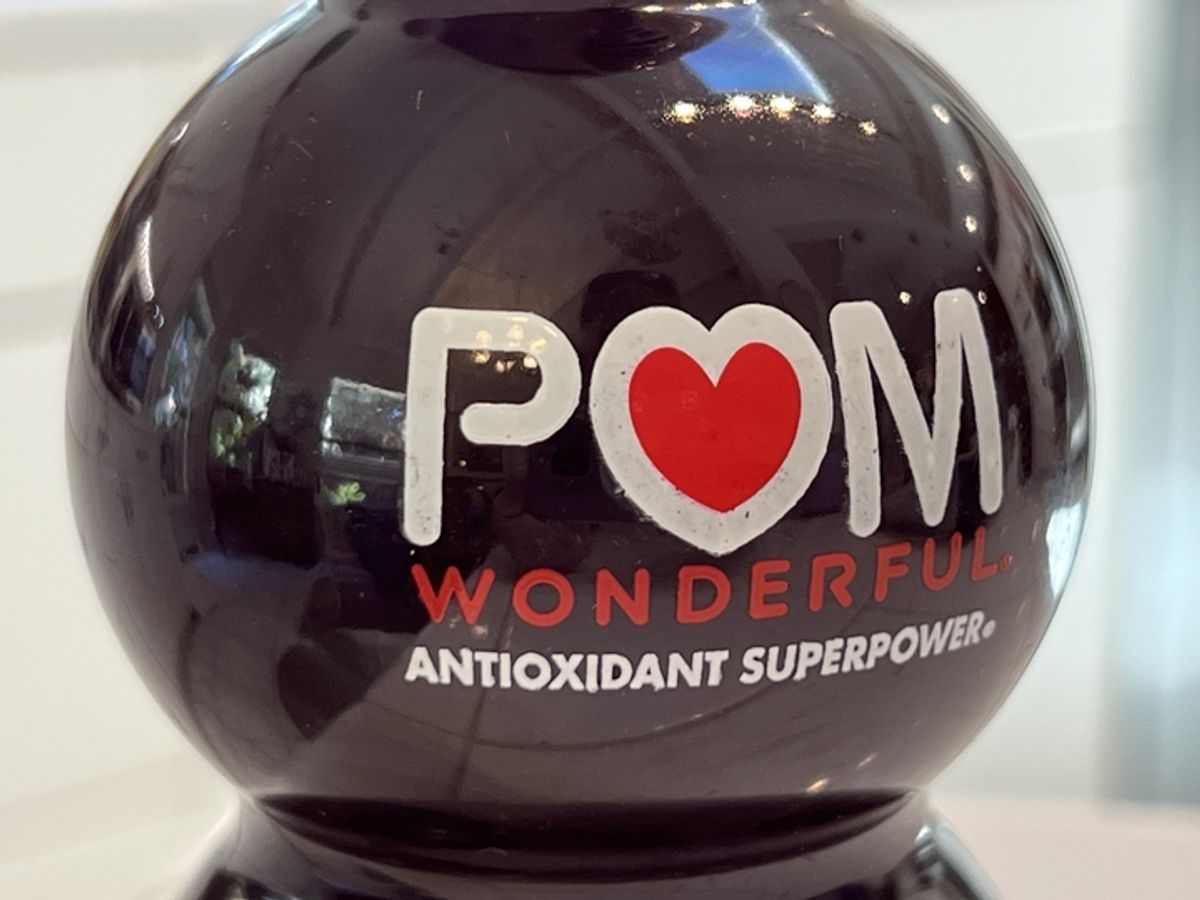
In spring 2026, a claim spread online that The Wonderful Co., which produces Pom Wonderful pomegranate juice, uses a pesticide called paraquat that over 60 countries have banned due to its ties to serious health risks, including Parkinson's disease and non-Hodgkins lymphoma.
The rumor (screenshot) circulated on Facebook (screenshot) and TikTok (screenshot). Social media users noted that Pom Wonderful previously made deceptive claims about the health benefits of its products. Meanwhile, Snopes readers searched the website for information about the rumor.


While posts appeared to recirculate an old report, a Snopes review of pesticide use reports in one California county found that The Wonderful Co. repeatedly sprayed a pesticide containing paraquat on pomegranates in one of its orchards in 2026.
Furthermore, paraquat is, in fact, banned in at least 74 countries, according to a peer-reviewed study from 2025. Research has tied the pesticide to Parkinson's disease, non-Hodgkins lymphoma, thyroid cancer and other health risks, although many of these risks are disputed and still under debate.
As such, we have rated the claim as true. In an emailed statement, a Pom Wonderful spokesperson said the company uses herbicides "solely for weed control and never directly on fruit or trees, and always in full compliance with label instructions."
"It is used sparingly, only at ground-level, and using protective guards to prevent the herbicide from touching the trees," the statement said. "As a part of our strict quality standards, we test our pomegranates to ensure compliance with all applicable government and food safety regulations. There are no health or safety concerns with consuming POM Wonderful products."
Following the publication of this story, The Wonderful Co. added that it has been "proactively reducing paraquat usage since 2019 … with a plan to phase out all usage by the end of 2026."
According to a 2019 review, the Environmental Protection Agency "has not found a clear link between paraquat exposure from labeled uses and adverse health outcomes such as Parkinson's disease and cancer." California's Department of Pesticide Regulation came to a similar conclusion regarding Parkinson's disease in a preliminary 2024 review, although the review found a "potential association" between paraquat exposure and thyroid cancer as well as birth defects.
Syngenta, the company that brought paraquat to market, says that with "good agricultural practices" there is "no risk to human safety with the use of paraquat." (Syngenta announced in March 2026 that it would cease paraquat production because of competition from generic producers.) Pom Wonderful also said it was not aware of "any scientific studies linking Parkinson's disease and the consumption of fresh produce grown in fields where paraquat is used."
However, there's no question that direct exposure to paraquat is highly toxic, and as such, it is heavily regulated in the United States. Still, California pesticide use records show that in total, more than 350,000 pounds of paraquat were applied statewide in 2023.
Origin of claim
Many of the posts circulating the claim online cited "investigations by the Environmental Working Group (EWG) and consumer advocacy groups." This appears to be a reference to a 2024 report from the Environmental Working Group, a nonprofit organic advocacy group. As we have previously reported, scientists and journalists have criticized the Environmental Working Group for flawed methodologies in its analyses and for overstating the health risks of pesticides.
The 2024 report found that The Wonderful Co. "sprayed more than 56,000 pounds of paraquat on fields in the Golden State used to produce pistachios, almonds and pomegranates, according to state and county pesticide records." According to the group's analysis, Wonderful was the state's second-largest user of paraquat in 2021 — only J.G. Boswell Co., a major crop grower, used more that year.
Environmental Working Group appeared to target Wonderful specifically because the company claims to use "bio-rational pest control that uses naturally occurring compounds rather than dangerous chemicals."
The group said it used statewide pesticide-use reporting data to identify which farms were granted permission to use paraquat, and then reached out to 19 county agriculture commissioners to request county-level data, which the group said it matched with statewide data.
Given that the report used data that is now outdated, we have not independently verified the Environmental Working Group's report.
"The Environmental Working Group is misleading consumers through its analysis of paraquat use, scaring consumers away from eating produce, and the numerous health benefits associated with these locally-grown products," a Wonderful Co. spokesperson said.
Following the publication of this article, the same spokesperson said that since 2019, the company has reduced paraquat use by more than 97%.
"We also don't believe we are one of the largest users of the herbicide in the state given this huge reduction," the spokesperson added.
California pesticide records
To determine whether Pom Wonderful was still using paraquat in 2026, we downloaded publicly available 2026 pesticide- use records for Kern County in California's Central Valley. (Wonderful has touted its connections to Kern County and the Environmental Working Group has called the county a "hot spot of paraquat use.")
The state of California also keeps a list of pesticide products registered in the state that use paraquat. Filtering for "Wonderful" and the names of the pesticide products on that list found that at least one orchard run by the Wonderful Company uses a pesticide containing paraquat.
That location — Wonderful Orchards in Dudley Ridge — had used about 553 gallons of Helmquat 3SL as of May 2026. The sole active ingredient in Helmquat 3SL is paraquat.