
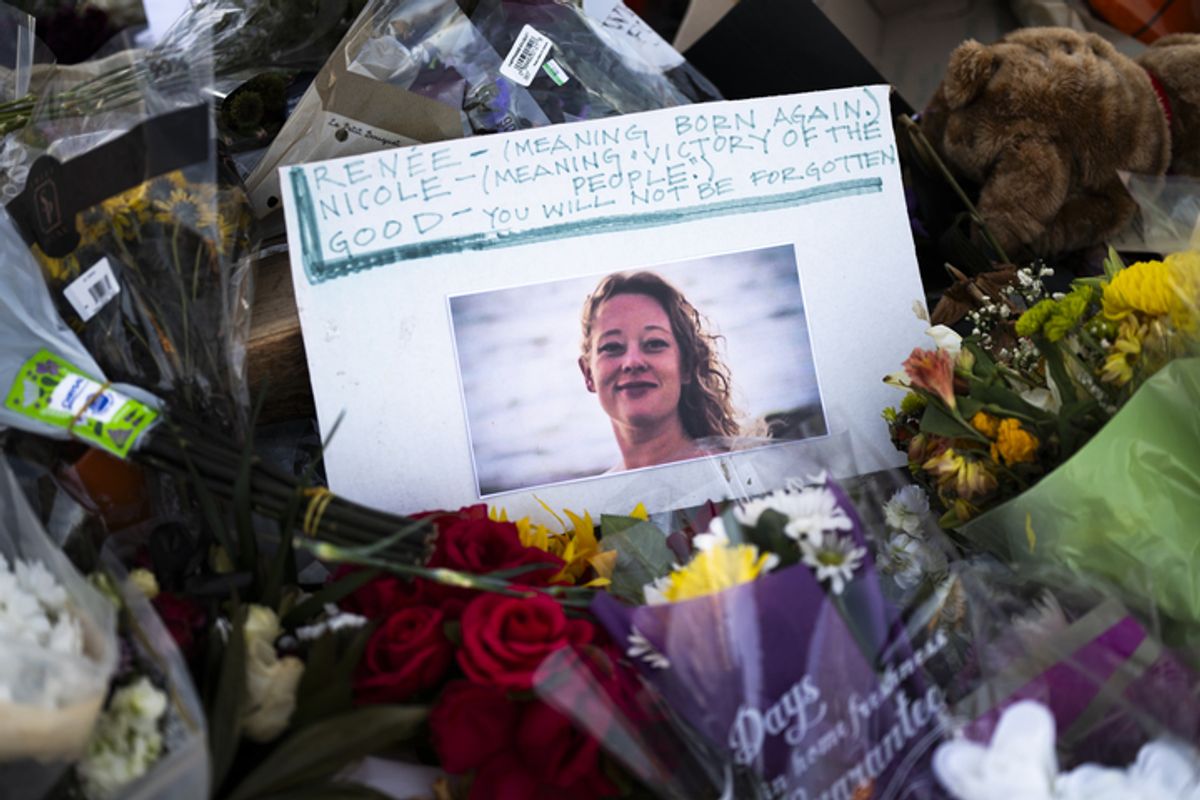
In mid-January 2026, a claim spread online that the United Nations had demanded an independent probe into the Jan. 7 fatal shooting of Renee Nicole Good by a U.S. Immigration and Customs Enforcement officer in Minneapolis.
The rumor circulated on Facebook (archived), Threads and Bluesky after the FBI shut out Minnesota law enforcement from the investigation into Good's death and federal prosecutors based in the state reportedly resigned after the Department of Justice pushed for a probe into Good's

Jeremy Laurence, a spokesperson for the Office of the United Nations High Commissioner for Human Rights, did call for an independent investigation into Good's death. However, Laurence was speaking only on behalf of the office, not the U.N. as a whole or its member nations.
The OHCHR, an expert body that provides recommendations to the United Nations,
No U.N. body with the authority to pass policy or settle legal disputes has taken any steps to demand an investigation into Good's killing. As such, we have rated this claim a mixture of truth and falsehood.
This claim may have originated from news headlines that conflated the United Nations with the U.N. human rights office. For example, the American magazine Barron's republished an article from France's AFP News titled, "UN Demands Independent Probe Into Woman's Killing By US Immigration Officer."
Later in the story, however, it clarified that the "UN rights office voiced deep concern at the killing of 37-year-old Renee Nicole Good," not the entire intergovernmental organization.
OHCHR spokesperson's comments
Laurence, the U.N. human rights office spokesperson, spoke about Good's death during a Jan. 13, 2026, news briefing on the United Nations' relief efforts in various areas of conflict, including Gaza, Sri Lanka, Iran and Ukraine.
During the question-and-answer section of the news conference, Laurence spoke about Good while answering a question from a reporter about "violence used by U.S. security forces against protesters" in U.S. cities "like Minneapolis." Here's the full exchange on the United Nations' newsroom website, starting at 48:02 (emphasis ours):
REPORTER 1: My question is about the violence used by U.S. security forces against protesters in some U.S. city like Minneapolis. Do you have any information about the number of detainees or [non-governmental organizations]? And do you have any information about the situation of the Venezuelan president who was kidnapped by the United States? Thank you.
LAURENCE: Thanks
[Reporter 1] . I'll work my way backwards, if you don't mind. On your second question, I don't have anything further to add, apart from what we've said in the past. With respect to your first question and the violence — and I guess you're referring more specifically to Minneapolis
— u nder international human rights law, the international use of lethal force is only permissible as a measure of last resort against an individual representing an imminent threat to life. We take note of the FBI investigation and insist on the
need for prompt , independent and transparent investigation into the killing of Ms. Good. We urge all authorities to take measures to de-escalate tensions and refrain from incitement to violence. […]
REPORTER 2: Following up on that, you say that the use of lethal force is only permissible as a measure of last resort — I guess, an individual representing an imminent threat to life. What is the assessment of the U.N. Human Rights Office about whether there was an imminent threat to life or not in this case?
LAURENCE: [Reporter 2], that wouldn't be really for us to make a judgment call on. What we have said quite categorically is there needs to be an independent and prompt investigation into this.
UN otherwise silent on Good's death
Several main bodies within the U.N. could hypothetically request an investigation into Good's death, though none have done so.
For example, the United Nations General Assembly is the main policy-making body of the organization, wherein each member nation has a vote. A search through the General Assembly's list of draft and final resolutions found no resolutions about Good's killing. The General Assembly's nonbinding resolutions are generally not enforceable.
The United Nations Security Council, considered the organization's most powerful body, oversees international peace and security. While the council does make binding decisions that member states are, in theory, required to follow, it has also not released any resolutions related to Good's death, according to the U.N.'s list of Security Council resolutions. The United States, as a permanent member of the Security Council, has the power to veto any such resolutions.
Finally, no nation has brought a case against the United States on Good's death in the U.N.'s International Court of Justice, which settles legal disputes between states.