
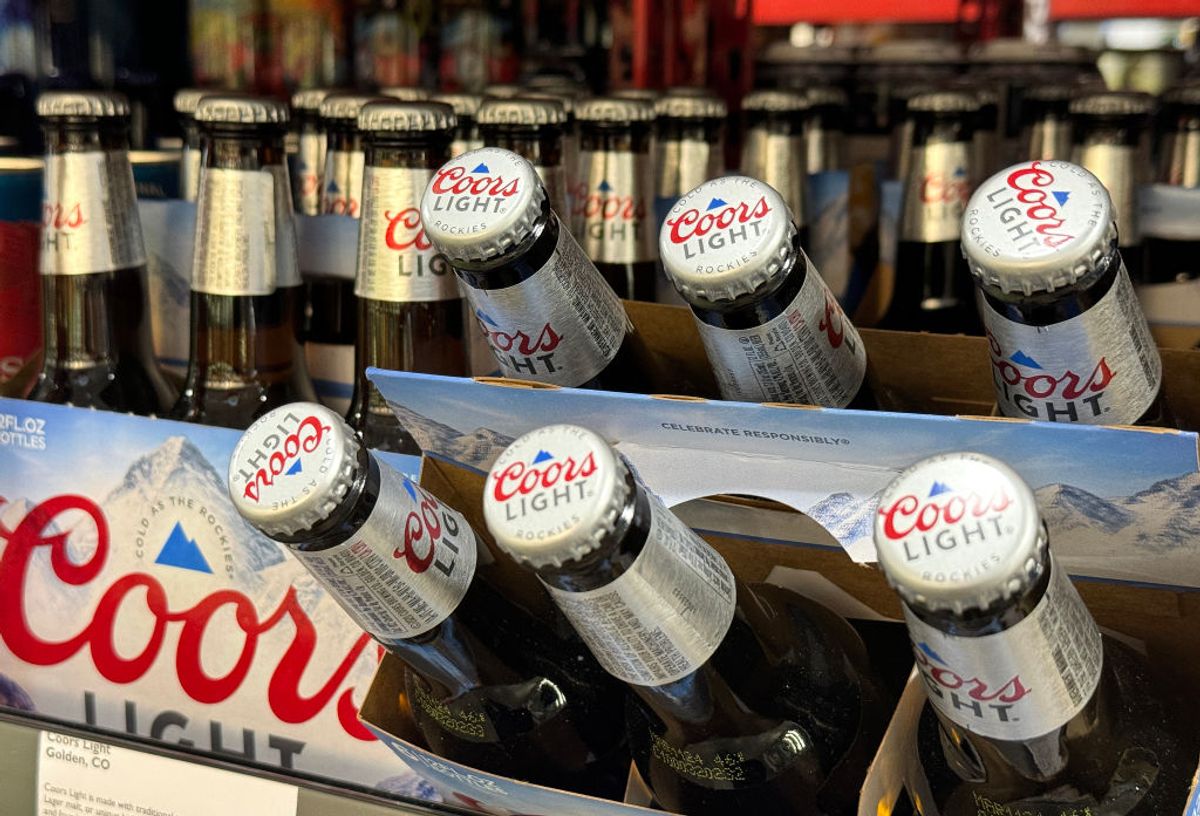
You've probably heard this saying before: "Beer before liquor, never been sicker. Liquor before beer, you're in the clear."
No one seems to know where the adage comes from — only that different versions of it exist in many cultures and languages. Similar sayings would have you believe "Beer before wine and you'll feel fine; wine before beer and you'll feel queer" and "Grape or grain but never the twain," which refers to drinking wine or beer, but never together.
While there is credible scientific evidence to disprove the sayings about beer and wine, Snopes could find no peer-reviewed, scientific research definitively proving or disproving the "beer before liquor" saying.
Scientific Study on 'Beer Before Wine'
Many news outlets have claimed that a 2019 study published in the peer-reviewed American Journal of Clinical Nutrition proved that "beer before liquor, never been sicker" isn't true. "Beer before liquor or liquor before beer? Scientists finally clear up the myth," declared one New York Post headline (archived).
"The research specifically addressed several popular sayings: 'Beer before liquor, never been sicker'; 'Grape or grain, but never the twain [never beer and wine on the same night]; Beer before wine and you'll feel fine,'" the New York Post story claimed.
But the study, conducted by German scientists, only looked at how drinking beer and wine might impact hangover intensity. No liquor was given to any of the subjects in the study. By recruiting 90 students between the ages of 19 and 40 from a German university and giving different groups controlled amounts of beer and wine in different orders, researchers were able to determine that drinking order did not uniformly affect subjects' hangover symptoms.
"Our findings dispel the traditional myths 'Grape or
Theories About 'Beer Before Liquor'
Some social media users claim that the adage has some truth to it because of how people behave after drinking beer or liquor. One Redditor wrote (archived): "In my experience it's because if you're already hammered, and you get into the liquor, it's easier to drink a lot of it faster and get sick (also the fact that your inhibitions are already lowered because you'd already be drunk). If you switch to beer, you're gonna get full before you get the opportunity to ingest too much alcohol."
Generally, the more alcohol you drink, the worse your hangover is — although some people are heavy drinkers and don't get hangovers, whereas other people get hangovers after just one or two drinks.
However, theories like these are down to personal behavior, not the actual compounds in beer or liquor — and personal behavior around drinking varies widely.
Another common theory has to do with carbonation — specifically, the idea that carbonated beverages like beer can increase pressure in the stomach and small intestine, forcing alcohol into the bloodstream faster. A 2007 study in the peer-reviewed Journal of Forensic and Legal Medicine found that 14 out of 21 subjects absorbed vodka at a faster rate when mixed with carbonated soda, as opposed to vodka taken neat or mixed with still water. But the study didn't look at beer, which means the results can't definitively prove anything about the beer and liquor saying.
There is some credible evidence that different types of alcohol can produce worse hangovers. Consuming red wine, as many know, can cause headaches in some people — and scientists are still coming up with theories as to why that is. Another study, published in the peer-reviewed journal Alcohol, Clinical and Experimental Research, found that drinking bourbon resulted in worse hangovers than vodka due to the higher amount of congener, a substance produced during fermentation, in darker alcoholic beverages.