
On Jan. 21, 2024, as one of the first acts of his second presidency, U.S. President Donald Trump pardoned or commuted over 1,500 people charged with crimes related to their participation in the Jan. 6, 2021, attack on the U.S. Capitol.
In response to this news, some social media users drew parallels to 1930s Germany. One such post was originally shared by former CIA officer John Sipher on BlueSky:

The text has since become regularly copy-and-pasted text (known as copypasta) on several other social media platforms including X and Facebook. While the claim is rooted in historical fact, it distorts and confuses the actual historical record, perhaps in an effort to draw more rhetorically obvious parallels to Trump's actions.
Hitler Became Chancellor in January 1933
Hitler was officially sworn in as Chancellor of the Weimar Republic on Jan. 30, 1933, not March 21, 1933, as claimed in the copypasta. After a series of backroom negotiations led to his appointment in early 1933, Hitler called new for parliamentary elections to be held on March 5, 1933. On Feb. 28, 1933, six days before those elections, a fire destroyed the Reichstag building — Weimar Germany's primary legislative assembly building.
Hitler blamed the fire on a communist plot and convinced President Paul von Hindenburg to use his power under the Weimar constitution to suspend civil liberties in times of emergency — an act known as the Reichstag Fire Decree. Hitler used this decree as a legal basis for detaining or intimidating his political opponents prior to the March elections, as reported by Time Magazine on March 27, 1933:
Before the new Reichstag met—nearly all Communist Deputies and many Socialist Deputies were in jail. The Hitler Government announced that no Communist Deputies (even should they break jail) would be admitted to the Reichstag. Most Socialist Deputies were expected to stay away, lest they be harmed.
Although the Nazi Party increased its representation in the Reichstag, they nevertheless failed to get a majority. Still, Hitler managed to create a political coalition strong enough to ensure passage of what is now referred to as The Enabling Act of 1933. This law allowed the chancellor — Hitler — to act without the authority of either the Reichstag or the president, making both political entities, in effect, powerless.
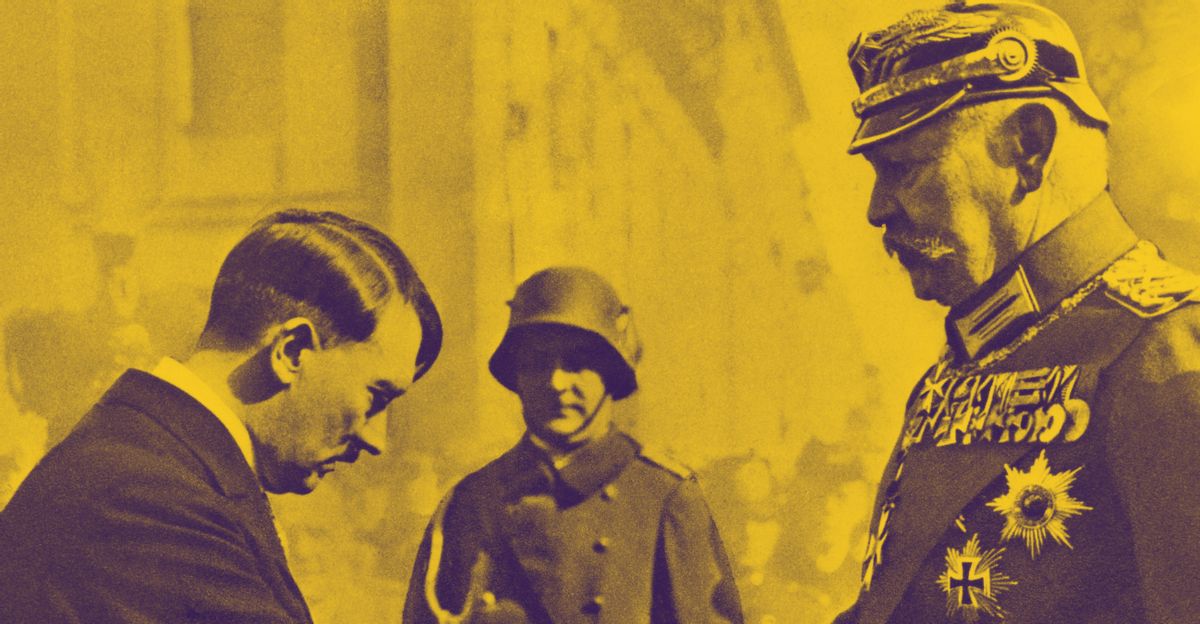
This act was passed on March 21, 1933 — referred to as Potsdam Day — and it marks the start of Hitler's dictatorship, but not his ascension to the office of chancellor.
Hitler Did Provide Immunity to Violent Nazis on March 21, 1933
On this same day, using the same emergency powers that produced the Reichstag fire decree, Hindenburg, at Hitler's urging, passed a lesser-known Decree of the Reich President on the Granting of Immunity from Punishment. This act granted individuals "immunity from punishment" for "crimes committed in the fight for the national uprising of the German people, in preparation for it, or in the fight for the German soil."
This law did have the effect of ending the criminal proceedings of, or releasing from jail, individuals convicted of violent crimes in which political motivation aligned with the Nazi Party. That same Time article from March 27, 1933, reported that a group of Nazi men "who took an unresisting Communist from his bed last August and stamped upon him until he died" were "last week pardoned, set free."
Other notable acts of immunity reportedly concerned two individuals — Heinrich Schulz and Heinrich Tillessen — who in 1921, as members of a network of far-right terror groups, assassinated a German politician, Matthias Erzberger, who had signed the armistice that ended WWI as well as the Treaty of Versailles. Both would become prominent Nazi Party members after being immunized by this new decree.
It is unclear, however, where the claim that 8,000 individuals were pardoned as a result of this act originated from. Snopes found no primary source attesting to this figure. We asked John Sipher, the apparent originator of the claim, what his source was for that figure, but he did not immediately respond to our request for comment.
Nobody from the 'Failed Nazi Coup in 1923' Was Jailed at Time of Decree
Sipher's mention of the failed Nazi coup refers to the infamous 1923 Beer Hall Putsch, when Hitler and some of his followers attempted to overthrow the government of Munich. The event, a complete failure, nonetheless brought Hitler and his views into the German mainstream.
Though Hitler had been charged with treason, the Munich court remained politically sympathetic to him, and he and a few other organizers ended up serving only nine months in prison. While the Beer Hall Putsch serves, to some online, as a historical parallel to the Jan. 6 attacks, connecting the March 1933 immunity act with Trump's pardon of the Jan. 6 defendants is a chronological stretch — by March 21, 1933, when Hitler issued the decree, there was nobody actively serving any punishment for the failed coup.
The Bottom Line
It is true that Hitler granted immunity from punishment to his political allies — including those who had carried out murder. It is unclear how many individuals were affected by this decree, but it could not have affected members of the Beer Hall Putsch. Further, this act did not occur the day he was sworn in as chancellor, but was enacted on the Day of Potsdam — the day when Hitler effectively assumed total control over Germany.