
For years, online users have posted videos shared across social media platforms – including Instagram, Reddit and Facebook – claiming to prove their Teslas can see ghosts.
One video (archive) shared to TikTok, for example, showed a "Tesla and a cemetery spotted ghosts." The recording bounced between the Tesla viewcam, which showed a blue vehicle driving down a street, and an empty cemetery. At moments, the outline of a person would be shown on the viewcam but when the video panned out the window, only a tombstone appeared.
At the time of this reporting, the video had received more than 2.8 million views.
@thebrandonleecook Tesla At A Cemetery Spotted Ghosts!! Crazy! #teslacheck #teslamodel3 #spooky #cemetery #tesla #teslacemetery #viral ♬ Amityville Horror - Scary Halloween Sound Effects - Halloween Sound Effects
There is no reason to believe that these videos show genuine "ghosts," of course, if for no other reason than there is no empirical evidence that ghosts exist.
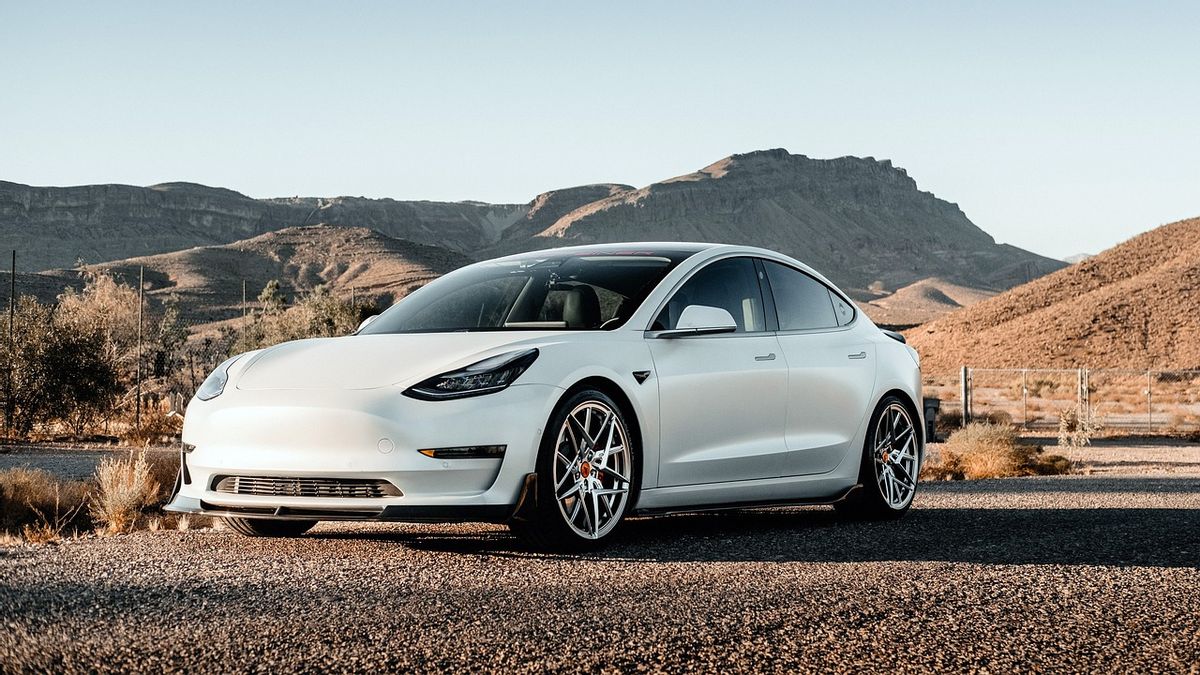
But it also has to do with how Teslas are manufactured. The Model 3 is equipped with collision avoidance systems used to alert a driver to potential objects or people that may be near the vehicle. At times, these systems might misinterpret an item – such as a tombstone in a cemetery – to be a pedestrian who is not actually there.
Snopes contacted Tesla for comment but did not receive a response. We will update the article accordingly.
Collision avoidance systems use sensors and cameras to determine obstacles surrounding a vehicle, which are then relayed to the viewscreen inside the vehicle. This information is shown to the driver in representations of items but not actual live video footage.
For example, a tombstone in a cemetery might be interpreted by the system as a person who is not present – or a "ghost."
According to the Tesla website, "Eight cameras and powerful vision processing provide 360 degrees of visibility, detecting nearby objects like pedestrians, bicyclists and vehicles."
The Tesla Model 3 Owner's Manual notes that when it comes to collision avoidance detection, "Several factors can reduce or impair performance, causing either unnecessary, invalid, inaccurate, or missed warnings."
Tesla's "pedestrian warning system" is described by the company as causing Model 3 vehicles to:
… emit sound when driving below approximately 40 km/h or while driving in reverse. Electric vehicles operate quietly and this sound helps to alert pedestrians of your oncoming vehicle. The sound, which activates whenever Model 3 is shifted out of Park, gets louder as speed increases.
Similarly, the vehicles feature a collision avoidance assist, which is "designed to increase the safety" of the driver and their passengers. The Model 3 manual reads:
- Forward Collision Warning - provides visual and audible (and in some regions, haptic feedback) warnings in situations when Model 3 detects that there is a high risk of a frontal collision (see Forward Collision Warning).
- Automatic Emergency Braking - automatically applies braking to reduce the impact of a collision (see Automatic Emergency Braking).
- Obstacle-Aware Acceleration - reduces acceleration if Model 3 detects an object in its immediate driving path (see Obstacle-Aware Acceleration).
The Model 3 also features a rearview camera located above the rear license plate. When a driver shifts into reverse, the touch screen on the vehicle dashboard displays the view from the camera.
Tesla models are also equipped with various cameras, such as those mounted to the windshield and each front fender. If the collision detection system detected a "ghost," then one might assume these camera systems would have as well.
Long Beach, California, resident Brandon Baxley has been driving Tesla vehicles since 2019. He noted that the camera detection system on his Model 3 Long Range and Model 3 Performance "sometimes shows people when they are not there." But this effect isn't just when driving through a cemetery and "the camera identification of objects is sometimes spotty."
Baxley added that he's never seen a "ghost" in his Tesla system.
To test the theory, Baxley drove through a cemetery in Long Beach on Feb. 8, 2025. Throughout the two-minute drive, the detection system did not pick up any pedestrians not otherwise visible.