
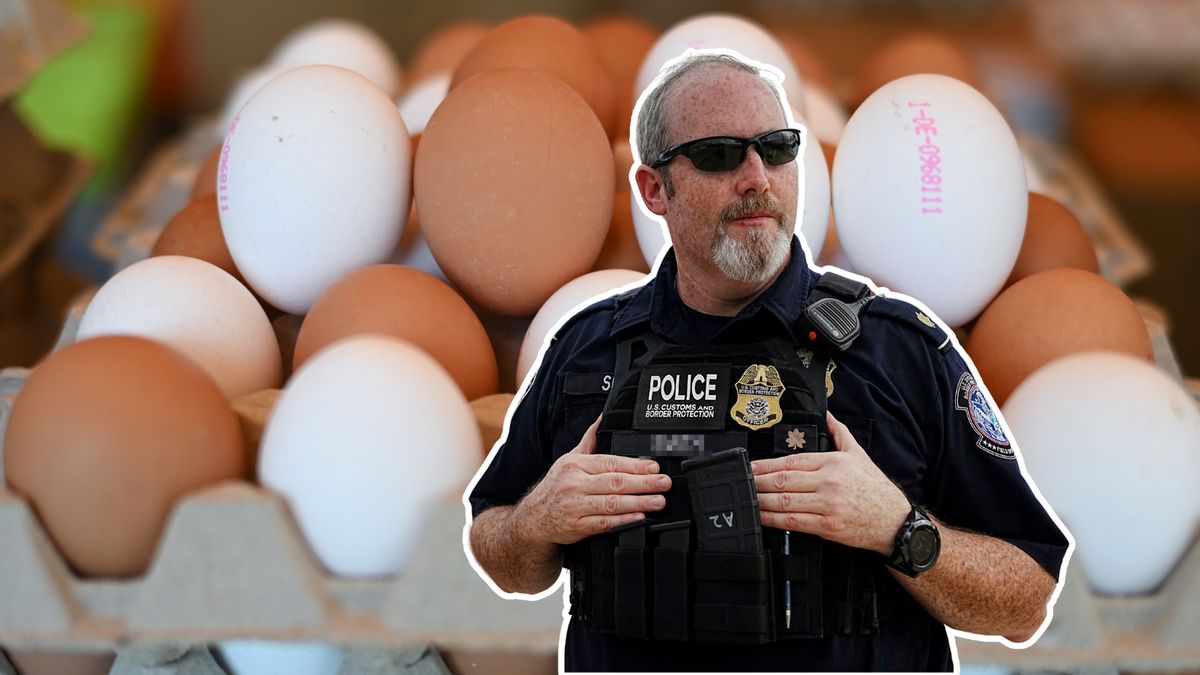
In March 2025, rumors spread online comparing U.S. Customs and Border Protection seizures of eggs with those of fentanyl.
While some posts claimed U.S. officials were seizing more eggs than fentanyl during border crossings into the United States, others alleged officials are catching people with eggs more often than they are with fentanyl. "U.S. Customs and Border Protection humiliates Donald Trump by revealing that their officers are busting more people smuggling eggs into America than fentanyl," a Facebook post by Occupy Democrats said.
News websites, including The Daily Beast, The Telegraph and Newsweek, also published stories about egg and fentanyl seizures with headlines such as "Border Patrol Has Seized More Eggs Than Fentanyl So Far This Year."
A few posts seemed to suggest increased egg smuggling indicated professional operations by cartels (although many of these posts may also be jokes). "Thanks to Trump, cartels aren't just smuggling fentanyl— they're now smuggling eggs," one X post read. "The cartels realize eggs are more profitable," a Bluesky user theorized.
These claims need context. It is true that CBP has documented many more incidents where eggs were confiscated than those involving fentanyl, and that egg seizures have increased amid the rising cost of eggs. However, "the vast majority of egg intercepts are from travelers who declare them when asked," an agency spokesperson said in an email, adding that very few cases involve secretive egg smuggling. As of this writing, the United States prohibits importation of raw or fresh eggs from Canada, Mexico and certain other countries due to concerns about disease.
Furthermore, CBP
Breaking down the numbers
CBP data shows 413 "drug seizure events" of fentanyl for the 2025 fiscal year to date — in other words, 413 incidents when officials seized fentanyl at border crossings from October 2024 to February 2025. During those seizures, border officials confiscated nearly 6,200 pounds of fentanyl. In comparison, authorities intercepted more than 5,500 "egg products" during that period.
For context, a large carton of eggs weighs a minimum of 1.5 pounds, according to the U.S. Department of Agriculture. In a hypothetical situation where every "egg product" intercepted was a large carton of eggs, officials would have intercepted about
However, "egg products" are not just raw or fresh eggs; CBP will confiscate most eggs and egg products from countries affected with highly pathogenic avian influenza — bird flu — or virulent Newcastle disease.
As stated above, most egg intercepts happen because of voluntary declarations — suggesting travelers simply do not know they cannot bring the eggs into the United States. CBP said via email that most travelers caught with eggs "abandoned them without consequence."
"There have been very few cases of people purposefully evading the inspection process/failing to declare the product. When that happens a $300 civil penalty is applied, and the eggs are seized," the spokesperson wrote, adding that the agency encourages travelers to declare "all agriculture products." As long as travelers declare the products they're carrying, they will face no legal consequences.
CBP also said it does not track numbers on egg "smuggling" — which implies deliberate, illegal activity — and measures only egg "interceptions."
However, the agency said it has seen a 48% increase in eggs being detained at ports of entry from October 2024 to February 2025 compared to the same period a year earlier. On the southern border, the San Diego field office has seen the highest increase of egg seizures — 158% — over that period. At the northern border, the Detroit field office — where most incidents at the Canadian border occur — saw its seizures jump by 36%, according to CBP.