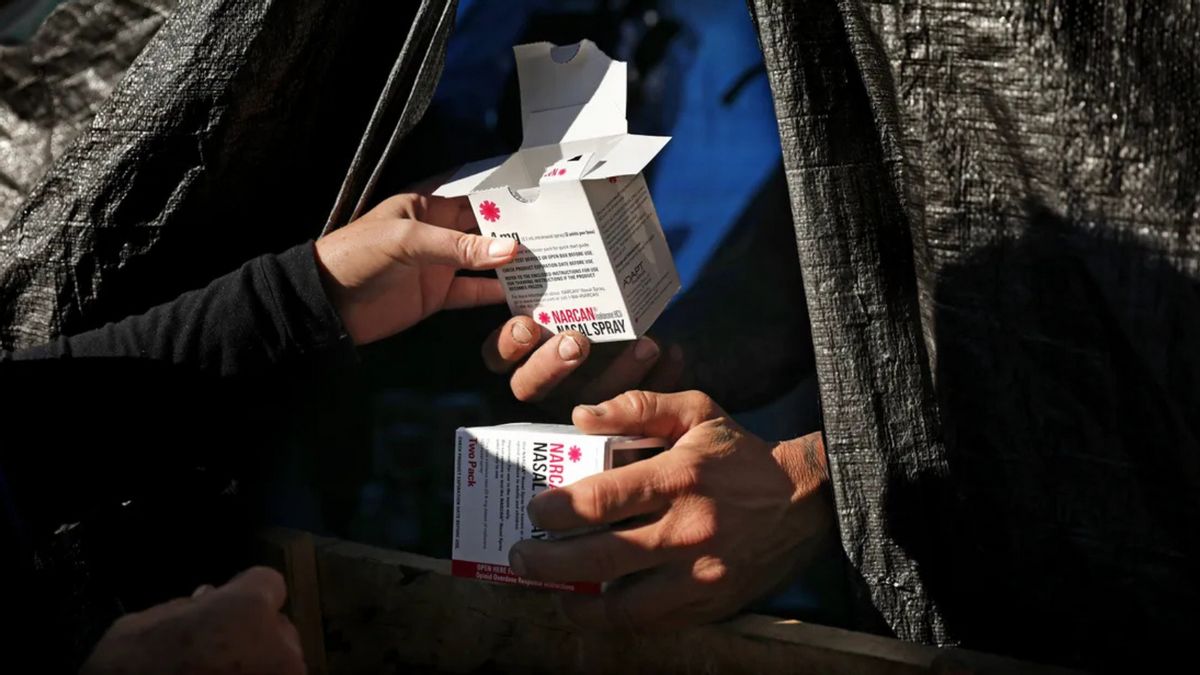
In late April 2025, a rumor spread online that U.S. President Donald Trump's administration planned to end a federal program that distributes the opioid overdose reversal medication naloxone — better known by its brand name, Narcan.
This rumor appeared to originate from The New York Times'
While HHS confirmed that the document is legitimate, an spokesperson for the agency said via email that the document is "pre-decisional, and no final decisions have been made" — which means we cannot yet rate whether this claim is true.
Alleged HHS document circulated among media
On April 16, 2025, The Washington Post reported that it obtained an HHS budget draft dated April 10, 2025, showing major cuts and restructuring for health and human service agencies.
Other news outlets appeared to obtain the same document, leading The New York Times on April 25, 2025, to report on its "Trump Administration Highlights" live blog that the proposal contained plans to terminate an "annual grant program that distributes doses and trains emergency responders in communities across the country to administer them."
Neither The Washington Post nor The New York Times published a full copy of the draft budget — but Inside Medicine did. Both The Washington Post's lead reporter on its story, Lena Sun, and Jan Hoffman, the NYT's reporter, confirmed via email that the document their reporting was based on was the same one published by Inside Medicine.
Both reporters, as well as Inside Medicine's Faust, declined to share their sources for verification purposes, but Sun said four people sent her the draft budget in a 24-hour period, and Faust said he received it from two current employees at the U.S. Centers for Disease Control and Prevention, which HHS oversees.
The proposal listed at least three programs that appeared to be directly related to naloxone distribution and training on Page 15: "Improving Access to Overdose Treatment," "Overdose Prevention (naloxone)" and "First Responder Training" (naloxone).

A screenshot from the alleged HHS/OMB draft budget document with red boxes added to highlight the programs in question. PNRS means "Programs of Regional & National Significance." (Inside Medicine)
During budget season, federal agencies submit funding requests to the president, who provides decisions on "broad policies." It is then up to OMB, under the president's direction, to provide a proposal in response. That proposal is known as a "passback," and it's what this document apparently is.
Thus, it would be accurate to say that according to these reports, the Trump administration is looking to end these programs — but there is no evidence that Kennedy, specifically, is backing this plan.
Naloxone distribution programs potentially cut
Among the list of programs to be eliminated in the reported draft budget shown above, "Improving Access to Overdose Treatment" refers to a federal program that provides grants to states, tribes and related organizations; the money goes toward collaborating with prescribers to train people on how to prescribe and expand access "to naloxone and other opioid overdose reversal medications," according to Page 222 of HHS' Substance Abuse and Mental Health Services Administration's 2025 budget year request
"Overdose Prevention" appears to allude to a SAMHSA program called "Grants to Prevent Prescription Drug/Opioid Overdose-Related Deaths," which involves training first responders and other key groups on preventing opioid overdose-related deaths and "implementing secondary prevention and harm reduction strategies, including the purchase and distribution of naloxone to first responders" (see Page 256). The program cost $16 million in fiscal year 2023.
Finally, "First Responder Training" appears to be the "First Responder Training – Comprehensive Addiction and Recovery Act" program, which offers resources to "first responders and members of other key community sectors at the state, tribal, and other government levels" to train and carry drugs that reverse opioid overdoses, per SAMHSA's description of the program on Page 271. (Naloxone is one of two FDA-approved drugs that can reverse an opioid overdose.) According to SAMHSA, the program also serves populations disproportionately affected by opioid use.
As the NYT reported, the first responder program costs $56 million annually; see Page 368 in SAMHSA's 2025 budget request document. The newspaper also initially reported that there is no indication Trump intends to cut one of the main federal programs which allows for naloxone distribution: a $2 billion program distributing money to states aimed at combating opioid addiction through various means (see Page 302 for details on this initiative).