
At the end of May 2025, calls for June no longer to be LGBTQ Pride Month, but instead Veterans Month, spread on the internet. For example, an X account posted a photograph of a woman wearing a bulletproof vest and carrying a machine gun, asking people if they agreed to "abolish" Pride Month (archived):
As of this writing, the post had amassed 183,400 views and 16,000 likes. Other posts on X and on Facebook made the same suggestion. Other internet users resisted the idea, implying the effort was born of bigotry against LGBT people.
The proposal failed to account for the fact that November is Veterans Month in the U.S. and much of the Western world while May is Military Appreciation Month in the U.S.
But why is June known as Pride Month?
While it was not designated as Pride Month everywhere in the world — for example, Southern Hemisphere locations moved the celebration to their summer season in November or February — it is the case that in the U.S., June was federally recognized as such starting in 1999, when former U.S. President Bill Clinton proclaimed it Gay and Lesbian Pride Month.
The Stonewall riots
Police raids on LGBTQ-friendly establishments were frequent at the time. However, that night, the patrons resisted, leading police to attempt mass arrests. The authorities' efforts failed after a crowd of a few hundred people gathered outside the Inn and scuffles began. By the end of the night, the mob had set garbage bags aflame and thrown them through the broken windows of the bar. In protest, another riot took place the next night, drawing thousands of people, including more prominent people friendly to the cause. The 2011 documentary provided more details:
Indeed, the events acted as a catalyst for the gay liberation movement in the U.S. While activism had existed before, the Stonewall riots created the impetus for stronger, more visible action. Many historians recognize it as a turning point in the history of LGBTQ rights.
The aftermath
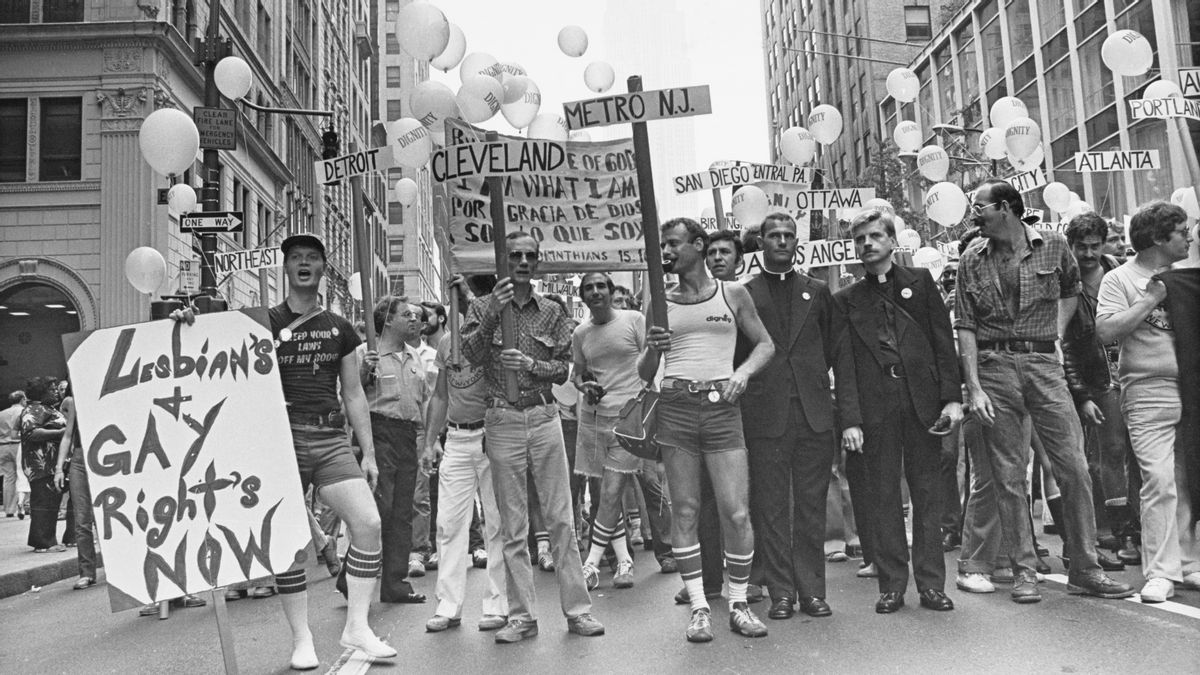
Exactly a year later, on June 28, 1970, various LGBTQ rights groups coalesced into a protest that became the first gay rights march. With time, this protest became known as the Pride Parade, which takes place in New York City every year on the last Sunday of June in commemoration of the Stonewall riots. The parade, which mobilizes a large number of city police, acts as the closing event of a monthlong celebration in the city and across the country.
Ten years after Clinton, then-President Barack Obama proclaimed June to be Lesbian, Gay, Bisexual, and Transgender Pride Month. "I call upon the people of the United States to turn back discrimination and prejudice everywhere it exists," the proclamation reads.
Twelve years later, in 2021, former President Joe Biden proclaimed June Pride to add the word "Queer" to its designation to account for a broader spectrum of gender identities and expressions, as well as sexual orientations. "I call upon the people of the United States to recognize the achievements of the LGBTQ+ community, to celebrate the great diversity of the American people, and to wave their flags of pride high," Biden said.