
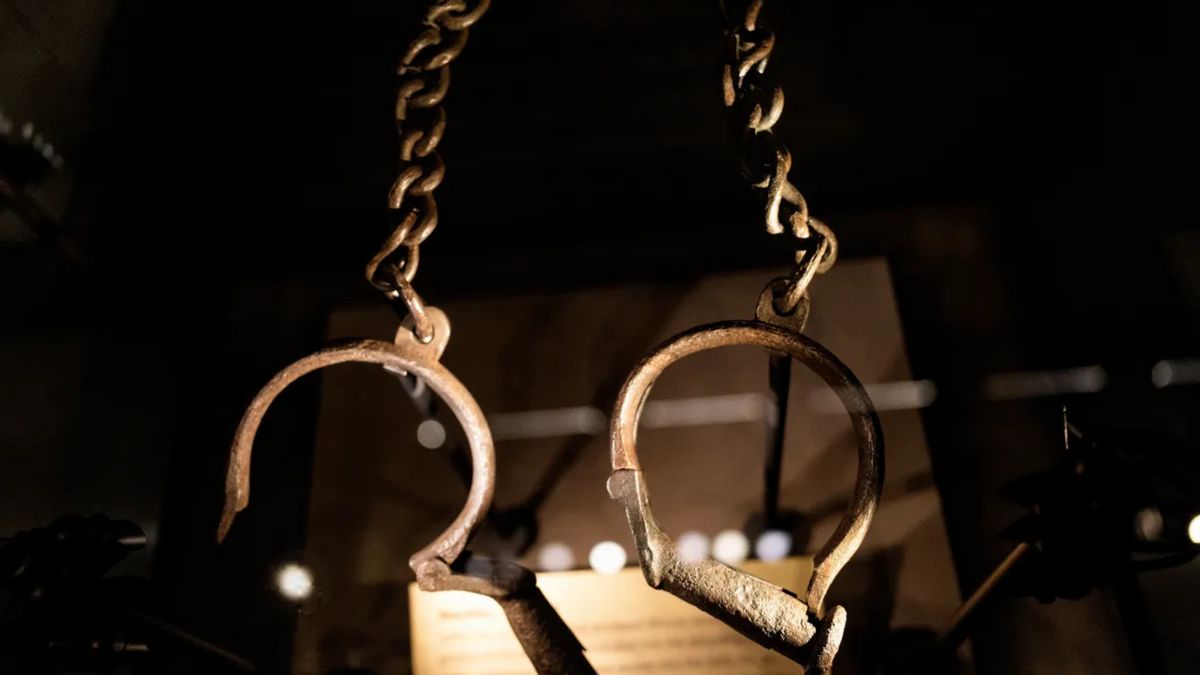
In early and mid-2025, a claim that "only 1.6% of US citizens owned slaves in 1860" resurfaced and circulated widely online, including on X, Reddit and Facebook.

As we previously
These posts share percentages differing between about 1.3% and 1.6%, per previous Snopes reporting, with the actual number being closer to 1.4% in 1860
However, these claims often omit important context. For one, the total number of people who owned slaves does not represent the number of people in the United States who participated in, supported or benefited from slavery. Furthermore, the claim also dilutes the significance of slavery by including free states. When looking only at states that permitted slavery at the time, the rates are much higher. Finally, this single misleading statistic does not in any way
Tracking the rumor's origin
The earliest instance of the 1.4% statistic being mentioned online with the purpose of minimizing white culpability for slaver
If you're white like Uncle Jim, your teachers will try to convince you that you're responsible … for a bunch of bad, bad things that happened a long, long time ago. If you're a black schoolchild, I'm sure your parents will have plenty of excuses for why your ancestors were enslaved.
But chances are that you're white — at least for the next generation or two, those are the chances — so I've collected a bunch of DUMB MYTHS and SMART FACTS about slavery that you can use to clown your teachers and everyone else at school!
One of those "smart facts" included the claim, phrased using language similar to what would appear in viral memes two decades later:
At the peak of black slavery in the South, only 6 percent of Southern whites owned slaves. If you include the white people in the North, it means that only 1.4 percent of white Americans owned black slaves at the HEIGHT of slavery.
This 1.4% statistic likely originated with U.S. Census Bureau data from 1860, wherein officials collected population demographic data based on free people, slaveholders and enslaved people. Per this data, U.S. officials counted
Consider, however, that the 3,953,742 enslaved people in the United States in 1860 — see Page 64 — made up about 12.6% of the population.
Furthermore, even if the data came from a legitimate source, the 1.4%
Census data does not capture true extent of slaveholding
Per the instructions given to census officials in 1850, the number of "slaveholders" only included the legal owner of the enslaved person.
"The person in whose family, or on whose plantation, the slave is found to be employed, is to be considered the owner—the principal object being to get the number of slaves, and not that of masters or owners," the census data
So while the head of the household legally owned the enslaved person, the slave would still perform work benefiting the family, household or business as a whole — and none of the people involved, aside from the legal slave owner, would be included in the census data for "slaveholders."
Thus, the percentage of slaveholding families is the "better measure of the extent of slaveholding," said Adam Rothman, a historian at Georgetown University who spoke to a Snopes reporter via email in 2019.
Official Census Bureau statistics for 1860 on the percentage of families who held slaves were not easily available. However, historians, including Rothman, have calculated a national rate of 7.4% by dividing the number of slaveowners by the number of families. A Census Bureau publication also provided an official rate on the percentage of families who held slaves in 1850: 9.7%, per Page 4 of "Statistics of Slaves."
But even these numbers are misleadingly low.
Historian Adam Goodheart, in an interview with PolitiFact in August 2017, noted that a person could be (and often was) a "slave master" but not technically a "slave owner." These people may not have been included in either the 1.4% statistic or the 7.4% statistic.
"Many non-slaveholding whites in the South rented slaves from wealthier slaveholders ... so it was very common for a white Southerner to be a 'slave master' but not technically a 'slave owner,'" Goodheart said.
Furthermore, J. David Hacker, a demographic historian at the University of Minnesota, noted in an email that slaveholding rates increased with age — because "many of the young household heads who did not own slaves expected to do so if they lived long enough." So even if a young white household head in a southern state didn't enslave Black people at the time of the 1860 census, they likely planned to in the future.
Including free states minimizes slavery in the South
By the time of the 1860 census, about half the states had already outlawed slavery. Each state where slavery was outlawed recorded 0% of slave-owning families in the 1860 census — and both the 1.4% and 7.4% statistics included these free states, thus minimizing the extent of slavery in antebellum America.

Number of slaveholding families and average number of slaves per family, by states and territory: 1790 and 1850, with 1850 percentages of slaveholding families highlighted. (U.S. Census Bureau)
Remember that these figures represent families that directly owned slaves, meaning that the number of people who rented slaves is not included — and thus, the number of white people who used enslaved labor was even higher than the percentages above.
America as a 'slave society'
In a
The basic point is that you can't think of slavery in the antebellum South as simply something people did. Slavery defined people — slaves, slave-owners, non-slave holding whites, free blacks and native Americans. Politically, the slave society impacted everything from Henry Clay's
push for the American System to the Nullification Crisis to the Mexican War.
Of the 4.4 million Black people in the United States in 1860, less than 500,000 were free (see Page 7 of this PDF). In contrast, nearly 4 million were enslaved. In other words, about 90% of the Black population was enslaved the year before the Civil War began — and Black people made up over half the population in states like South Carolina and Mississippi. Furthermore, the legacy of slavery in the United States still haunts modern society — consider racial inequities in criminal justice, economic mobility, health disparities and more.
Thus, to suggest that the pervasiveness of slavery in 19th-century America and its subsequent effects can be minimized to the result of only "1.6% of US citizens" owning slaves would be a grossly deceptive and outright inaccurate reading of U.S. history.
Snopes' archives and former Snopes reporter Alex Kasprak contributed to this report.