
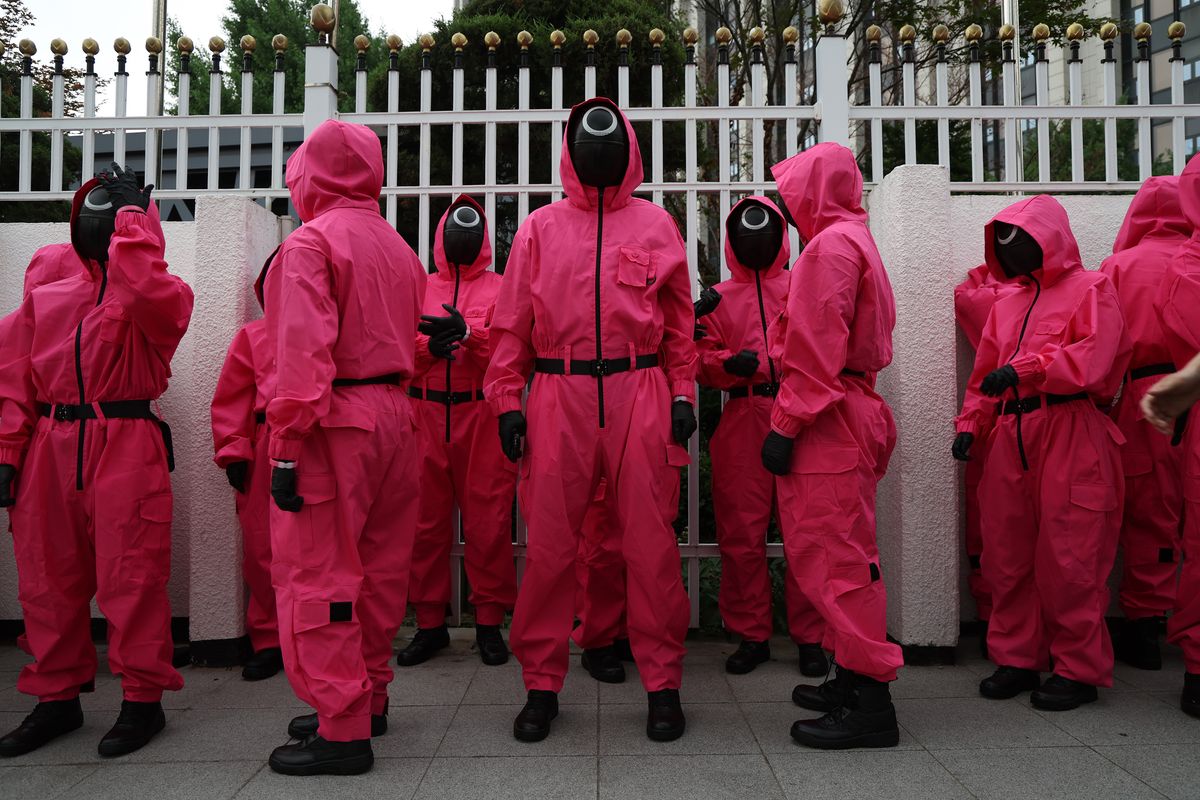
As Netflix released the third and final season of its hit show "Squid Game" in the summer of 2025, it became a hit and broke records as the biggest ever TV-launch for Netflix. The origins and inspiration behind the South Korean show became a subject of discussion, including a claim that the show was based on a true story of hostages being held in a South Korean bunker in 1986.
Snopes' readers asked us whether a bunker known as "Brother's Home" was truly connected to the television show. One wrote: "Instagram is posting all about the 'Brother's Home' being the real life version of the squid games. I can't find anything other than stories on social media."
A number of Facebook (archived) and Instagram (archived) posts also shared the claim. One post stated:
Back in 1986, in South Korea, whispers began to circulate about a disturbing event that took place in a remote bunker located in a no man's land between regions. According to reports, several individuals were abducted and forced to participate in a series of brutal, high-stakes games. These weren't just games of chance — they were life-and-death trials, where each round meant someone would fall, and only the victors could move on.
The goal? Survival at any cost.
The prize? Your life.
The incident was swiftly buried, with little official recognition, but over the years, survivors and secret reports have emerged — fueling the chilling rumors that this horrifying underground event may have inspired the dark, psychological world of Squid Game.
Although "Brothers Home" was a name given to a real South Korean detention facility, there is no evidence it was the inspiration for "Squid Game." The show's creator has never mentioned any connection and has cited a range of other sources of inspiration in various interviews.
"Squid Game" is described on IMDb as a show in which "hundreds of cash-strapped players accept a strange invitation to compete in children's games. Inside, a tempting prize awaits with deadly high stakes: a survival game that has a whopping 45.6 billion-won prize at stake."
According to Al Jazeera, Brothers Home was implemented under a 1975 ordinance that aimed to clear up the streets to rebrand South Korea as a modern and clean country. Brothers Home was based in Busan, and was among dozens of locations across the country that were referred to as "welfare centers" but are believed to have been similar to internment camps. Former inmates have described being starved, raped, abused, tortured and enslaved.
The posts repeating the claim that the show and detention facility are connected provide no links or evidence that such "games" occurred in bunkers where people were supposedly held hostage.
The writer and director of "Squid Game," Hwang Dong-hyuk, spoke to Variety in September 2021, upon the release of the first season. He said he was inspired by Japanese manga with similar themes involving battles to the death, as well as Korean children's games:
I freely admit that I've had great inspiration from Japanese comics and animation over the years. […] When I started, I was in financial straits myself and spent much time in cafes reading comics including "Battle Royale" and "Liar Game." I came to wonder how I'd feel if I took part in the games myself. But I found the games too complex, and for my own work focused instead on using kids' games.
[…]
I wanted to write a story that was an allegory or fable about modern capitalist society, something that depicts an extreme competition, somewhat like the extreme competition of life. But I wanted it to use the kind of characters we've all met in real life. As a survival game it is entertainment and human drama. The games portrayed are extremely simple and easy to understand. That allows viewers to focus on the characters, rather than being distracted by trying to interpret the rules.
In an interview with The Guardian, he described his own struggles as a result of the 2009 financial crash as inspiration for the show:
I was very financially straitened because my mother retired from the company she was working for. There was a film I was working on but we failed to get finance. So I couldn't work for about a year. We had to take out loans — my mother, myself and my grandmother. […] I read Battle Royal and Liar Game and other survival game comics. I related to the people in them, who were desperate for money and success. That was a low point in my life. If there was a survival game like these in reality, I wondered, would I join it to make money for my family?
He also described the origins of the eponymous "squid game":
He drew on a version of tag he played as a boy called squid game, named after the various squid-bodypart shapes that were drawn on to whatever field it was played on. "I used to be good at fighting my way to the squid's head," Hwang says. "You had to fight to win."
In the first game in the show, all 456 contestants can only move when the face of a sinister mechanised doll is turned away from them. Those caught out are mown down with machine-gun fire. Why did Hwang create a horrifyingly brutal contest that holds human life so cheap? "Because the show is motivated by a simple idea," he says. "We are fighting for our lives in very unequal circumstances."
Some moments in "Squid Game" do reference real events in South Korea. According to Hwang, the protagonist's backstory was inspired by a carmaker's decision to lay off more than 2,000 workers in 2009. He told AFP: "Through the reference to the SsangYong Motor layoffs, I wanted to show that any ordinary middle-class person in the world we live in today can fall to the bottom of the economic ladder overnight."
South Koreans also recognized the crushing cycle of debt depicted in the show as a very real aspect of their lives. Household debt has risen considerably in the years since the show first aired, and the country's financial watchdog chief said in late 2024 that it could turn into "systemic risk."
But what relation does Brothers Home have to "Squid Game"? Aside from it being a space in South Korea where numerous human-rights abuses occurred, we have found no definitive connection between them.