
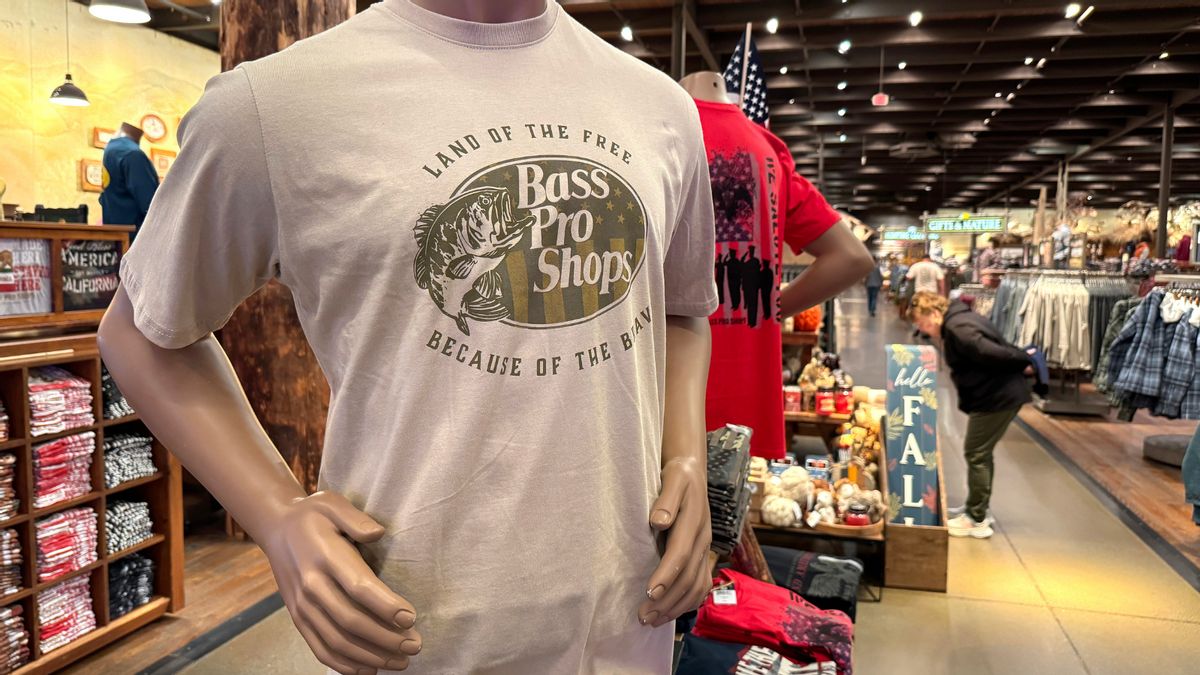
In early September 2025, claims that popular outdoor sports retail chain Bass Pro Shops was able to shirk paying federal taxes due to shops' classification as "museums" circulated online.
The claim appeared to originate with a TikTok video (archived) that was then shared to other social media platforms like Facebook (archived) and X (archived).
"This is your reminder that Bass Pro Shops doesn't pay federal taxes because they call themselves a museum because of their aquarium," the TikTok user said, turning the camera around to show off one of the locations. "Because they're a store that has all of this, they don't pay taxes because of that. Eat the rich."
@frankandash Wild ain't it @bassproshops #eattherich #taxtherich #billionaireromance #taylorswift #engaged ♬ original sound - Kelly & Frank & Ash
However, Bass Prop Shops' tax situation was not as cut and dried as the claim suggested. We have opted not to give a rating to this claim since it is difficult to determine the specifics of how much in federal taxes the company has paid, due to it being confidential information for the privately owned company. Bass Pro Shops has not responded to Snopes' request for comment.
That said, the basis of the claim that Bass Pro Shops received financial benefits for housing a "museum" within its stores has merit in the form of taxpayer subsidies. There is a history of publicly available information and reporting dating back 30 years tracking the company's taxpayer subsidies.
While the company appeared to receive $0 in federal subsidies, state and local subsidies that were awarded totaled 116 in quantity for a combined monetary value of $414,366,794. It's important to note this data also included Cabela's, a former Bass Pro competitor it acquired for $5.5 billion in 2016. Cabela's historically took advantage of similar subsidies well before it was under Bass Pro's corporate umbrella.
In 2005, the Oklahoma City newspaper The Oklahoman published a timeline of events relating to a Bass Pro Shop that opened in its Lower Bricktown neighborhood in 2003. According to the paper, the Oklahoma City Council approved "$17.2 million to build the Bass Pro store" in 2002 despite opposition from local merchants. "They intend to retire the debt through lease payments and sales tax revenues," the paper reported.
Following the Cabela's acquisition in 2016, The Oklahoman published a follow-up in which Cathy O'Connor, director of the Oklahoma City Urban Renewal Authority, stated that with six years left remaining on the store's 20-year lease, the city had already recouped its investment "with a pretty hefty interest rate."
O'Connor continued, "Even though it involved internal borrowing, interest was set at what rates were at that time, which was 5.5 percent. The city made more money on the Bass Pro deal compared to its usual securities investments. It was a riskier deal. But the city got paid back with a nice interest rate."
In 2007, Buffalo, New York's,
In some cases, economic development subsidies are dedicated specifically to building the "museums." For example, a tax increment financing package in Hooksett, New Hampshire included $4 million (out of $18 million total) for four "museum wings" at the corners of a new Cabela's store. And Glendale Arizona's $16.7 million package for Bass Pro included $10 million for the "museum," aquarium and Conservation Mountain, [a display of stuffed animals].
The retailer has also taken advantage of state condominium laws, which allows the same property to be owned by multiple entities. This approach was further elaborated upon in a 2012 Bloomberg report about a Cabela's store in Buda, Texas, in which the town owned "about 20 percent of the 185,000-square-foot store and one-third of the land on which it stands," meaning that the company would "save $4 million in property taxes over the next 20 years because those non-revenue generating areas of the Buda store are publicly owned."
In 2021,
The store and the village are using the state condominium act to allow most of the building to be owned by Cabela's as a for-profit business, while the museumlike portion would be deeded to Hoffman Estates. Under the act, a single property can have more than one owner.
Cabela's expects to save $5.5 million over 20 years on property taxes because of the tax exemption and $18 million in sales-tax rebates over 18 years.
While some cities appeared satisfied with these financial arrangements, such as the one in Oklahoma City cited above, not all municipalities shared the enthusiasm.
For instance, in 2006, then-South Carolina Gov. Mark Sanford "engaged in a battle with his state's legislature over whether to provide incentives for Cabela's to build a store in North Charleston," according to Bloomberg.
"It's almost like they are out to take advantage of the rubes. Often these small town city councils aren't the most sophisticated in analyzing an economic development proposal," one economist told Bloomberg.
The outlet further reported:
In 2006, Sanford vetoed legislation passed by the South Carolina legislature that gave Cabela's a 50-percent break on sales and income taxes. But the legislature overrode Sanford's veto. At that point, Sanford led a grassroots campaign against the Cabela's subsidies.
"We don't think it makes sense for the any number of family-owned and smaller businesses that have been paying taxes in South Carolina for a long time to now be called on to subsidize a loss in their sales," Sanford wrote in a letter to dozens of outdoor sporting goods stores.
In 2010, the Springfield Business Journal, self-described as "the business news authority for Springfield and southwest Missouri," reported that the Springfield, Missouri-based, Bass Pro Shops was subject of a critical report by a watchdog organization that claimed the chain failed "to deliver on its promises to develop stores as tourist destination and economic anchor for the cities in which it wins government favor."
For instance, the report said a "taxpayer-subsidized store" in Harrisburg, Pennsylvania, was "'struggling to attract tenants to the mall it anchors.' The report said Bass Pro expected to hire 300 to 400 workers, but three years after opening had hired only 101."
Bass Pro Shops denied the claims.