
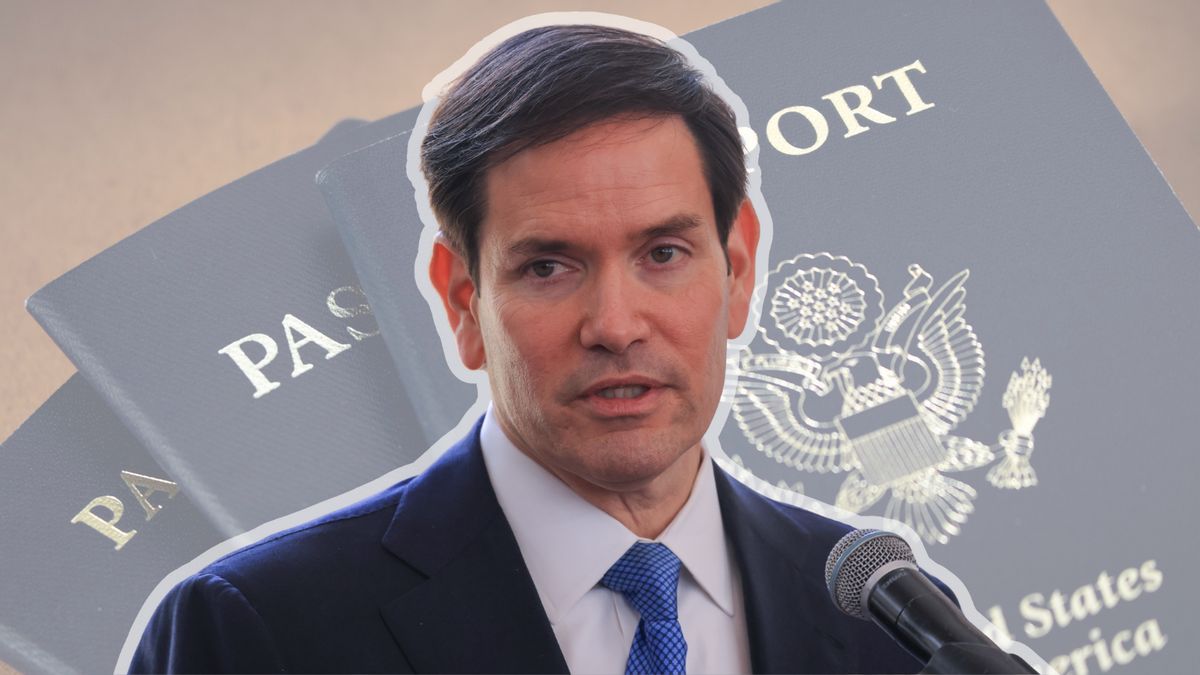
In September 2025, a rumor began to circulate that a proposed bill in the U.S. House of Representatives would allow Secretary of State Marco Rubio to deny or revoke the passports of U.S. citizens for criticizing Israel.
For example, a post on X shared the rumor and claimed such a law would be "treason" (archived):
The post had received 3.2 million views and 14,000 likes as of this writing. Another post on X made the same claim, garnering 6.9 million views and 46,000 likes. The rumor further appeared on Facebook and Reddit.
The posts stemmed from a Sept. 13, 2025, report by The Intercept, a website that covers security news.
The Intercept reported that U.S. Rep. Brian Mast, a Republican from Florida who chairs the House Committee on Foreign Affairs, introduced a bill that would have included a provision to allow Rubio to "deny or revoke passports to individuals providing material support to terrorism."
Snopes reviewed the bill — H.R. 5300, introduced Sept. 11 — and identified the section where this provision appeared.
Secretary of state's determination
Mast's proposal said that to deny or revoke someone's passport, it would suffice for the secretary of state to deem the person to have provided material support for terrorism. In other words, it would apply not only to people who were not just convicted of or even charged with such a crime, but also to those Rubio believes to have committed it. Section 226, on Page 44, read (emphasis ours):
(1) ISSUANCE.—Subject to subsection (b), the 2 Secretary of State shall refuse to issue a passport to any individual who—
(A) has been charged with or convicted of a violation of section 2339A or 2339B of title 6 18, United States Code; or
(B) the Secretary determines has knowingly aided, assisted, abetted, or otherwise provided material support to an organization the Secretary has designated as a foreign terrorist organization pursuant to section 219 of the Immigration and Nationality Act (8 U.S.C. 1189).
The bill would also allow the affected people to appeal the denial or revocation of their passports.
What is 'material support'?
"Material support" is a phrase that has left much for interpretation. However, in its 2010 Holder v. Humanitarian Law Project decision, the U.S. Supreme Court said "material support" could include speech. In this case, speech referred to "expert advice or assistance" and did not constitute a violation of the First Amendment of the U.S. Constitution, which guarantees freedom of speech and association. In other words, using speech to advise an organization deemed terroristic made the defendant liable to prosecution. Chief Justice John Roberts wrote the majority opinion.
In a dissent, then-Justice Stephen Breyer said the U.S. government's position that speech can constitute material support "would gravely and without adequate justification injure interests of the kind the First Amendment protects."
This is the concern civil liberties experts expressed with Mast's bill, according to The Intercept. For example, the report cited Seth Stern, director of advocacy at Freedom of the Press Foundation, as saying he feared the bill, if it were to become law, would amount to "thought policing at the hands of one individual" — the secretary of state.
This led The Intercept to speculate that people who criticize Israel could be deemed to have provided "material support" to Hamas, the Palestinian militant group that governs the Gaza Strip and which the State Department lists as a terrorist organization. Rubio could unilaterally deny or revoke their passport, preventing them from traveling, even if they have not been convicted of such a crime. To back its argument, The Intercept cited a letter from the Anti-Defamation League, whose mission it is to fight antisemitism, and the Brandeis Center, in which they accused Students for Justice in Palestine, which organized many campus demonstrations against Israel and in support of the Palestinian people, for providing "material support" to Hamas.
Mast retracts his proposal
However, whether criticisms of Israel could be deemed material support of terrorism will not be put to the test.
Following The Intercept's report, Mast published amendments to his proposed bill on Sept. 14, 2025 that removed this particular provision. "Page 43, beginning line 15, strike section 226 (and redesignate accordingly)," the amendment read. Further, the bill itself had not yet been voted out of committee. If it does make it out of committee, it will be part of the larger State Department Authorization Act for the next fiscal year.