
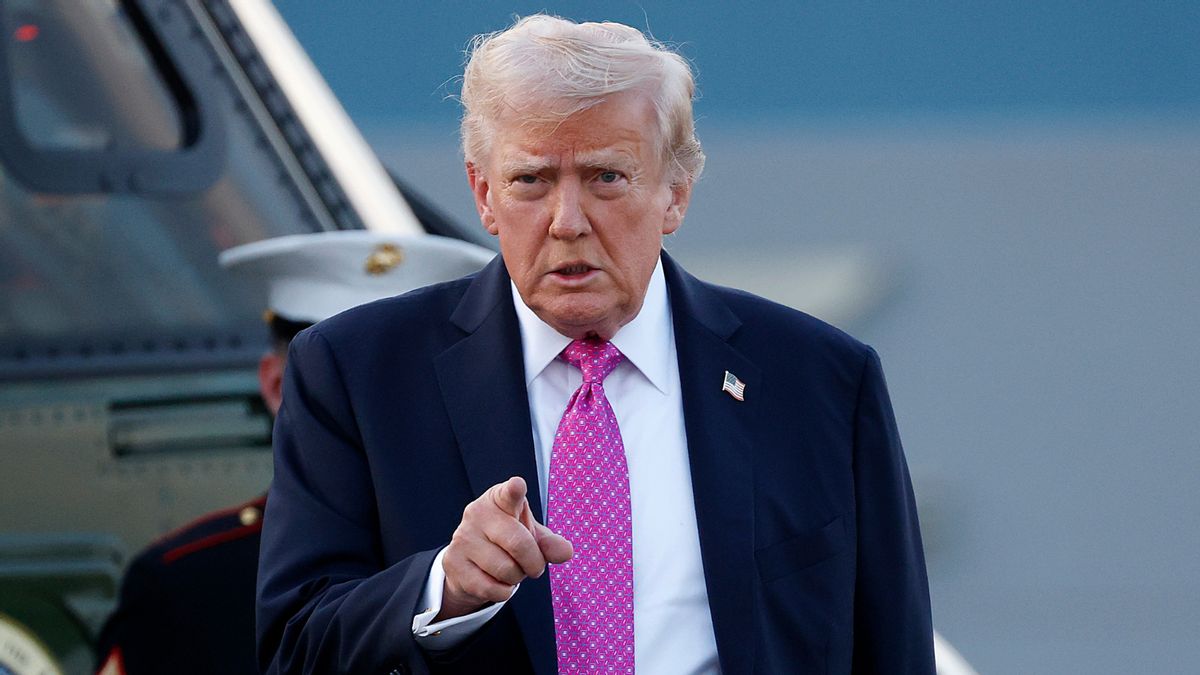
In mid-September 2025, a claim spread online that U.S. President Donald Trump's administration had said birth control pills and IUDs were abortions.
The rumor spread on X, Instagram and Reddit.
The allegation came from a statement that the U.S. Agency for International Development — the humanitarian aid agency being dismantled by the Trump administration — reportedly provided to The New York Times about the government's plan to destroy nearly $10 million in contraceptives meant for women in low-income countries. While the origin of the statement indicated the claim was likely legitimate, the White House directed inquires about the purported comment to the State Department, which did not return repeated requests to confirm the Times' reporting. As such, we have not rated this claim.
Here's what the Trump administration said, according to the Times' Sept. 11 story (emphasis ours):
On Thursday, a spokeswoman for U.S.A.I.D. — which is now being wound down by Russell Vought, the head of the White House Office of Management and Budget — said in a statement to The Times that the contraceptives had been destroyed, and falsely suggested that they induced abortion.
"President Trump is committed to protecting the lives of unborn children all around the world," the statement said. "The administration will no longer supply abortifacient birth control under the guise of foreign aid."
"We received the statement via email from a spokeswoman for U.S.A.I.D. and accurately quoted them in our report," said Maria Case, a spokesperson for the Times, who added in an email that the Times "doesn't share source material."
Case also directed Snopes to a July 31 State Department news briefing, in which Tommy Pigott, a spokesperson for the agency, said on the record that the contraceptives in question could "potentially be abortifacients under the Kemp-Kasten Amendment, and as well could potentially violate Mexico City." However, Case did not elaborate, nor did he explicitly state which contraceptives, exactly, might be considered abortifacients by the administration.
The Kemp-Kasten Amendment, first enacted in 1985, states that no U.S. funds may go to "any organization or program, which, as determined by the President, supports or participates in the management of a program of coercive abortion or involuntary sterilization." The Mexico City policy blocks U.S. funding for non-governmental organizations that provide abortion services. The Trump administration reinstated that policy, also known as the "global gag rule," in January. (For decades, the Mexico City policy, first enacted by former President Ronald Reagan, has been reinstated by Republican presidents and revoked by Democratic presidents.)
According to the Times, USAID first bought the birth control pills, IUDs and hormonal implants as part of its humanitarian aid efforts.
To be clear, calling birth control an "abortifacient," or a product which induces an abortion, does not align with medical definitions of an abortion or the process of pregnancy — although some who oppose abortion have argued otherwise. As we previously reported:
Many anti-abortion activists believe that conception occurs at the moment the sperm fertilizes the egg, before implantation. Anything that might expel an embryo in the days after fertilization, is, in their eyes, abortifacient. According to experts, however, abortion occurs after implantation because a person is only considered pregnant after implantation.
As our reporting stated, one reason some abortion opponents believe the birth control pill is an abortifacient is because it causes the uterus' lining to thin — but so do smoking, cancer treatment, breastfeeding and vigorous exercise, to name a few other factors.