
In 2025, a claim circulated online that U.S. President Donald Trump had repeatedly deployed the National Guard on 29-day cycles to avoid paying out housing and health benefits that activate after 30 days.
The rumor spread on X, Facebook and Instagram. Snopes readers also wrote in to ask whether it was true.
This claim needs context. While it is true that sending the National Guard on a 29-day order can skirt requirements to pay out full benefits, this is a common practice in the guard, according to legitimate news reports.
As of this writing, there have been two major National Guard deployments set into motion by Trump in 2025. In the first instance, when Trump sent the California National Guard to quell protests in Los Angeles in June, soldiers received full benefits starting from their first day on active duty due to U.S. law about federal activation, according to the California Military Department.
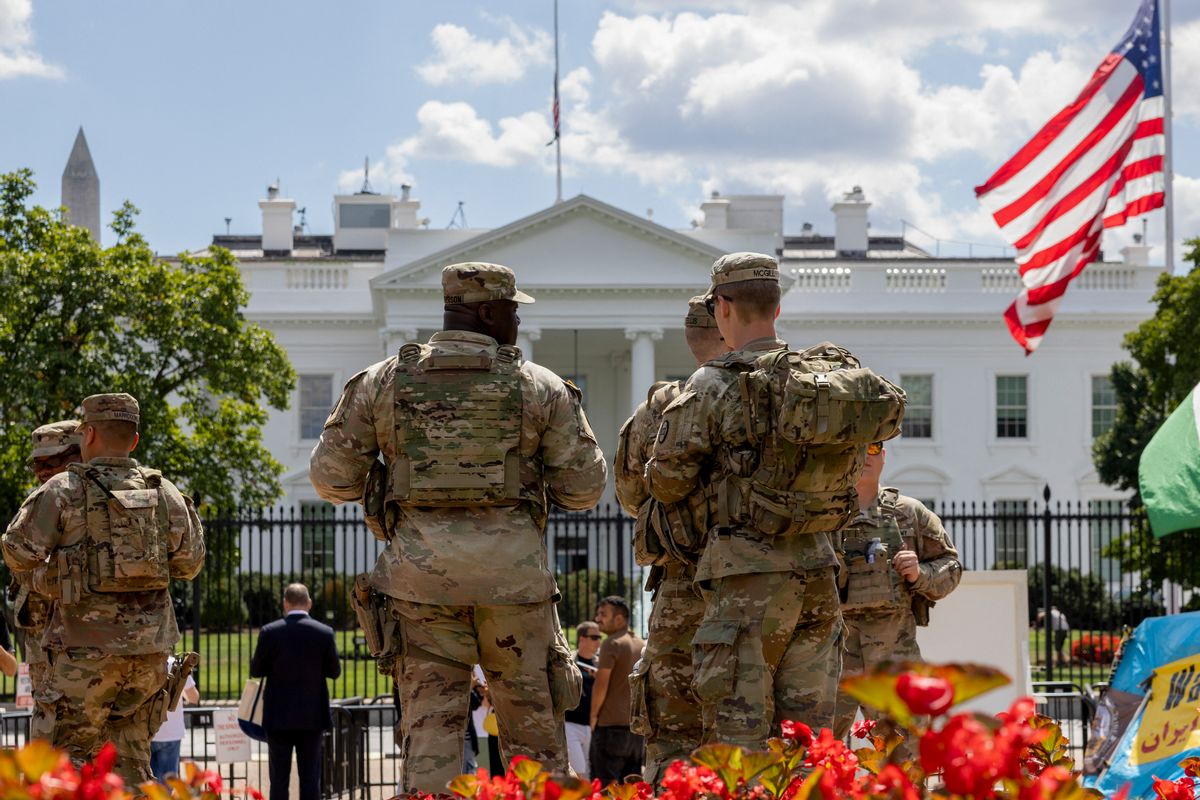
In the second instance, when Trump deployed the guard to Washington, D.C., "for the purpose of restoring law and order," he actually did so in two ways: He requested governors of other states to send their own National Guard to the district, and he sent the D.C. National Guard, which reports directly to the president, unlike the National Guard in states.
A spokesperson for Joint Task Force — District of Columbia, the mission in charge of the deployment, said that for the purposes of that specific mobilization, "no service member was intentionally placed on an order of 29 days or less for the purpose of avoiding the allowance or entitlements for which they are entitled."
"While exceptions may exist, the majority of service members are mobilized on orders extending beyond 30 days, ensuring they qualify for full benefits," the spokesperson said via email, adding that states that sent their guard members to D.C. would be responsible for their benefits.
Given the complex nature of this claim, we have not rated it. Here's what we know:
The 29-day limit did not apply to LA
Under federal law, members of the "reserve components" of U.S. military — which includes the National Guard — are obligated to the same rate of "basic allowance for housing" that regular military members receive under certain circumstances, detailed here:
(4) The rate of basic allowance for housing to be paid to the following members of a reserve component shall be equal to the rate in effect for similarly situated members of a regular component of the uniformed services:
(A) A member who is called or ordered to active duty for a period of more than 30 days.
(B) A member who is called or ordered to active duty for a period of 30 days or less in support of a contingency operation.
Similar rules apply for health care coverage.
In other words, members of the guard receive full benefits only when called to active duty for more than 30 days or for a "contingency operation," legally defined either as a deployment by the secretary of defense against "an enemy of the United States or against an opposing military force" or an activation after the president declares a national emergency or war.
When Trump deployed the California National Guard, he did so under a "Title 10" contingency operation, which is when the president calls in the National Guard due to invasion, rebellion, "danger of a rebellion" or because the president is "unable with the regular forces to execute the laws of the United States." That means that regardless of the number of days the guard was deployed, soldiers received full benefits from their first day on active duty, as confirmed by an emailed statement from the California Military Department.
"About 4,300 Soldiers served on this activation and received the same benefits," the department said. "In this case, Soldiers were entitled to full benefits—including housing allowance—from their first day on active duty, regardless of whether their orders were for one day or several months."
Did the 29-day limit apply to the National Guard in DC?
Unlike in California, Trump's activation of the D.C. National Guard did not fall under Title 10 federal activation because the district's guard answers directly to the president rather than to a governor because the district does not have one. As previously stated, a spokesperson for the joint task force said the Trump administration activated the "majority" of the guard under orders lasting more than 30 days.
In a Sept. 4, 2025, X post, Brig. Gen. Leland D. Blanchard II, interim commanding general for the D.C. task force, said he extended the encampment in part to ensure "Guard members and families retain their activation benefits."
Guard members from outside states deployed to D.C. by their governors on request of the president "remain under the administrative control of their home states," according to the joint task force spokesperson.
"D.C. Guard works hand-in-hand with those states to ensure every Guard member is paid, supported, and cared for," the spokesperson said.
At least six states, all Republican-controlled, have also sent their own National Guard to the district by request of the president: Georgia, Louisiana, Mississippi, Ohio, South Dakota and West Virginia.
Only Mississippi, Georgia and South Dakota responded to inquiries from Snopes. In response to our question about 29-day orders, Georgia National Guard provided a generic statement detailing its support for the D.C. mission and said other questions should go to the task force. South Dakota directed all questions to the task force. Daniel Szarek, a spokesperson for the Mississippi National Guard, said via email that the "claims you are referencing are factually inaccurate."
"Our Mississippi Guardsmen are not deployed on 29-day orders and are receiving the benefits they are entitled to," Szarek said.
On Reddit, various users of the National Guard subreddit joked about being put on 29-day orders in the district. We filed a records request in an attempt to determine how common these orders were in comparison with the longer orders and await a response.
Many Redditors in the National Guard subreddit also alleged that being put on 29-day orders to avoid paying out benefits has been a common tactic used in the guard long before the Trump administration — although no user felt comfortable providing their name to Snopes for verification due to fear of retaliation. We reached out to
In sum …
There is no concrete evidence the Trump administration has been repeatedly activating National Guard members on 29-day orders to avoid paying benefits to them. In fact, when the president deployed the California National Guard in June, guard members received full benefits from the first day of work as required by federal law.
In the District of Columbia, where Trump both deployed the district's guard and requested governors send their own states' guard members, the situation is more complicated. According to the joint task force overseeing the deployment in D.C., the Trump administration did not purposefully send anyone out on 29-day orders, and the majority of guard members have received orders lasting more than 30 days, ensuring full benefits. However, it was unclear whether any states' governors have sent their guard members on 29-day orders to the district; only Mississippi's National Guard responded to an inquiry about it and stated that its members are receiving full benefits.