In September 2025, a rumor circulated online that U.S. President Donald Trump received a $2 billion bribe for selling highly sensitive AI microchips to the United Arab Emirates and China.
One Instagram page claimed (archived) it was "the biggest corruption scandal in American history," adding: "Trump PERSONALLY took a $2 BILLION bribe from the #UAE and then handed them (and China) our most advanced AI microchips."
The rumor also appeared on X as early as Sept. 15 and later cropped up on Facebook, Bluesky and Reddit.
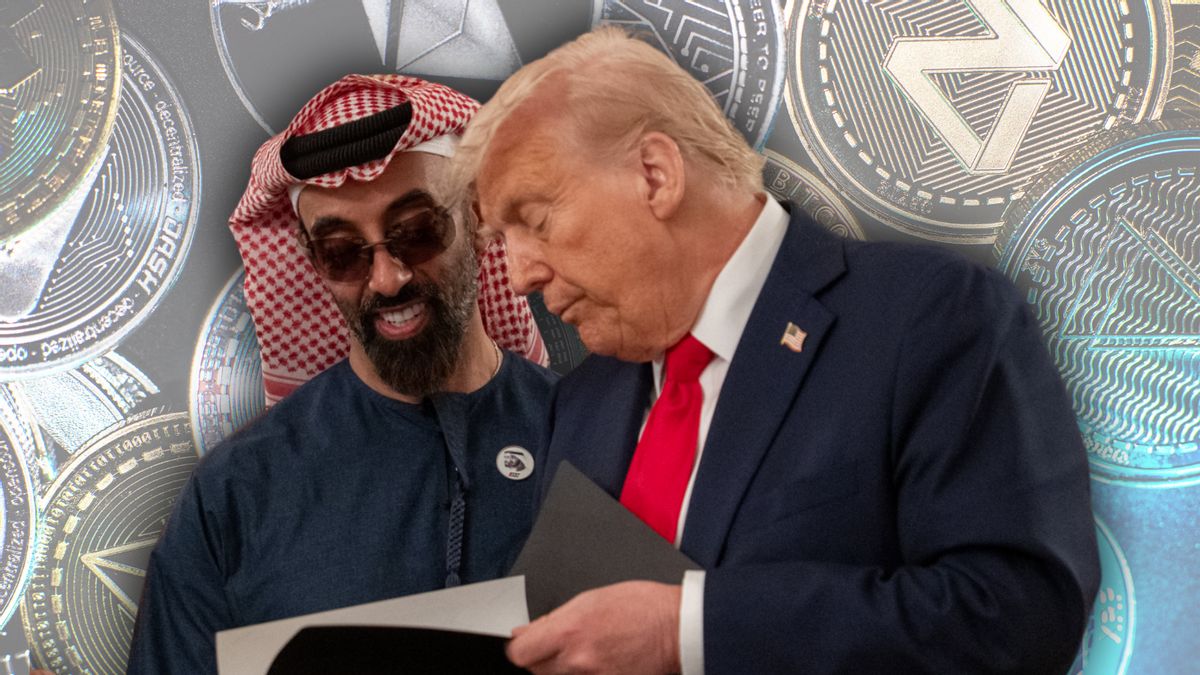
The claim appeared to be based on a Sept. 15 New York Times article that recounted two deals made over a two-week period, one between the UAE and the Trump family's cryptocurrency company World Liberty Financial and another between the UAE and the U.S. government regarding highly sensitive AI microchips. While Trump did not receive $2 billion directly, that money benefited a company he co-owns, resulting in his personal enrichment,
For this story, The New York Times said it reviewed correspondence and interviewed 75 people, including some in former President Joe Biden's administration and people who served during Trump's first administration. Further, the paper reportedly obtained statements from World Liberty Financial and G42, the Abu Dhabi-based company chaired by Sheikh Tahnoon bin Zayed Al Nahyan, the same member of the Abu Dhabi royal family who was said to be involved in the two deals.
Snopes could not independently verify the Times' report. Therefore, we did not rate the claim that Trump received a $2 billion bribe for selling highly sensitive AI microchips to the UAE and China. However, we
How the two deals happened
After winning the November 2024 presidential election, Trump announced that Steve Witkoff would be his special envoy to the Middle East. Since then, according to The New York Times,
On May 1, 2025, numerous reputable news media outlets reported that Witkoff's son Zach Witkoff, who appeared as a co-founder on the World Liberty Financial website, announced that one of the investment companies backed by Abu Dhabi's government, MGX, would invest $2 billion into crypto exchange platform Binance using World Liberty Financial's stablecoin, USD1. Binance is the world's largest crypto exchange as of this writing.
The Times reported that while there was no evidence of a quid pro quo regarding the two deals, they were "testing the limits of ethics rules while enriching the president, his family and his inner circle."
In Wachsman's email to Snopes, he said that "the technology selection of a marquee investor is completely independent from and has nothing to do with the actions of the U.S. government …
The Biden administration's concern about the UAE acquiring the chips was linked to fears that China might obtain "access to Emirati data centers, accelerating its efforts to build A.I.-enhanced weapons that could someday be deployed against American soldiers," according to the Times. Under the deal with the Trump administration, it now appeared that the UAE would have unfettered access to such chips and that the U.S. would have no way to control what the Emirates would do with them.
Most of the chips would go to G42, the technology company in Abu Dhabi focused on AI and cloud computing, the report said.
In sum …
While the two deals happened within two weeks and there was an overlap of people who were involved in them, there was no evidence the first, between MGX and World Liberty Financial, was a direct bribe for the second deal, which involved the chips.
The New York Times did not suggest this, though it underscored the fact that Witkoff had taken part in negotiations for both deals in spite of a rule that should have precluded him from doing do so. This rule prohibits government officials from taking part in matters that may benefit them or their family.
The Times also underscored other aspects of the deals that may have at least