
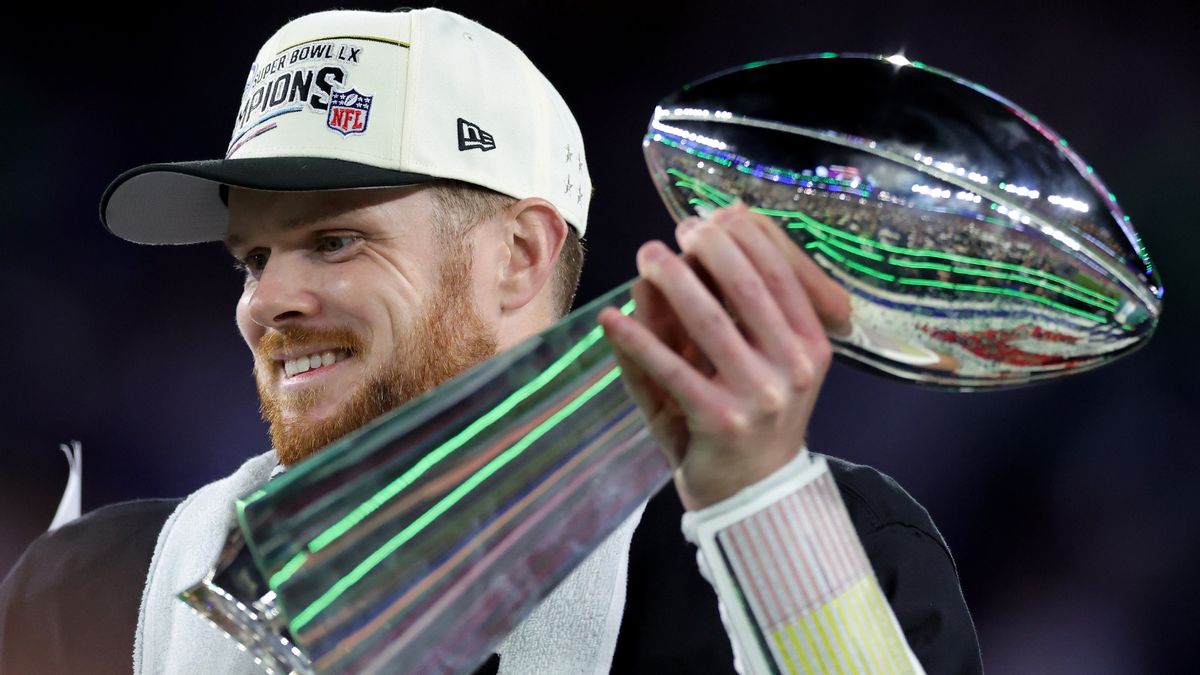
A claim that NFL star Sam Darnold, quarterback of 2026 Super Bowl champions the Seattle Seahawks, owed more in California state taxes than he earned by winning the big game circulated online in mid-February 2026.
Users on social media platforms like Facebook (archived), X (archived) and Instagram (archived) claimed Darnold stood to lose $71,000 because his bonus for winning the game was $178,000 and his overall income tax bill from the state of California will amount to $249,000.
The rumor kicked off after the Seahawks defeated the New England Patriots on Feb. 8, 2026.
The 'jock tax'
It appeared to be true that based on publicly circulating information about NFL player salaries and post-season bonus structures, Darnold would owe more in California state taxes than he earned as a bonus for winning the 2026 Super Bowl.
It is crucial to note that some headlines suggesting that Darnold was "losing money" were misleading and did not account for the entire financial picture of his NFL salary, not including money earned from endorsement deals. According to the NFL, Darnold signed a three-year contract with the Seahawks in 2025, valued at $100.5 million.
However, because Snopes was unable to independently verify Darnold's official financial records or tax bills, we have opted not to put a rating on this claim.
The specific numbers included in the claim appeared to originate with retired NFL quarterback Boomer Esiason, co-host of "Boomer and Gio" on New York's WFAN sports radio network, who broke down the numbers during a Super Bowl recap episode that aired on Feb. 9, 2026.
Esiason broke it down as such:
For winning the Super Bowl, the winning team, each player gets $178,000. In other words, the Super Bowl isn't a part of their salary… So each spends seven days in the state of California. So those are seven duty days, and they pierce your regular salary at 3.5 percent. So he has to pay, when you take into account he got the $178,000, plus his overall salary, he has to pay the state of California for spending seven days there $249,000. It ends up costing him $71,000 to go play in California.
Esiason was speaking about a tax law colloquially referred to as the "jock tax," which taxes athletes competing in outside their home states based on the value of their overall compensation, including regular season salary and bonuses.
Therefore, the $249,000 Darnold allegedly owes California was not just for the Super Bowl itself, but every working visit made to California during the season.
Reports of athletes' tax burdens have circulated for years.
A New York Times article from 2013 said the law impacted NBA players, and a 2019 Pittsburgh Post-Gazette piece reported the same about MLB players. The Los Angeles Times reported on the impact of the "jock tax" on both athletes and the state of California in 2004, 2009 and 2020.
In 2018, Sports Illustrated explained how the "jock tax" affects NFL players specifically, which is primarily that players don't only pay taxes to the state they live in, but also to states "where they play and, most notably, where they practice."
SI and Forbes both offered a simplified view of how the tax works: Essentially, the number of days spent "playing, practicing and training" in a given state gets multiplied by the state tax rate and then that total is divided by the number of days in the season.
To calculate a jock tax, the state will divide the number of days spent in the state (7 days, assuming the teams leave right after the game) into the total number of days the player was available to work in any state during the season (varies by player, but usually around 170). The state will then multiply that amount by the player's income to arrive at the portion of income attributable to the state. The state will then multiply this amount by the state's income tax (in New Jersey, the top rate is 8.97 percent) to arrive at the jock tax bill. So a player making $1 million would owe roughly $727 for the game.
The Tax Foundation also pointed out that states tax every member of the team that works in the state, "including trainers, scouts, and coaches," and though high-paid stars may not balk at the high tax rates, "it can be more problematic for lower paid members of the teams."
NBA legend Michael Jordan first brought media attention to the "jock tax" in the early 1990s, when his Chicago Bulls bested the Los Angeles Lakers in the 1991 NBA finals.
Following the 1991 finals, California notified Jordan of the taxes he owed for the days worked in Los Angeles, and later, reportedly in response, Illinois passed a similar tax on visiting athletes that became commonly referred to as "Michael Jordan's Revenge Tax."