
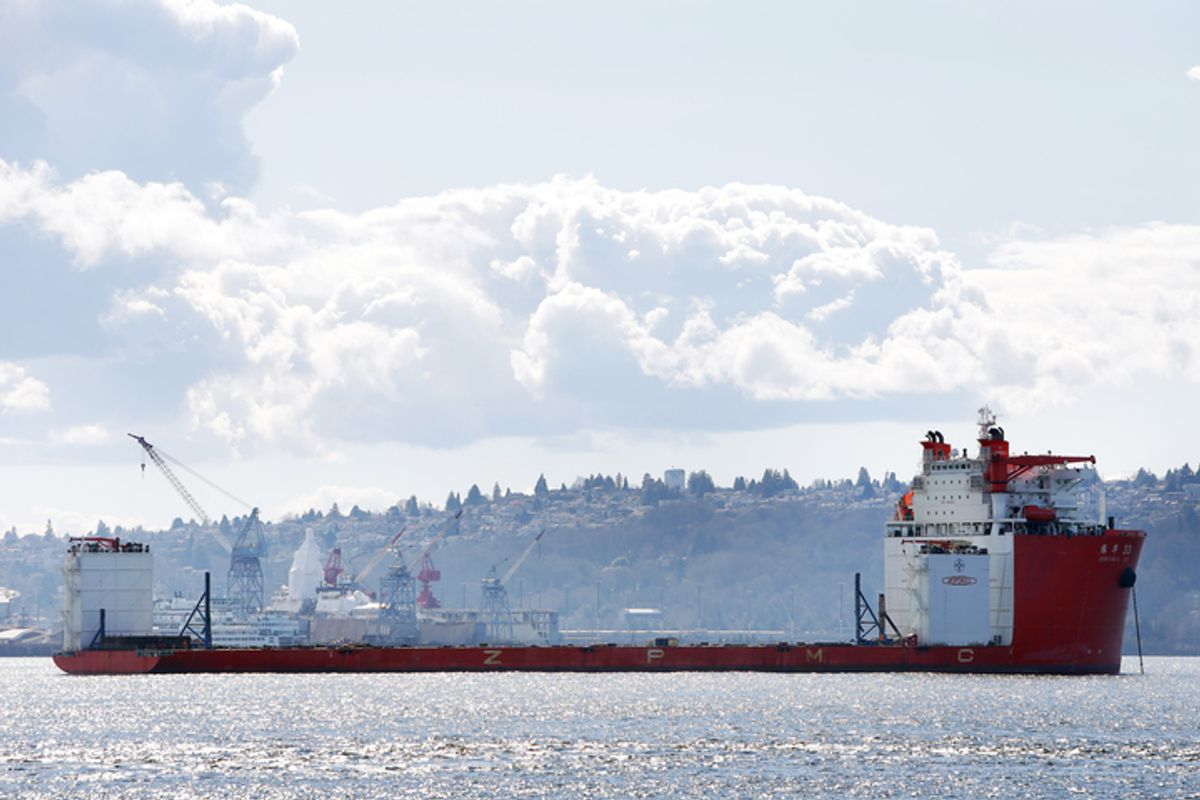
In late April 2025, as the United States and other countries awaited the effects of U.S. President Donald Trump's far-reaching tariffs, people began claiming on social media that the Port of Seattle was suddenly empty of cargo ships.
For example, a photo (archived) captioned, "April 23, 2025 - Port of Seattle is empty. Only one ship and no containers. Usually a busy port," had gained more than 33,000 upvotes on Reddit, as of this writing.
OC: April 23, 2025 - Port of Seattle is empty. Only one ship and no containers. Usually a busy port.
byu/Dark-Knight-Rises inpics
We have not verified, as of this writing, whether the photograph itself was authentic or that the user took it on April 23. We contacted the account that posted it and will update this story if we receive a response.
Social media users also claimed there would be no new international ships in the port "after April 29," and more specifically that no ships from China were coming in. (As of this writing, the U.S.'s duty rate imposed on China is 145%, the highest of any country affected by U.S. tariffs.)
@mossymatriarch Seattle's ports are shutting down. No new international ships after April 29. This will hit supply chains, prices, and jobs across the Puget Sound. Stay alert. #Seattle #PortOfSeattle #SupplyChain #USChinaTensions #WashingtonState #SeattleNews #PriceHikes #LocalEconomy #ShortagesIncoming #PNW #worldtok #fyp ♬ original sound - ? Mossy Matriarch ?
Port of Seattle wasn't empty
Despite claims Seattle's marine ports were empty of ship traffic due to Trump's tariff policies, the port was operating at normal capacity as of this writing. In fact, the Northwest Seaport Alliance — which manages all marine cargo operations for the Port of Seattle and Port of Tacoma — said it was so far seeing more vessels call into port in 2025 than in 2024, with three more calls in the first quarter of 2025 than during the same period in 2024.
However, the ships calling into port were arriving with unpredictable volumes of cargo — sometimes 30% less than anticipated, the NWSA said. Because of the unprecedented scope of Trump's tariffs, the alliance said it didn't yet have a formalized system for tracking the amount of cargo going in and out. The import and export markets were only beginning to feel the effects.
We spoke with the NWSA's communications manager, Kate Nolan, via email, who confirmed that while tariffs were likely going to affect import and export markets and some of these changes were already apparent, the claims that Seattle's marine cargo terminals were empty and that Chinese vessels stopped calling on April 29 were not true.
On any given day, the number of vessels in Seattle's ports is not reflective of the port's activity. "We might have a busy day but no vessels, because cargo was off-loaded by [a] vessel earlier in the week and is still being moved inland, and exports are being moved onto terminal for the next vessel," Nolan said. Current port activity, including how many international vessels are in the harbor at any given time, is public information.
Nolan said 15 international container vessels (nine in Seattle) were working or scheduled to arrive through May 4, 2025. Of the 15 (including Port of Tacoma), 12 would have called at Chinese ports. This meant that the ship either originated in China or passed through a Chinese port to collect cargo. The following week (May 5 through May 12), 16 more international vessels were scheduled to arrive. Therefore, the claim that there were no new international vessels coming in — or that vessels from China in particular stopped calling into the Seattle port on April 29 — is false.
"They're looking to be consistent and on time," Nolan said. According to Nolan, in the 30 days before April 29, 2025, there was a 7.3% increase in shipments to Seattle alone, which she noted was partially due to shippers advancing cargo before anticipated tariffs.
Was the NWSA feeling the effects of tariffs?
Despite a higher-than-average rate of ships scheduled to arrive, the actual amount of cargo on the ships was less predictable. There was no way to keep track of any loss of cargo, because this degree of increased tariffs was unprecedented and the NWSA did not yet have a system to track fluctuations in the amount of cargo on ships coming in.
"We are seeing some vessels coming in with less cargo than anticipated, and we are hearing from exporters and importers directly on canceled orders, especially with China," Nolan told us. "These impacts are real and will likely be reflected in our data in the coming months."
According to Nolan, the NWSA was seeing some vessels come into port with 30% less cargo than anticipated.
"It's on a vessel-by-vessel basis," Nolan continued over the phone. "There's an immediate impact to jobs felt, because [truckers, longshoremen, etc.] are hired on a volume by volume basis."
In sum …
As of this writing, international vessels were still consistently calling into Seattle's port in late April 2025 — at even higher rates than in the first quarter of 2024. Shippers advancing cargo before anticipated tariffs are partially driving this uptick.
However, on the ships that were coming in, the volume of cargo on board was falling short of anticipated numbers. The NWSA did not yet have a way to track this decrease in cargo, which was already affecting dockworkers, truckers and other industry players. NWSA data would likely begin to reflect the effects of these tariffs in the coming months.
Regarding the broader effects of tariffs on the import and export markets, Nolan said:
We remain concerned about the impacts of tariffs and other trade policies on our gateway. Any trade policies that limit trade and investment should be used as a measure of last resort and tariffs should be thoroughly researched and narrowly targeted, qualities that do not apply to the current tariffs. In the first round of tariffs we saw some agricultural export markets decimated, such as apples, and these markets have never fully recovered.