After tensions between Iran and Israel came to a head in June 2025, resulting in military strikes by both nations (as well as U.S. strikes on Iran and retaliatory strikes on a U.S. base in Qatar), a graphic circulated online that appeared to place the blame for the situation on the policies of Democratic politicians previously in power.
The graphic — which made claims about former Secretary of State Hillary Rodham Clinton, former President Barack Obama and former President Joe Biden — included the caption: "REMEMBER HOW WE GOT HERE!" and "SO DON'T EVEN BLAME THIS ON TRUMP." The image spread across multiple sites, including X (archived), Instagram (archived) and Reddit (archived). One example of the claim (archived) received more than 460,000 views, as of this writing:
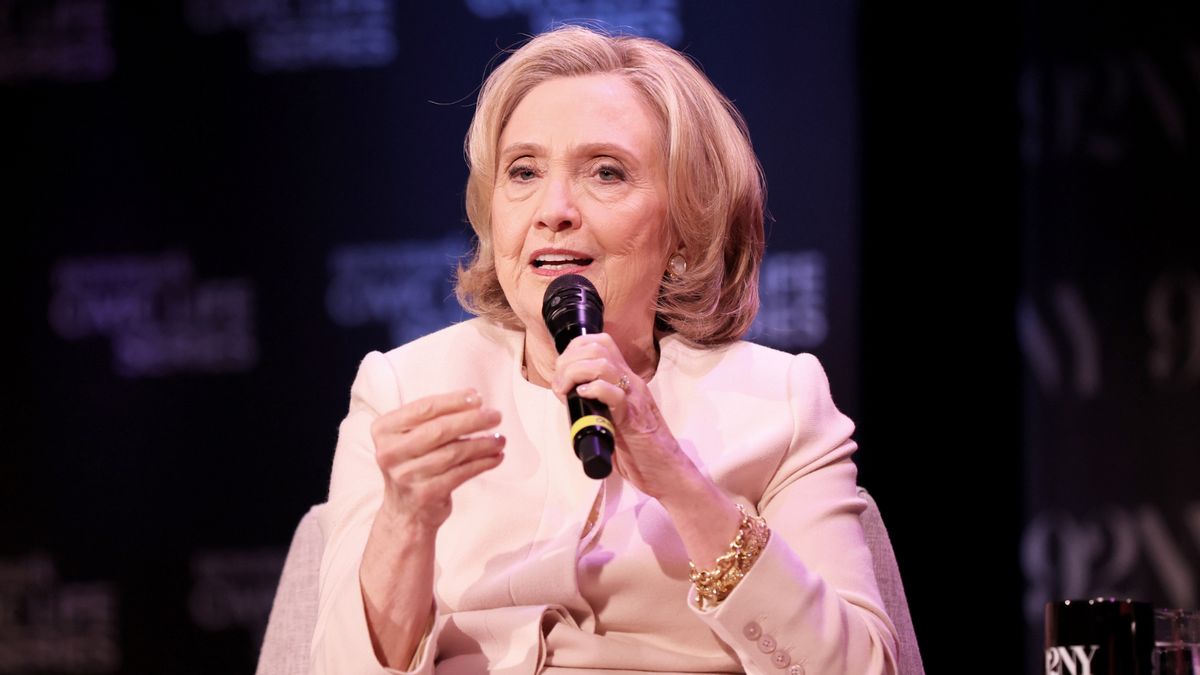
Snopes previously fact-checked the claim that Biden unfroze $16 billion in funds for Iran. Below, we focus on the claim related to Clinton: that she "supplied Iran with uranium to enrich their nuclear program." We reached out to the Clinton Foundation seeking comment on the claim and will update this story if we receive a response.
In September 2015, about two and a half years after Clinton stepped down from her role in Obama's administration, The Wall Street Journal published a story (archived) that claimed she was a "key player" in the lead-up to the decision that Iran would constrain its uranium enrichment to peaceful purposes in exchange for the U.S. and others lifting some sanctions.
The story posited that Clinton personally helped open the door to "a dramatic shift in U.S. policy toward Iran: an acceptance that Tehran would maintain at least some capacity to produce nuclear fuel, according to current and former U.S. officials."
"She recognized the difficulty of reaching a solution with zero enrichment," Jake Sullivan, Clinton's top foreign policy aide at the time, reportedly said to the Journal. The story read:
Mrs. Clinton's role in this critical early debate hasn't been previously reported and shows that the Democratic presidential front-runner and her top aide, Mr. Sullivan, were key players in the Iran deal. Given united Republican opposition to the deal, the issue is likely to be central in the 2016 election.
The result of this concession was the Iran Nuclear Deal, or Joint Comprehensive Plan of Action — an agreement between China, France, Germany, Russia, the U.K., the U.S., the EU and Iran that came into effect in October 2015 and aimed to ensure that Iran's nuclear program was exclusively peaceful.
Upon the announcement of the deal in July 2015, Clinton delivered a statement on her position, which began:
I am still studying the details, but based on the briefings I received and a review of the documents, I support the agreement because it can help us prevent Iran from getting a nuclear weapon. With vigorous enforcement, unyielding verification, and swift consequences for any violations, this agreement can make the United States, Israel, and our Arab partners safer.
In light of the international community's long history and experience with Iranian behavior, the highest priority must be given to effective enforcement of the agreement. Signing is just the beginning. As President, I would use every tool in our arsenal to compel rigorous Iranian compliance. At the outset, we must see the verified roll back of the Iranian nuclear program required by the agreement. We can never permit Iran to evade its obligations or to place any suspicious site off limits to inspectors. And the response to any cheating must be immediate and decisive — starting with the return of sanctions but taking no options off the table, including, if necessary, our military options.
The message to Iran should be loud and clear: We will never allow you to acquire a nuclear weapon; not just during the term of this agreement — never.
A policy aide quoted anonymously in the story reportedly said, "By the time she left [her role as secretary of state], her position was: 'I'm not an absolute firm hard 'no' on enrichment. … Let's see how it unfolds and reserve judgment on whether we'd accept enrichment until a later date.'" Because it came from an anonymous source, it wasn't possible for Snopes to independently verify this statement.
The process of uranium enrichment increases the concentration of U-235, an isotope that can sustain a nuclear chain reaction. Beginning in 2006, the U.N. Security Council called on Iran to suspend all uranium enrichment, but it endorsed the JCPOA on July 20, 2015.

(Getty Images)
The deal dictated that Iran would reduce its centrifuge program to 6,104 machines — 5,060 at one facility and 1,044 at another — from nearly 20,000, but the nation was allowed to expand the scale of machines after a decade.
Most importantly with respect to the question at hand, however, the deal did not supply Iran with any uranium.
In 2018, just three years after the JCPOA went into effect, Trump withdrew the U.S. from the agreement.
In sum …
Although Clinton reportedly played a critical role in forming the 2015 Iran Nuclear Deal — which included Iran maintaining some of its uranium enrichment capabilities — this does not mean that the deal, much less Clinton specifically, "supplied Iran with uranium."