
On July 3, 2025, the Republican-led U.S. House of Representatives passed Trump's "Big Beautiful Bill" — a sweeping budget plan that among other things increased funding to U.S. Immigration and Customs Enforcement and largely banned states from regulating artificial intelligence for 10 years. The bill, which U.S. President signed into law on July 4, 2025, also slashed Medicaid, the government insurance program that helps Americans in poverty, which critics warned would leave millions without health care.
That same day, rumors that the Washington, D.C.-based, U.S. Conference of Catholic Bishops (USCCB) publicly denounced the bill spread on multiple platforms, including Facebook (archived), Reddit (archived) and X (archived), collectively garnering more than a million views and reactions. "Catholic Bishops Trash Trump's Big Beautiful Bill Passing," one Newsweek article headline read.
Some users pointed out the fact that the bill did advance anti-abortion efforts — several X accounts with claimed association to Catholicism also praised the bill's passages (archived). The truth is that the USCCB did publicly denounce the bill, saying that, "The bill, as passed, will cause the greatest harm to those who are especially vulnerable in our society." We reached out via phone and email to the media contact listed under the statement, and will update this story if we receive a response.
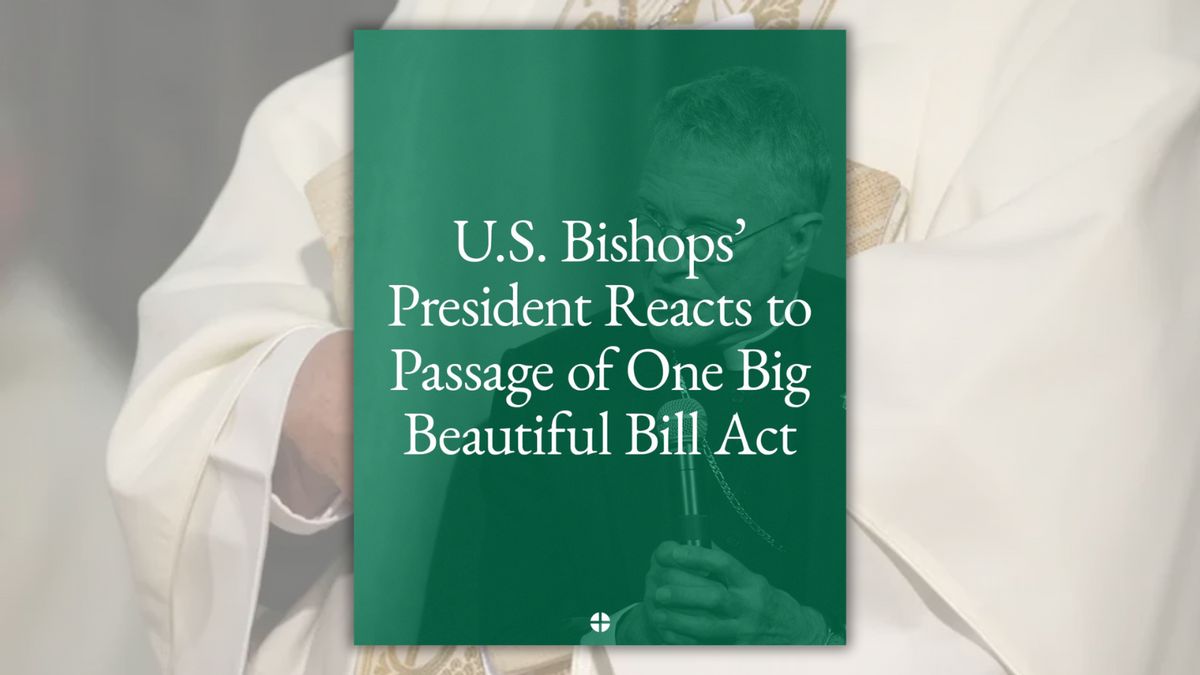
The full July 3 statement (archived) featuring the message from USCCB's president, Archbishop Timothy P. Broglio, read as follows:
WASHINGTON — Reacting to the passage of the One Big Beautiful Bill Act by the U.S. Congress, Archbishop Timothy P. Broglio, president of the U.S. Conference of Catholic Bishops, lamented the great harm the bill will cause to many of the most vulnerable in society, making steeper cuts to Medicaid and clean energy tax credits, and adding more to the deficit. While the bishops had commended the positive aspects of an earlier version of the bill, the restriction on federal funds to abortion providers such as Planned Parenthood was reduced to one year, the parental choice in education provision was greatly weakened, and the restriction on federally funding "gender transition" procedures was removed.
Archbishop Broglio said:
"My brother bishops and I have repeatedly and consistently urged lawmakers to use the budget reconciliation process to help families in need and to change course on aspects of the bill that fail the poor and vulnerable. The final version of the bill includes unconscionable cuts to healthcare and food assistance, tax cuts that increase inequality, immigration provisions that harm families and children, and cuts to programs that protect God's creation. The bill, as passed, will cause the greatest harm to those who are especially vulnerable in our society. As its provisions go into effect, people will lose access to healthcare and struggle to buy groceries, family members will be separated, and vulnerable communities will be less prepared to cope with environmental impacts of pollution and extreme weather. More must be done to prevent these devastating effects.
"The Catholic Church's teaching to uphold human dignity and the common good compels us to redouble our efforts and offer concrete help to those who will be in greater need and continue to advocate for legislative efforts that will provide better possibilities in the future for those in need."
The USCCB also posted links to and excerpts from the statement on its platforms, including Facebook (archived), X (archived), etc.
While at least one user asked where the USCCB was before the passage of the bill, implying the group had not spoken out against the bill at an earlier time, there is a trail of statements by the USCCB calling for changes to the bill leading up to its passage.
On Jan. 13, 2025, a week before Trump took office, the USCCB wrote to members of the U.S. House and Senate regarding their "considerations of a budget reconciliation package." In May, six bishops collectively signed a letter specifically addressing the "Big Beautiful Bill," strongly urging "reconsideration of provisions that will harm the poor and disadvantaged, as well as our immigrant brothers and sisters."
By June 26, the same six bishops signed a letter focused on the Catholic Church's commitment to "the common good" in advance of the Senate's consideration of the bill. In this letter, the USCCB did clarify it supported "ending taxpayer subsidization of major abortion and 'gender transition' providers such as Planned Parenthood," but maintained that "we must also urge you to make drastic changes to the provisions that will harm the poor and vulnerable."
The bill, as signed, institutes major cuts to federal healthcare insurance Medicaid. According to the Congressional Budget Office, combined with two policies under current law, the "Big Beautiful Bill" would increase the number of people without health insurance by 16 million in 2034.
In sum, the statement the USCCB's president made on July 3 was authentic and not the USCCB's first public comment on the bill.