
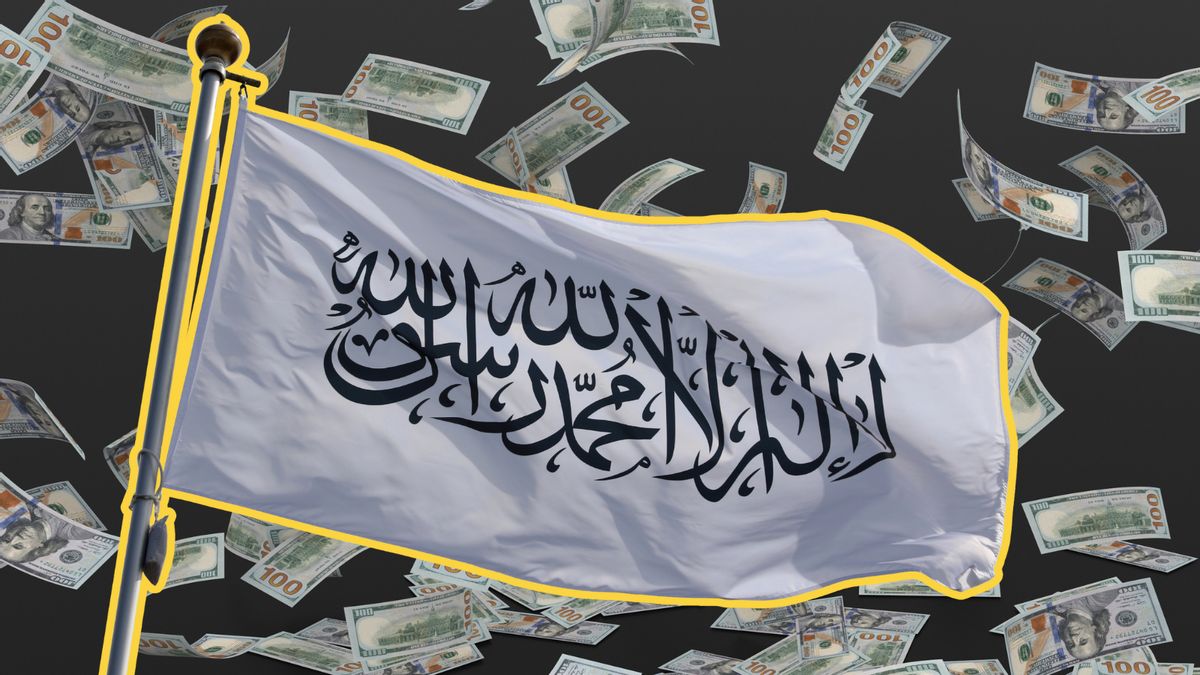
In late June 2025, a rumor spread online that the U.S. House of Representatives passed a bill to "defund the Taliban" — in other words, to stop sending U.S. tax dollars to Afghanistan's de facto rulers, who are designated as a terrorist organization by the United States.
The claim spread on X and Facebook. Meanwhile, Snopes readers searched the website for information on whether the aforementioned legislation passed and whether the United States does, in fact, send money to the Taliban.
It is accurate to say that legislation aimed at preventing U.S. taxpayer dollars from flowing to the Taliban passed the House on June 23, 2025, and that supporters of the policy, officially titled "No Tax Dollars for Terrorists Act," also call it the "Defund the Taliban" bill — including the bill's sponsor, Republican Rep. Tim Burchett of Tennessee. The act would direct the secretary of state to develop and implement a strategy to "discourage foreign countries and nongovernmental organizations from providing financial or material support to the Taliban."
The United States already prohibits sending money to the Taliban, but U.S. taxpayer dollars reach them through indirect means.
The legislation must pass the Senate and be signed by the president' to become law, which has not yet happened as of this writing. Representatives passed the bill via a voice vote, meaning it likely isn't controversial. As it is not yet possible to know how effective any strategy developed by the secretary of state under this bill might be at preventing American taxpayer dollars from reaching the Taliban, we cannot rate this claim.
"Yes, given the amount of money that was sent to Afghanistan and therefore the Taliban, we believe this will weaken the Taliban," said Will
No Tax Dollars for Terrorists Act
The No Tax Dollars for Terrorists Act would require the secretary of State to produce reports scrutinizing how money either flows or could flow to the Taliban, particularly if that money initially came from the United States.
That includes "United States-provided foreign assistance" that may end up in the Taliban's hands, "direct cash assistance programs in Afghanistan" run by the United States and money from the "Afghan Fund" set up by the United States and international partners to hold $3.5 billion from Afghanistan's central bank. (The fund, according to a 2022 news release from the Department of the Treasury announcing its establishment, is for "the benefit of the people of Afghanistan while keeping them out of the hands of the Taliban and other malign actors.")
It is
The legislation would give either 90 days or 180 days after the date of the bill's enactment to produce initial reports, depending on the subject of the report.
Following the production of the first set of reports, the secretary of state must then produce a "strategy to discourage" other countries and organizations from sending funds to the Taliban. The act does not provide many details on what this strategy must entail. It reads:
U.S. taxpayer dollars and the Taliban
As previously stated, U.S. law bans the country from sending money to the Taliban — the Taliban is on the U.S. "SDN" sanction list, for "Specially Designated Nationals" whose "assets are blocked, and U.S. persons are generally prohibited from dealing with them." The United States also designated the Taliban as a "SDGT," or "Specially Designated Global Terrorist."
"In general, any transaction or dealing by a U.S. person in any property or interests in property of persons designated as SDGTs under or otherwise blocked pursuant to [Executive Order 13224] is prohibited," according to the Department of Treasury's Office of Foreign Assets Control.
However, as of March 2025, the United States has been Afghanistan's largest foreign-aid donor since 2013, according to the United Nations Office for the Coordination of Human Affairs. U.S. aid largely flows through what are called "implementing partners," third parties that include private contractors, nonprofit organizations and other groups.
According to a May 2024 audit by the U.S. Special Inspector General for Afghanistan Reconstruction, 58% of 65 implementing partners surveyed "reported paying taxes, fees, duties or utilities to the Taliban-controlled government," amounting to at least $10.9 million in U.S. taxpayer money being paid to the group since the Taliban returned to power in August 2021. For context, according to the audit, the U.S. government has provided more than $2.8 billion in aid and development assistance to the people of Afghanistan since then.
However, the audit said the $10.9 million likely represents "only a fraction of the total amount of U.S. assistance funds provided to the Taliban" because United Nations agencies that receive U.S. funds did not collect or provide the auditors with information they needed for a more accurate estimate.
Failure to pay the Taliban's fees can result in "significant consequences," the report added, and 26% of respondents reported "experiencing direct pressure from the Taliban." Recommendations outlined on Page 4 included expanding foreign tax reporting requirements and ensuring officials and partners follow preexisting rules.
In an April 2025 news release about the "No Tax Dollars for Terrorists Act," Republican U.S. Rep. Brian Mast of Florida, who chairs the House Foreign Affairs Committee, claimed lawmakers "were made aware that weekly cash shipments of nearly $40 million were being sent to Afghanistan's Taliban-controlled Central Bank." This appears to reference a January 2024 audit that found the United Nations shipped more than $2.9 billion in American currency to Afghanistan, some of which ended up in the central bank.
As first reported by ProPublica, the central bank posted on X (archived) in November 2022 that, at one point, it received $40 million in cash in one aid delivery. Another audit, from July 2024, found the currency shipments stabilized the Afghan economy, but also benefited the Taliban. Burchett's office said it believed its legislation would "stop" the UN's shipments of U.S. currency to Afghanistan.
In sum …
The United States does not provide direct financial aid to the Taliban, but the group often requires humanitarian-aid groups operating in Afghanistan to pay fees and taxes, meaning U.S. taxpayer dollars meant for foreign assistance sometimes indirectly end up as payments to the Taliban.
Legislation passed by the House seeks to better identify and scrutinize this issue and directs the secretary of state to develop a strategy to combat it, but it is not clear how effective the legislation would be at preventing U.S. taxpayer dollars from ending up in the Taliban's hands, should it become law.